
Audi RS 4 4.2 Avant V8 AT (2015) vs Nissan Leaf EV (2023)
A full spec-by-spec comparison of Audi RS 4 4.2 Avant V8 AT (2015) vs Nissan Leaf EV (2023) — engine, performance, dimensions, features and price, with the differences highlighted to help you decide.
| Specification |
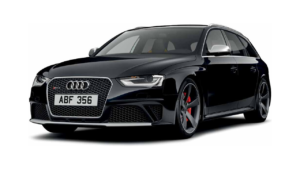 Audi RS 4 4.2 Avant V8 AT (2015)
Audi |
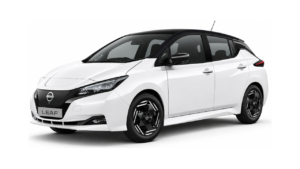 Nissan Leaf EV (2023)
Nissan
₱1,998,000 |
|---|---|---|
| Overview | ||
| Model Year | 2015 | 2023 |
| Warranty | Unlimited/2-years | 3-years/100,000km |
| Availability | Discontinued | Current |
| Engine & Drivetrain | ||
| Engine Type | V8 | Electric Motor |
| Displacement | 4163cc | — |
| Valvetrain | DOHC 32-valve | — |
| Aspiration | Naturally Aspirated | Hybrid / Electric |
| Fuel Type | Gas | Electric |
| Max Power | 450 PS @ 8250 rpm | 150 PS |
| Max Torque | 430 Nm @ 4000-6000 rpm | 320 Nm |
| Transmission | 7-Speed A/T | Single Speed |
| Drivetrain | AWD | FWD |
| Performance & Economy | ||
| 0–100 km/h | 4.7 secs | — |
| Top Speed | 250 km/h | — |
| Fuel Economy (City) | 19.3 (14.6) | — |
| Fuel Economy (Highway) | 33.2 (8.5) | — |
| Fuel Economy (Combined) | 26.4 (10.7) | — |
| Body & Dimensions | ||
| Body Type | Wagon | Hatchback |
| Segment | D | Hatchback |
| Construction | Unibody | Unibody |
| Doors | 5 | 5 |
| Seating Capacity | 2+3 | 2+3 |
| Length (mm) | 0 | 4490 |
| Width (mm) | 0 | 1788 |
| Height (mm) | 0 | 1540 |
| Wheelbase (mm) | 0 | 2700 |
| Curb Weight (kg) | 1795 | 1591 |
| Exterior Colors | — | White Pearl, Night Blue Metallic, Radiant Red, Gun Metallic |
| Chassis, Wheels & Brakes | ||
| Steering Type | Hydraulic | EPS |
| Steering Column | Height adjust | Tilt |
| Tire Pressure Monitoring | No | Yes |
| Differential Lock | No | No |
| Front Suspension | — | MacPherson Strut w/ Coil Spring |
| Rear Suspension | — | Torsion Beam |
| Front Wheels | — | 16 |
| Rear Wheels | — | 16 |
| Front Tires | — | 205/55/R16 |
| Rear Tires | — | 205/55/R16 |
| Front Brakes | — | Disc |
| Rear Brakes | — | Disc |
| Safety | ||
| Anti-lock Braking (ABS) | Yes | Yes |
| Electronic Brakeforce Distribution | Yes | Yes |
| Brake Assist | Yes | No |
| Parking Sensors | No | No |
| Stability Control | No | No |
| Traction Control | No | No |
| Vehicle Dynamic Control | No | Yes |
| Forward Collision Mitigation | No | No |
| Blind Spot Warning | No | Yes |
| Hill Start Assist | No | Yes |
| Hill Descent Control | No | No |
| Auto Stop/Start | No | No |
| Driver Airbag | Yes | No |
| Knee Airbag | Yes | No |
| Passenger Airbag | No | No |
| Front Curtain Airbags | No | No |
| Rear Curtain Airbags | No | No |
| Rear Side Airbags | No | No |
| Engine Immobilizer | No | Yes |
| Security Alarm | Yes | Yes |
| Door Locking | Central Locking | Central Locking |
| Comfort & Convenience | ||
| Air Conditioning | Automatic Climate Control | Automatic Climate Control |
| Rear A/C Vents | No | No |
| Parking Brake | Manual | EPB |
| Key Type | Keyless Entry | Keyless Entry |
| Push-Button Start | No | No |
| Cruise Control | No | Yes |
| Multi-Info Display | No | Yes |
| Paddle Shifters | No | No |
| Reverse Camera | No | No |
| Auto Headlights | No | No |
| Power Windows | No | Yes |
| Power Seats | No | No |
| Remote Trunk Release | No | No |
| Eco Mode | No | No |
| Antenna | no | yes |
| Seat Material | — | Fabric |
| Infotainment & Audio | ||
| Touchscreen | Yes | Yes |
| Navigation | No | No |
| Bluetooth | No | Yes |
| Apple CarPlay | No | Yes |
| Android Auto | No | No |
| USB | Yes | Yes |
| AUX Input | Yes | No |
| AM/FM Radio | Yes | Yes |
| CD Player | Yes | No |
| DVD Player | No | No |
| MP3 Playback | Yes | No |
| iPod Support | No | No |
| SD Card Slot | No | No |
| Speakers | — | 6 |
| Lighting | ||
| Headlights | HID | LED |
| Fog Lights | Yes | Yes |
| Daytime Running Lights | No | Yes |
Audi RS 4 4.2 Avant V8 AT (2015) vs Nissan Leaf EV (2023): which should you buy?
For the Filipino buyer prioritizing raw performance and traditional driving thrills, the 2015 Audi RS 4 is the definitive choice, offering a staggering 450 PS and 4.7-second 0-100 km/h acceleration, though it comes with a high maintenance cost and discontinued status. Conversely, the 2023 Nissan Leaf is the logical pick for budget-conscious commuters or those seeking a modern, available electric hatchback with a 3-year warranty, despite its lower 150 PS output and FWD layout. The RS 4's V8 engine and AWD system deliver superior power and handling, while the Leaf's electric motor and lower price point of ₱1,998,000 make it accessible, albeit with significantly lower top speed and fuel economy figures compared to the RS 4's 26.4 km/l combined rating.
Frequently asked questions
Which vehicle is more powerful?
The 2015 Audi RS 4 is vastly more powerful with 450 PS and 430 Nm of torque, compared to the 2023 Nissan Leaf's 150 PS and 320 Nm.
Which car is cheaper to buy?
The 2023 Nissan Leaf is cheaper at ₱1,998,000, whereas the 2015 Audi RS 4 has no listed price in the provided data.
Which one is better for daily commuting in Manila traffic?
The 2023 Nissan Leaf is better for daily commuting due to its lower price, current availability, and 3-year warranty, whereas the RS 4 is discontinued and lacks specific fuel economy data for city driving.
Which vehicle has better fuel economy?
The 2015 Audi RS 4 has a combined fuel economy of 26.4 km/l, while the 2023 Nissan Leaf has no fuel economy figures listed as it is an electric vehicle.