
Volvo V40 T4 (2016) vs Nissan Leaf EV (2023)
A full spec-by-spec comparison of Volvo V40 T4 (2016) vs Nissan Leaf EV (2023) — engine, performance, dimensions, features and price, with the differences highlighted to help you decide.
| Specification |
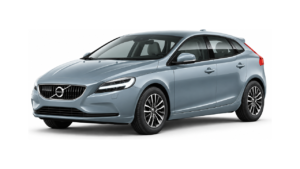 Volvo V40 T4 (2016)
Volvo
₱2,395,000 |
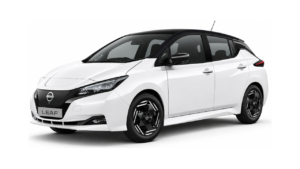 Nissan Leaf EV (2023)
Nissan
₱1,998,000 |
|---|---|---|
| Overview | ||
| Model Year | 2016 | 2023 |
| Warranty | 2 Years | 3-years/100,000km |
| Insurance | Upon Request | — |
| Availability | Current | Current |
| Engine & Drivetrain | ||
| Engine Type | Inline-4 | Electric Motor |
| Displacement | 1969cc | — |
| Valvetrain | DOHC 16-Valve | — |
| Aspiration | Turbocharged | Hybrid / Electric |
| Fuel Type | Gas | Electric |
| Max Power | 190 HP @ 4700 rpm | 150 PS |
| Max Torque | 240 Nm @ 5000 rpm | 320 Nm |
| Transmission | 6-Speed Automatic | Single Speed |
| Drivetrain | FWD | FWD |
| Performance & Economy | ||
| 0–100 km/h | 8.5s | — |
| Top Speed | 225 | — |
| Fuel Economy (Combined) | 16.34 | — |
| Euro NCAP Rating | 5 | — |
| Body & Dimensions | ||
| Body Type | Hatchback | Hatchback |
| Segment | C | Hatchback |
| Construction | Unibody | Unibody |
| Doors | 5 | 5 |
| Seating Capacity | 2+3 | 2+3 |
| Length (mm) | 4369 | 4490 |
| Width (mm) | 1857 | 1788 |
| Height (mm) | 1420 | 1540 |
| Wheelbase (mm) | 2647 | 2700 |
| Curb Weight (kg) | 1470 | 1591 |
| Fuel Tank (L) | 62 | — |
| Front Headroom (mm) | 984 | — |
| Rear Headroom (mm) | 932 | — |
| Front Legroom (mm) | 1073 | — |
| Rear Legroom (mm) | 847 | — |
| Exterior Colors | — | White Pearl, Night Blue Metallic, Radiant Red, Gun Metallic |
| Chassis, Wheels & Brakes | ||
| Front Suspension | MacPherson Strut, Coil Springs, Hydraulic Shock Absorbers, Stabilizer Bar | MacPherson Strut w/ Coil Spring |
| Rear Suspension | Independent Suspension with Coil Springs, Hydraulic Monotube Shock Absorbers, Stabilizer Bar | Torsion Beam |
| Front Wheels | 17" Alloy | 16 |
| Rear Wheels | 17" Alloy | 16 |
| Front Brakes | Discs | Disc |
| Rear Brakes | Discs | Disc |
| Tire Pressure Monitoring | No | Yes |
| Differential Lock | No | No |
| Front Tires | — | 205/55/R16 |
| Rear Tires | — | 205/55/R16 |
| Steering Type | — | EPS |
| Steering Column | — | Tilt |
| Safety | ||
| Anti-lock Braking (ABS) | Yes | Yes |
| Electronic Brakeforce Distribution | Yes | Yes |
| Brake Assist | Yes | No |
| Parking Sensors | Yes | No |
| Stability Control | Yes | No |
| Traction Control | Yes | No |
| Vehicle Dynamic Control | No | Yes |
| Forward Collision Mitigation | Yes | No |
| Blind Spot Warning | No | Yes |
| Hill Start Assist | No | Yes |
| Hill Descent Control | No | No |
| Auto Stop/Start | Yes | No |
| Driver Airbag | Yes | No |
| Knee Airbag | No | No |
| Passenger Airbag | Yes | No |
| Front Curtain Airbags | No | No |
| Rear Curtain Airbags | No | No |
| Rear Side Airbags | No | No |
| Engine Immobilizer | Yes | Yes |
| Security Alarm | Yes | Yes |
| Door Locking | Remote Central Locki | Central Locking |
| Comfort & Convenience | ||
| Air Conditioning | Electronic Climate Control | Automatic Climate Control |
| Rear A/C Vents | No | No |
| Seat Material | Premium Fabric | Fabric |
| Parking Brake | Manual Parki | EPB |
| Key Type | Keyless Entry | Keyless Entry |
| Push-Button Start | Yes | No |
| Cruise Control | Yes | Yes |
| Multi-Info Display | Yes | Yes |
| Paddle Shifters | No | No |
| Reverse Camera | No | No |
| Auto Headlights | Yes | No |
| Power Windows | Yes | Yes |
| Power Seats | No | No |
| Remote Trunk Release | Yes | No |
| Eco Mode | Yes | No |
| Antenna | yes | yes |
| Roadside Assistance | yes | — |
| Infotainment & Audio | ||
| Speakers | 6 | 6 |
| Touchscreen | No | Yes |
| Navigation | No | No |
| Bluetooth | No | Yes |
| Apple CarPlay | No | Yes |
| Android Auto | No | No |
| USB | Yes | Yes |
| AUX Input | Yes | No |
| AM/FM Radio | Yes | Yes |
| CD Player | Yes | No |
| DVD Player | No | No |
| MP3 Playback | Yes | No |
| iPod Support | Yes | No |
| SD Card Slot | No | No |
| Lighting | ||
| Headlights | Halogen | LED |
| Fog Lights | No | Yes |
| Daytime Running Lights | Yes | Yes |
Volvo V40 T4 (2016) vs Nissan Leaf EV (2023): which should you buy?
For a Filipino buyer prioritizing immediate drivability and speed, the Volvo V40 T4 is the superior choice despite its higher price tag of ₱2,395,000 versus the Nissan Leaf's ₱1,998,000. The Volvo offers a turbocharged 1969cc engine producing 190 HP and 240 Nm of torque, achieving 0-100 km/h in 8.5 seconds, whereas the Nissan Leaf relies on a single-speed electric motor with 150 PS and 320 Nm, likely feeling less spirited in traffic. If budget and lower running costs are the primary concerns, the Nissan Leaf wins with a newer 2023 model year, 3-year warranty, and zero fuel expenses, though it lacks the Volvo's 2-year warranty and traditional combustion engine performance. Ultimately, choose the Volvo for performance and the Leaf for economy and modern electric utility.
Frequently asked questions
Which vehicle is cheaper to buy?
The Nissan Leaf is cheaper at ₱1,998,000 compared to the Volvo V40 T4 which costs ₱2,395,000.
Which car has more power and torque?
The Volvo V40 T4 produces more power at 190 HP and 240 Nm of torque, while the Nissan Leaf has lower power at 150 PS and 320 Nm.
Which one is better for daily commuting in the Philippines?
The Nissan Leaf is better for daily commuting due to its lower purchase price, 3-year warranty, and electric fuel type which eliminates fuel costs.
What are the warranty and fuel economy differences?
The Volvo V40 T4 comes with a 2-year warranty and 16.34 combined fuel economy, whereas the Nissan Leaf offers a 3-year/100,000km warranty and uses electricity instead of gasoline.