
Ford Everest 2.2 Titanium 4×2 AT (2017) vs BYD Tang DM-i (2026)
A full spec-by-spec comparison of Ford Everest 2.2 Titanium 4×2 AT (2017) vs BYD Tang DM-i (2026) — engine, performance, dimensions, features and price, with the differences highlighted to help you decide.
| Specification |
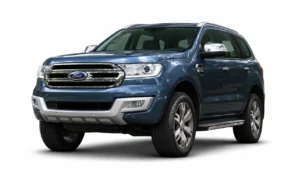 Ford Everest 2.2 Titanium 4×2 AT (2017)
Ford
₱1,918,000 |
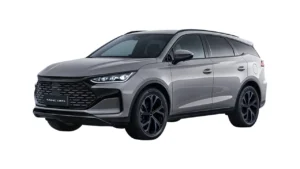 BYD Tang DM-i (2026)
BYD
₱2,148,000 |
|---|---|---|
| Overview | ||
| Model Year | 2017 | 2026 |
| Warranty | 100,000km/3-years | 6 years or 150,000 km |
| Availability | Current | Current |
| Engine & Drivetrain | ||
| Engine Type | Inline-4 | Inline-4 |
| Displacement | 2198cc | 1498cc |
| Valvetrain | DOHC 16valve | DOHC 16-valve |
| Aspiration | Turbocharged CRDI | Turbocharged |
| Fuel Type | Diesel | PHEV |
| Max Power | 160 PS @ 3200 rpm | 271 PS |
| Max Torque | 385 Nm @ 1600 rpm | 315 Nm |
| Transmission | 6-Speed A/T | Automatic 6-Speed |
| Drivetrain | RWD | FWD |
| Body & Dimensions | ||
| Body Type | SUV | Midsize Crossover SUV |
| Segment | J | Crossover |
| Construction | Body-on-frame | Unibody |
| Doors | 5 | 5 |
| Seating Capacity | 2+3+2 | 2+3+2 |
| Length (mm) | 4893 | 4870 |
| Width (mm) | 1862 | 1950 |
| Height (mm) | 1836 | 1720 |
| Wheelbase (mm) | 2850 | 2820 |
| Exterior Colors | — | Moonstone Grey, Pearl White, and Silver Sand Black |
| Curb Weight (kg) | — | 2130 |
| Fuel Tank (L) | — | 53 |
| Chassis, Wheels & Brakes | ||
| Front Suspension | Double Wishbone | MacPherson Strut w/Coil Spring |
| Rear Suspension | Live Axle | Multi-link with Coil Spring |
| Front Wheels | 20 | 20 |
| Rear Wheels | 20 | 20 |
| Front Tires | 265/50 R20 | 255/55R20 |
| Rear Tires | 265/50 R20 | 255/55R20 |
| Front Brakes | Disc | Ventilated Disc |
| Rear Brakes | Disc | Solid Disc |
| Steering Type | Hydraulic | EPS |
| Steering Column | tilt | Tilt & Telescope |
| Tire Pressure Monitoring | No | Yes |
| Differential Lock | No | No |
| Safety | ||
| Anti-lock Braking (ABS) | Yes | Yes |
| Electronic Brakeforce Distribution | Yes | Yes |
| Brake Assist | No | No |
| Parking Sensors | Yes | No |
| Stability Control | Yes | No |
| Traction Control | Yes | No |
| Vehicle Dynamic Control | No | Yes |
| Forward Collision Mitigation | No | No |
| Blind Spot Warning | No | No |
| Hill Start Assist | Yes | Yes |
| Hill Descent Control | No | Yes |
| Auto Stop/Start | No | No |
| Driver Airbag | Yes | No |
| Knee Airbag | No | No |
| Passenger Airbag | Yes | No |
| Front Curtain Airbags | Yes | No |
| Rear Curtain Airbags | Yes | No |
| Rear Side Airbags | Yes | No |
| Engine Immobilizer | No | Yes |
| Security Alarm | Yes | Yes |
| Door Locking | Central Locking | Central Locking |
| Comfort & Convenience | ||
| Air Conditioning | Dual Zone Automatic Climate Control | Automatic Climate Control Dual Zone |
| Rear A/C Vents | Yes | Yes |
| Seat Material | Leather | Leather |
| Parking Brake | Manual | EPB |
| Key Type | Keyless Entry | Keyless Entry |
| Push-Button Start | No | No |
| Cruise Control | Yes | Yes |
| Multi-Info Display | Yes | Yes |
| Paddle Shifters | No | No |
| Reverse Camera | Yes | No |
| Auto Headlights | Yes | No |
| Power Windows | Yes | Yes |
| Power Seats | Yes | Yes |
| Remote Trunk Release | No | Yes |
| Eco Mode | No | No |
| Antenna | yes | yes |
| Infotainment & Audio | ||
| Speakers | 10 | 12 |
| Touchscreen | Yes | Yes |
| Navigation | No | No |
| Bluetooth | Yes | Yes |
| Apple CarPlay | No | Yes |
| Android Auto | No | No |
| USB | Yes | No |
| AUX Input | Yes | No |
| AM/FM Radio | Yes | Yes |
| CD Player | Yes | No |
| DVD Player | No | No |
| MP3 Playback | Yes | No |
| iPod Support | Yes | No |
| SD Card Slot | No | No |
| Lighting | ||
| Headlights | Halogen | LED |
| Fog Lights | Yes | No |
| Daytime Running Lights | No | Yes |
Ford Everest 2.2 Titanium 4×2 AT (2017) vs BYD Tang DM-i (2026): which should you buy?
For a Filipino buyer weighing cost, power and everyday practicality, the 2017 Ford Everest 2.2 Titanium 4×2 AT offers a lower upfront price (₱1,918,000) and a robust diesel engine that delivers 160 PS and a high 385 Nm of torque at low rpm, which is useful for hauling loads or occasional off‑road trips despite its RWD, body‑on‑frame construction. Its three‑row seating (2+3+2) and longer wheelbase (4,893 mm) give it a spacious cabin and a traditional SUV feel, but the older platform may lack the refined ride of newer crossovers. The 2026 BYD Tang DM‑i, priced at ₱2,148,000, is a plug‑in hybrid (PHEV) with a smaller 1.5 L turbo engine but a combined 271 PS, delivering strong acceleration while being greener and eligible for future fuel‑efficiency incentives. Its unibody crossover design, front‑wheel drive and modern styling (three exterior colour options) provide a smoother, more car‑like driving experience, though torque is lower (315 Nm) and seating capacity is the same. Choose the Everest if you need a proven, torque‑rich diesel SUV for heavy loads and prefer a lower price. Opt for the BYD Tang if you value higher peak power, hybrid efficiency, newer technology and a more refined ride, and are willing to pay a modest premium.
Frequently asked questions
Which vehicle is cheaper?
The 2017 Ford Everest 2.2 Titanium AT costs ₱1,918,000, which is ₱230,000 less than the BYD Tang DM‑i priced at ₱2,148,000.
Which model offers more power?
The BYD Tang DM‑i produces 271 PS, surpassing the Ford Everest’s 160 PS.
Is the Ford Everest or BYD Tang better for heavy loads?
The Everest provides higher torque (385 Nm vs 315 Nm) at low rpm, making it more capable for hauling heavy loads.
What are the key drivetrain differences?
The Everest uses rear‑wheel drive with a body‑on‑frame SUV layout, while the Tang is front‑wheel drive, built on a unibody crossover platform and runs as a plug‑in hybrid.