
Ford Everest 2.2 Titanium 4×2 AT (2017) vs GAC Aion V Premium (2026)
A full spec-by-spec comparison of Ford Everest 2.2 Titanium 4×2 AT (2017) vs GAC Aion V Premium (2026) — engine, performance, dimensions, features and price, with the differences highlighted to help you decide.
| Specification |
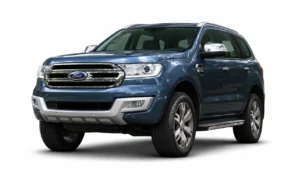 Ford Everest 2.2 Titanium 4×2 AT (2017)
Ford
₱1,918,000 |
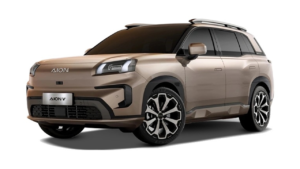 GAC Aion V Premium (2026)
GAC
₱1,698,000 |
|---|---|---|
| Overview | ||
| Model Year | 2017 | 2026 |
| Warranty | 100,000km/3-years | 8-year / 160,000 km |
| Availability | Current | Current |
| Engine & Drivetrain | ||
| Engine Type | Inline-4 | Electric Motor |
| Displacement | 2198cc | — |
| Valvetrain | DOHC 16valve | — |
| Aspiration | Turbocharged CRDI | — |
| Fuel Type | Diesel | Electric |
| Max Power | 160 PS @ 3200 rpm | 224 PS |
| Max Torque | 385 Nm @ 1600 rpm | 240 Nm |
| Transmission | 6-Speed A/T | Automatic |
| Drivetrain | RWD | FWD |
| Body & Dimensions | ||
| Body Type | SUV | Midsize Crossover SUV |
| Segment | J | Crossover |
| Construction | Body-on-frame | Unibody |
| Doors | 5 | 5 |
| Seating Capacity | 2+3+2 | 2+3 |
| Length (mm) | 4893 | 4605 |
| Width (mm) | 1862 | 1854 |
| Height (mm) | 1836 | 1686 |
| Wheelbase (mm) | 2850 | 2775 |
| Exterior Colors | — | Sahara Sand, Onyx Black, Alpine White, Volcano Orange, Aurora Silver, Iceland Grey, Volcano Orange with White Roof |
| Curb Weight (kg) | — | 2330 |
| Chassis, Wheels & Brakes | ||
| Front Suspension | Double Wishbone | MacPherson Strut w/ Coil Spring |
| Rear Suspension | Live Axle | Torsion beam w/Coil Spring |
| Front Wheels | 20 | 19 |
| Rear Wheels | 20 | 19 |
| Front Tires | 265/50 R20 | 235/55R19 |
| Rear Tires | 265/50 R20 | 235/55R19 |
| Front Brakes | Disc | Disc |
| Rear Brakes | Disc | Disc |
| Steering Type | Hydraulic | EPS |
| Steering Column | tilt | Tilt |
| Tire Pressure Monitoring | No | Yes |
| Differential Lock | No | No |
| Safety | ||
| Anti-lock Braking (ABS) | Yes | Yes |
| Electronic Brakeforce Distribution | Yes | Yes |
| Brake Assist | No | No |
| Parking Sensors | Yes | No |
| Stability Control | Yes | No |
| Traction Control | Yes | No |
| Vehicle Dynamic Control | No | No |
| Forward Collision Mitigation | No | No |
| Blind Spot Warning | No | No |
| Hill Start Assist | Yes | Yes |
| Hill Descent Control | No | Yes |
| Auto Stop/Start | No | No |
| Driver Airbag | Yes | No |
| Knee Airbag | No | No |
| Passenger Airbag | Yes | No |
| Front Curtain Airbags | Yes | No |
| Rear Curtain Airbags | Yes | No |
| Rear Side Airbags | Yes | No |
| Engine Immobilizer | No | Yes |
| Security Alarm | Yes | Yes |
| Door Locking | Central Locking | Central Locking |
| Comfort & Convenience | ||
| Air Conditioning | Dual Zone Automatic Climate Control | Automatic Climate Control Dual Zone |
| Rear A/C Vents | Yes | No |
| Seat Material | Leather | PVC |
| Parking Brake | Manual | EPB |
| Key Type | Keyless Entry | Keyless Entry |
| Push-Button Start | No | No |
| Cruise Control | Yes | No |
| Multi-Info Display | Yes | Yes |
| Paddle Shifters | No | No |
| Reverse Camera | Yes | No |
| Auto Headlights | Yes | No |
| Power Windows | Yes | Yes |
| Power Seats | Yes | Yes |
| Remote Trunk Release | No | Yes |
| Eco Mode | No | No |
| Antenna | yes | yes |
| Infotainment & Audio | ||
| Speakers | 10 | 9 |
| Touchscreen | Yes | Yes |
| Navigation | No | Yes |
| Bluetooth | Yes | Yes |
| Apple CarPlay | No | Yes |
| Android Auto | No | No |
| USB | Yes | No |
| AUX Input | Yes | No |
| AM/FM Radio | Yes | Yes |
| CD Player | Yes | No |
| DVD Player | No | No |
| MP3 Playback | Yes | No |
| iPod Support | Yes | No |
| SD Card Slot | No | No |
| Lighting | ||
| Headlights | Halogen | LED |
| Fog Lights | Yes | No |
| Daytime Running Lights | No | Yes |
Ford Everest 2.2 Titanium 4×2 AT (2017) vs GAC Aion V Premium (2026): which should you buy?
For a Filipino buyer weighing a rugged, diesel‑powered SUV against a sleek, electric crossover, the choice hinges on usage and budget. The 2017 Ford Everest 2.2 Titanium 4×2 AT costs ₱1,918,000, about ₱220,000 more than the 2026 GAC Aion V Premium at ₱1,698,000. The Everest delivers 160 PS and a hefty 385 Nm of torque, ideal for heavy loads, off‑road confidence and the 2+3+2 seating layout that accommodates up to seven passengers. Its body‑on‑frame construction and RWD drivetrain further reinforce its capability on rough roads, though fuel is diesel and the warranty is limited to 100,000 km or 3 years. In contrast, the Aion V is an all‑electric, FWD midsize crossover with 224 PS and 240 Nm, offering smoother city acceleration and zero‑emission driving. It seats five, fits tighter urban spaces with a shorter 4,605 mm length, and comes with an 8‑year/160,000 km warranty, providing longer peace of mind. However, buyers must consider charging infrastructure and the lower torque figure for hill climbs. Choose the Everest if you need seven‑seat capacity, higher torque for towing, and frequent trips on uneven roads, and you’re comfortable with diesel fuel costs. Opt for the Aion V if you prioritize lower running costs, modern electric tech, a longer warranty, and primarily city or highway driving with five‑seat practicality.
Frequently asked questions
Which vehicle is cheaper?
The GAC Aion V Premium is priced at ₱1,698,000, which is ₱220,000 less than the Ford Everest’s ₱1,918,000 price tag.
Which model offers more power?
The Aion V provides 224 PS, surpassing the Everest’s 160 PS, though the Everest has higher torque at 385 Nm versus the Aion V’s 240 Nm.
What are the seating differences?
The Everest seats up to seven (2+3+2) while the Aion V accommodates five (2+3).
Which vehicle has a longer warranty?
The Aion V comes with an 8‑year/160,000 km warranty, far longer than the Everest’s 100,000 km/3‑year coverage.