
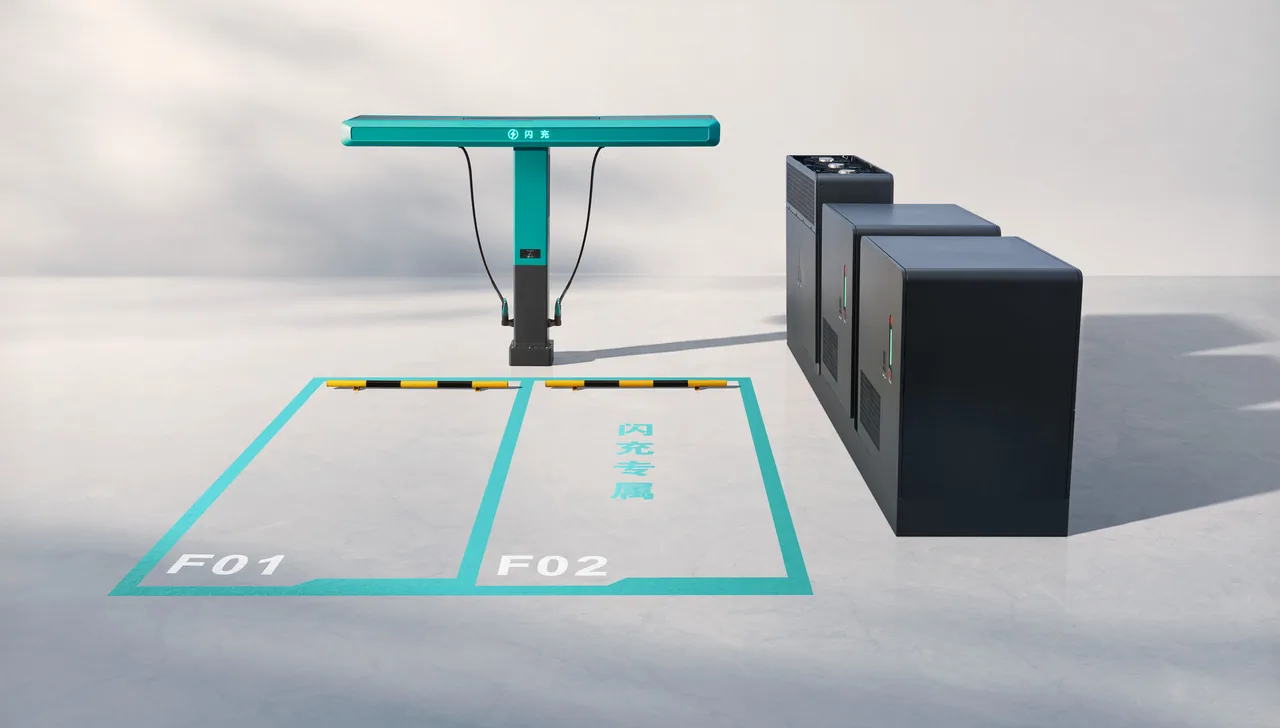
The BYD Group has unveiled its 2nd Generation Blade Battery and FLASH Charging Technology, introducing improvements to address two common challenges for electric vehicles: slow charging speeds and reduced charging performance at low temperatures.
The new system sets a charging benchmark by allowing vehicles to charge from 10% to 70% state of charge (SOC) in 5 minutes and to 97% in just nine minutes.
BYD also said the technology performs well in cold conditions. At temperatures as low as -30°C, charging from 20% to 97% takes only 3 minutes longer than at room temperature.
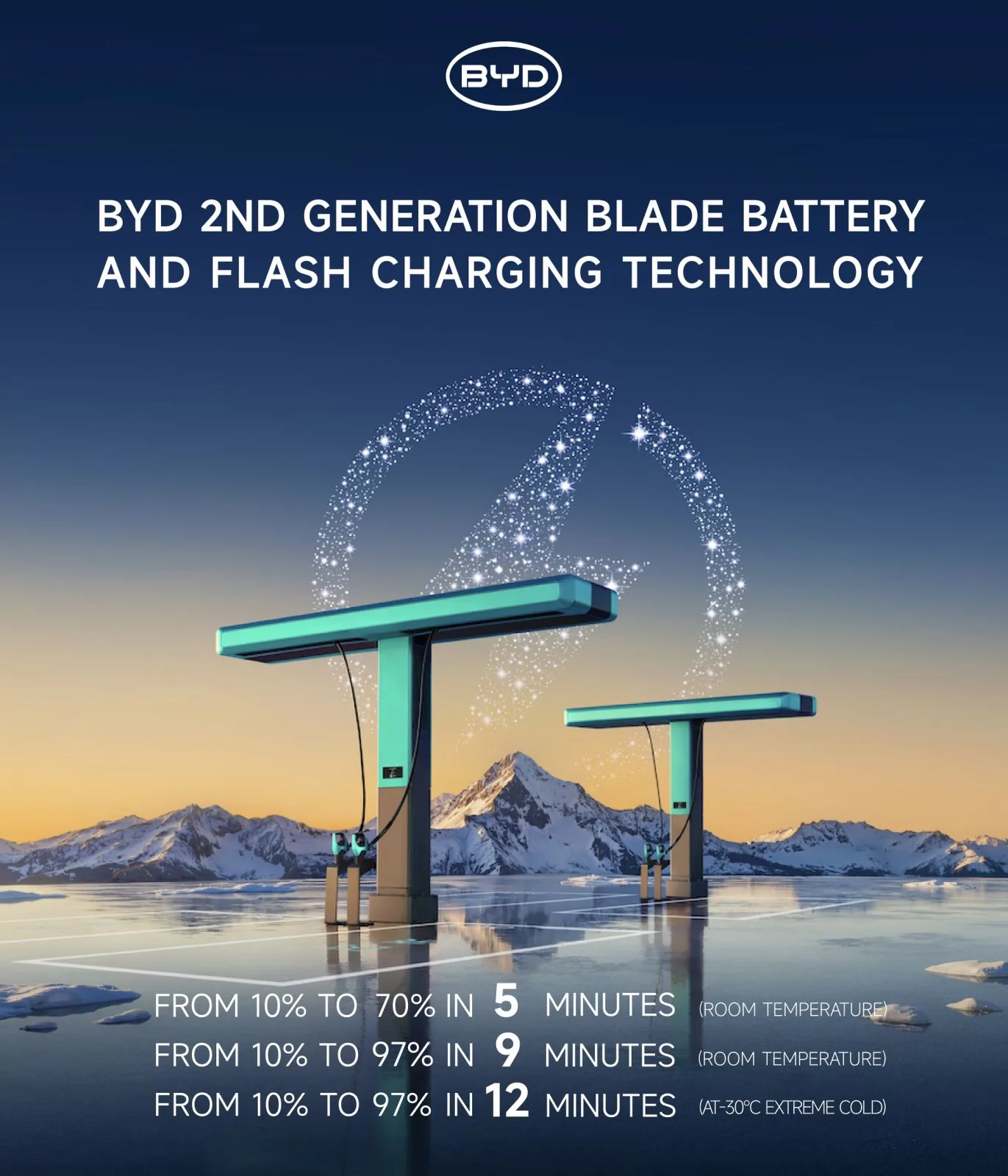
Alongside the technology launch, the company announced plans to build 20,000 FLASH Charging Stations across China, with global rollout expected to begin at scale by the end of 2026.
Despite strong growth in the electric vehicle market, consumers still face concerns such as range anxiety, long waiting times at charging stations during peak travel periods, and slower charging performance in winter.
According to BYD, these issues also create pressure on the charging infrastructure and can increase energy and resource consumption.
BYD Chairman and President Wang Chuanfu said the industry must address two major problems that continue to affect EV adoption: slow charging speeds and poor low-temperature charging performance.
After six years of research and development, BYD developed the 2nd Generation Blade Battery to deliver faster charging while improving energy density.
Traditionally, battery designs face a trade-off between fast charging capability and high energy density. BYD said it addressed this by increasing energy density by 5% compared to the first-generation Blade Battery while significantly improving charging speed.
The new battery is used in the Denza Z9GT, which also features a lightweight body structure. The model is claimed to achieve a range of up to 1,036 km, placing it among the longest-range electric vehicles in its class.
To improve thermal control, BYD developed a “Lithium-Ion High-Speed Channel” along with a “Full-Spectrum Intelligent Thermal Management System.” These systems are designed to reduce internal heat generation and improve heat dissipation during fast charging.
BYD said the battery has passed multiple safety tests that exceed China’s national standards, aligning with the company’s approach that “safety is the ultimate luxury of NEVs.”
FLASH Charging System and Infrastructure
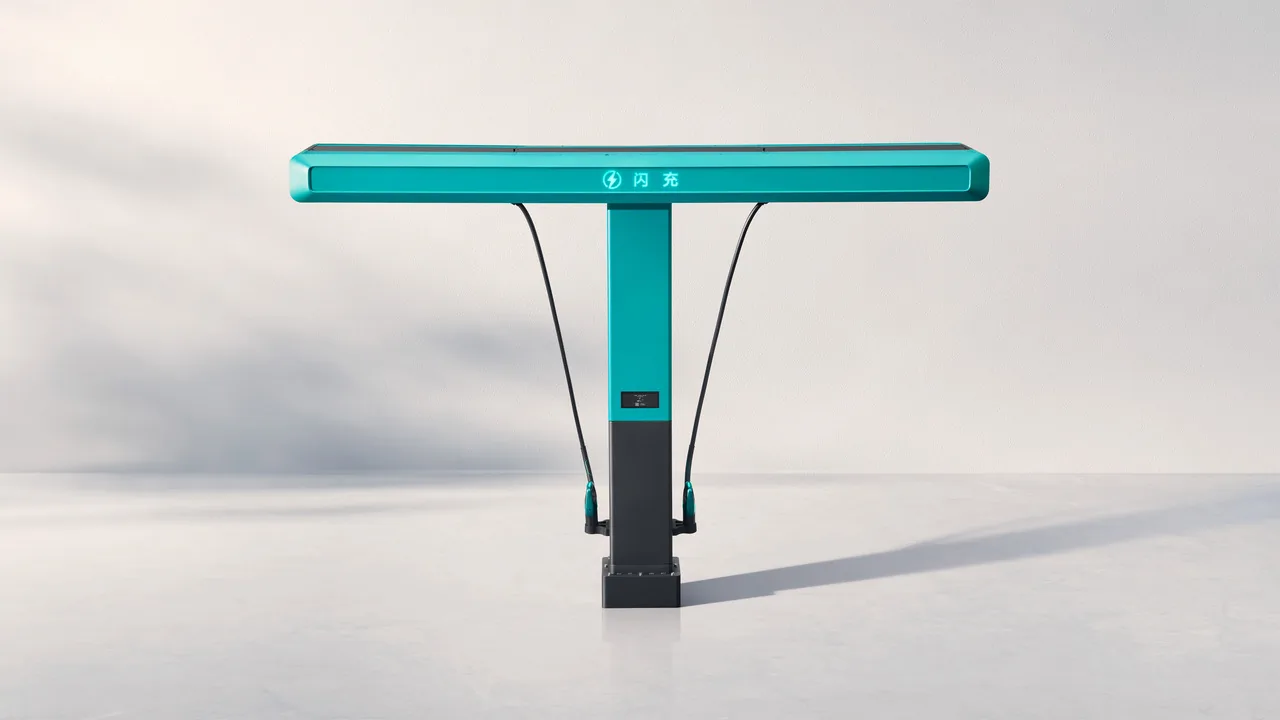
The new FLASH Charger supports a single-connector output of up to 1,500 kW, which BYD describes as a world-leading level of charging power.
The system is paired with a high-capacity energy storage unit, allowing charging stations to deliver extremely high power while avoiding strain on the local electricity grid.
BYD said this approach enables charging infrastructure to operate efficiently even in locations with limited grid capacity.
BYD’s FLASH Charging Station also introduces design changes to improve usability.
The charger uses a T-shaped pulley system with a “Zero-Gravity” cable design, allowing drivers to easily move the connector to either side of the vehicle. The design also keeps cables off the ground to maintain cleanliness and reduce wear.
Once built, BYD said the planned 20,000 charging stations in China will be open to the public, supporting broader EV adoption.
The technology also aligns with BYD’s long-term sustainability strategy, known as the “Three Green Dreams,” introduced by Wang Chuanfu in 2006.
The vision focuses on integrating solar energy, energy storage, and electric vehicle charging, which BYD now refers to as its Solar-Storage-Charging (SSC) FLASH Charging technology.
With the launch of the 2nd-Generation Blade Battery and FLASH Charging system, BYD said it aims to accelerate the transition to electric and intelligent mobility while supporting global transportation electrification.
Related: DENZA, the premium brand of BYD, is now in the Philippines
Now that said, does BYD Philippines (DENZA/BYD) or AC Mobility plan to bring the FLASH Charging system to market in the country?


0 Comments
Leave a Reply