
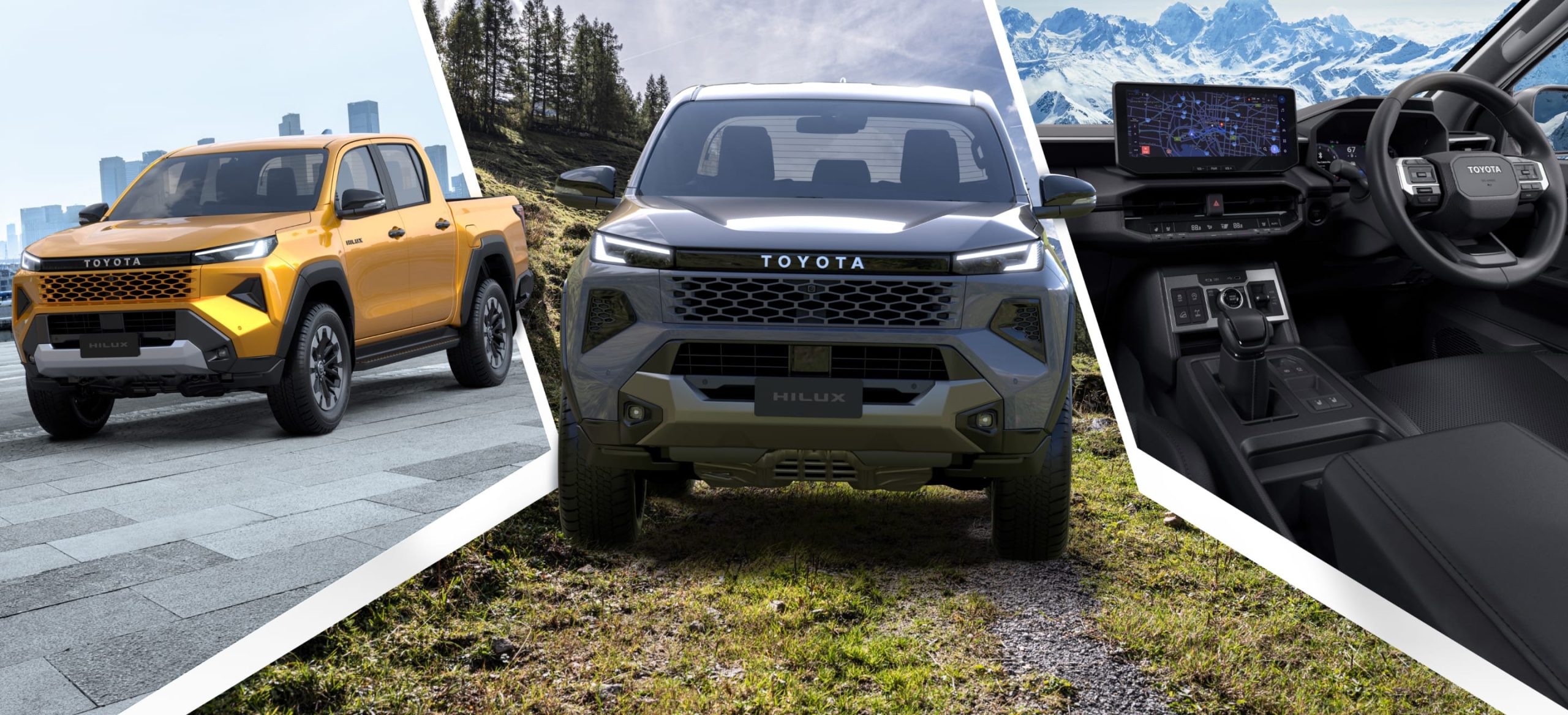
Toyota Motor Corporation has officially revealed the all-new Hilux in Bangkok, Thailand, at a regional vehicle announcement event hosted by Toyota Motor Asia. The new model marks the first time the Hilux lineup will include a battery electric vehicle (BEV). Sales in Asia are scheduled to begin in 2026, with Japan expected to receive a diesel variant by mid-2026.
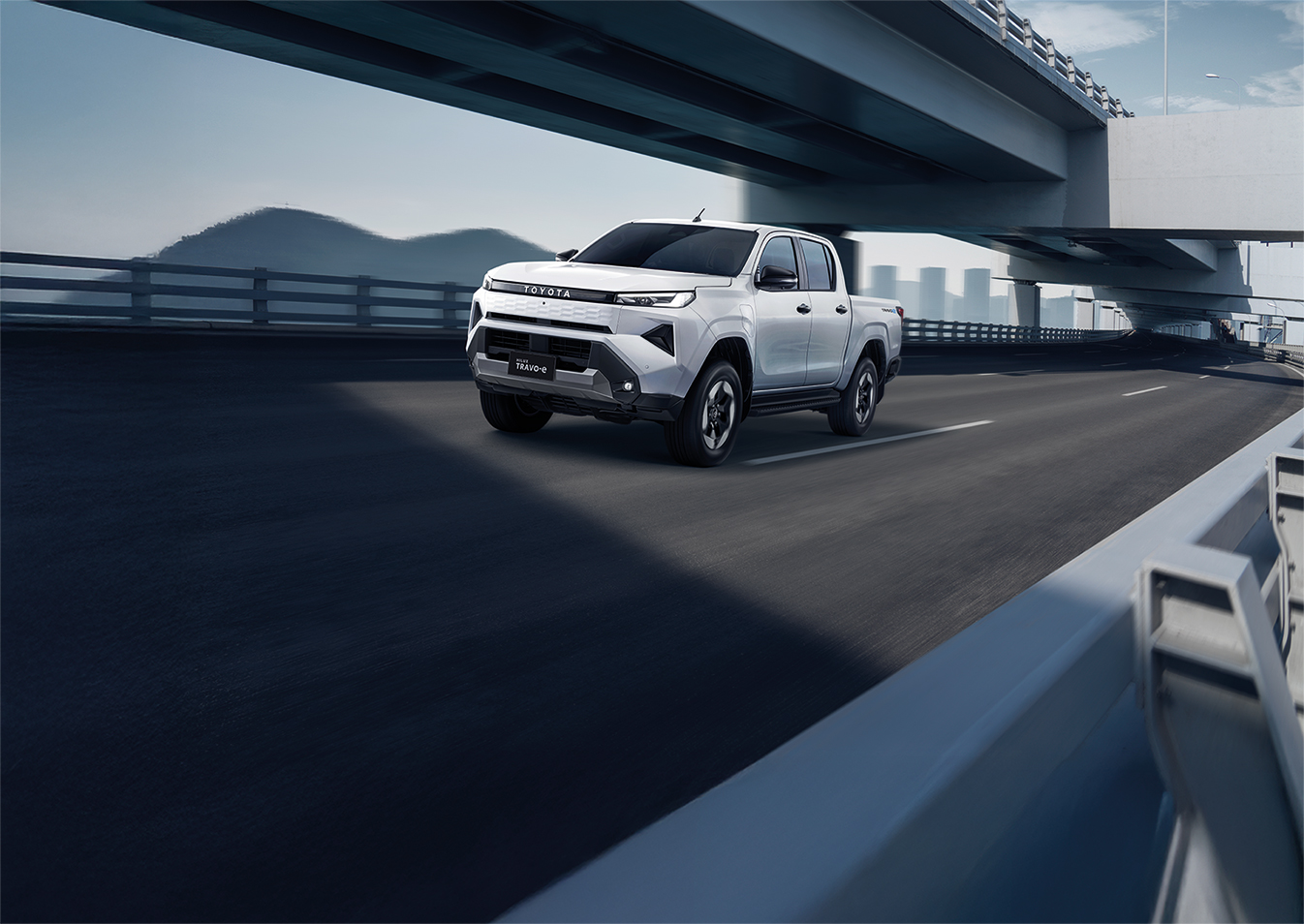
The new Hilux reflects Toyota’s multi-pathway approach to achieving carbon neutrality, offering different powertrain choices tailored to regional needs and infrastructure. Alongside the diesel and BEV models announced, Toyota also confirmed that a fuel cell electric vehicle (FCEV) Hilux is under development. The FCEV version is planned for Europe and Oceania beginning in 2028.
The headline model is the BEV variant, called the Hilux Travo-e (at least that’s what it is called in Thailand). It features a 59.2 kWh lithium-ion battery mounted under the floor and dual electric motors that produce a combined system output equivalent to 193 hp (196 PS). Toyota estimates a driving range of 300 km. The Travo-e supports both AC and DC charging, with AC charging rated at 11 kW and DC fast charging capable of up to 125 kW. It’s safe to assume that the test bed for the new BEV Hilux is based on the Hilux EV concept unveiled a couple of years ago.
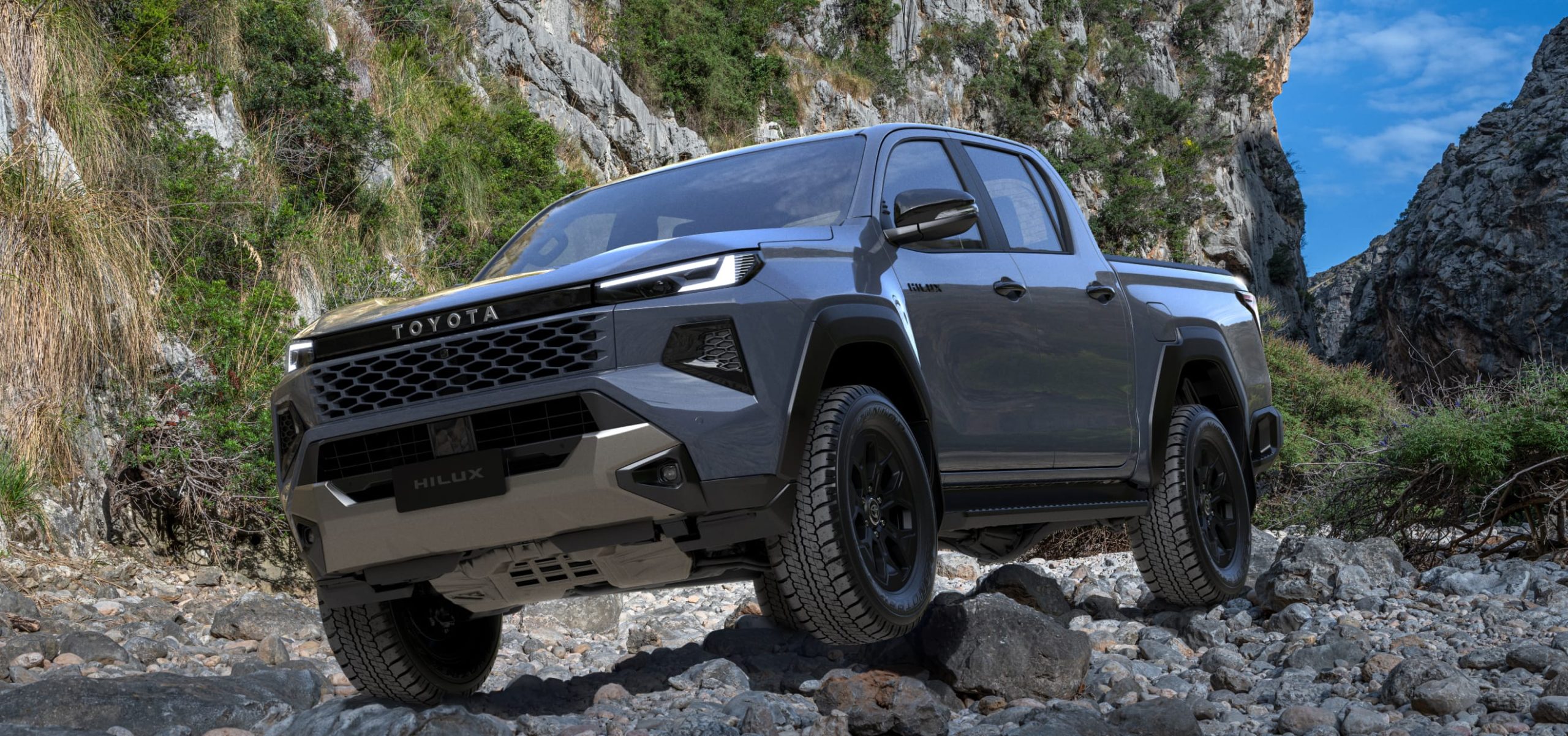
The diesel powertrain still remains, and Toyota retains the 1GD-FTV 2.8-liter turbo-diesel engine. It produces 201 hp (204 PS) and up to 500 Nm of torque when paired with a six-speed automatic transmission. Torque output is 420 Nm when equipped with a six-speed manual. The Hilux will be available in 4×2 or 4×4 configurations, with higher variants including a part-time 4WD system with rear-locking differential. A new Multi-Terrain Select system offers preset traction settings for different surfaces, including Dirt, Sand, Mud, Rock, and Deep Snow.
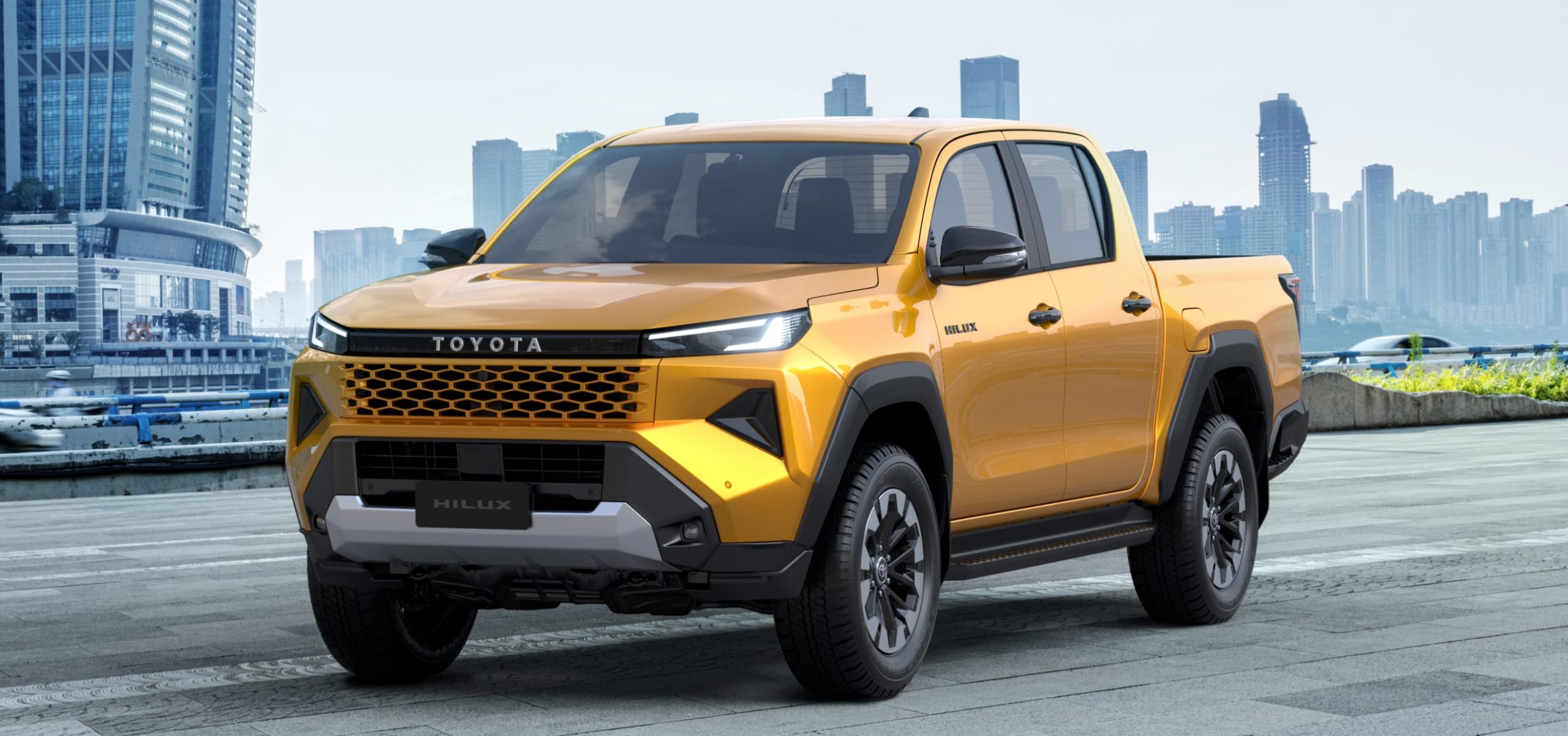
Across all variants, Toyota introduces “Dynamic Cloud,” a structural enhancement that increases the number of welding points on the cabin floor to enhance rigidity and ride comfort. New suspension dampers and hydraulic engine mounts help reduce cabin vibration. Inside, redesigned seats feature Softex leather material on higher-grade models.
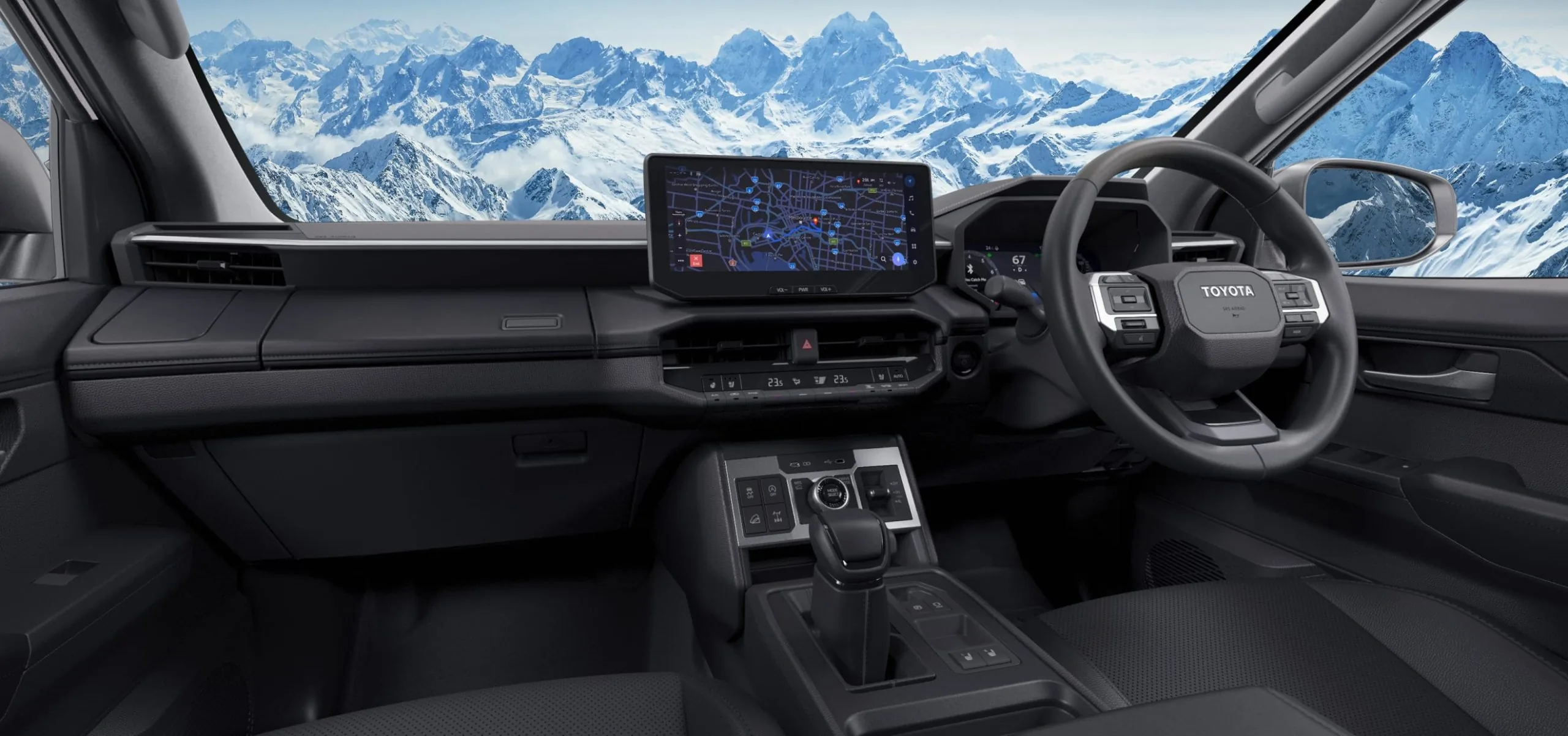
The interior represents one of the most significant updates in the Hilux’s history. The dashboard now follows the layout seen in the all-new Toyota Land Cruiser FJ and the Land Cruiser Prado, featuring a 12.3-inch touchscreen infotainment display and a 12.3-inch digital instrument cluster. The center console and cupholders have been redesigned, and depending on the variant, the truck may come with manual climate controls or digital climate control. Higher grades add dual-zone climate control, leather upholstery, power-adjustable front seats, an electronic parking brake, wireless charging, multiple USB charging ports, and an eight-speaker audio system. Drive mode selection includes Eco, Normal, and Sport.
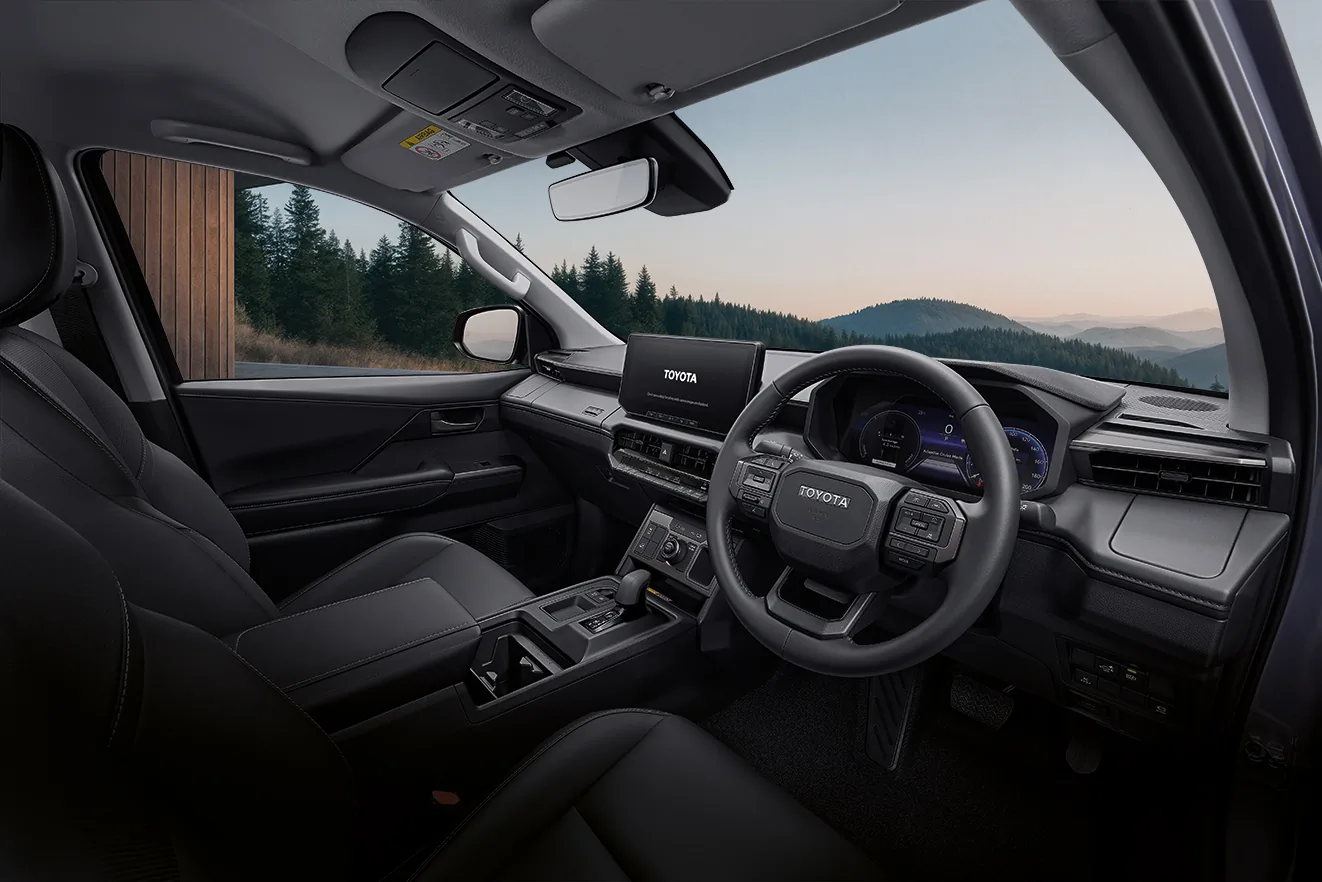
Toyota Safety Sense is available, introducing a full suite of driver assistance systems. These include blind-spot monitoring, around-view monitor, rear cross-traffic alert, pre-collision system, lane departure alert, auto high beams, hill-start assist, downhill assist control, parking sensors, trailer sway control, and parking support brake.
The all-new Hilux signals Toyota’s plan to offer different electrification paths depending on market requirements, adding an EV and eventually a hydrogen fuel cell version alongside the traditional diesel option.
The only question now is, when will the all-new Hilux launch in the Philippines, and what powertrain and variant options will we get?



0 Comments
Leave a Reply