
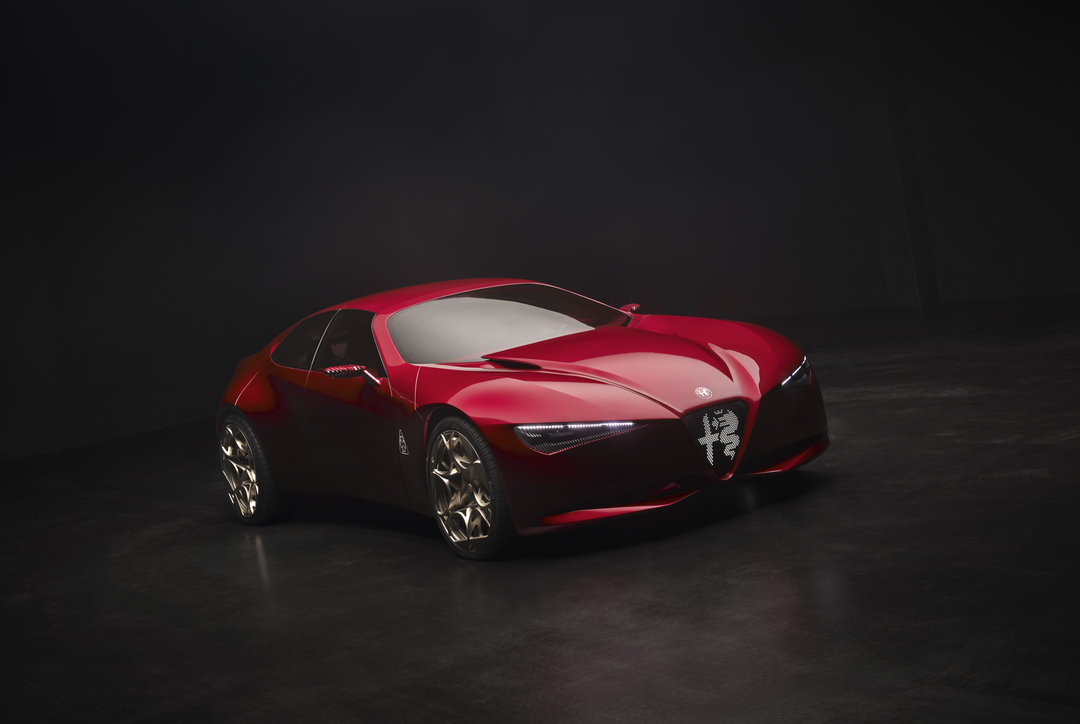
Alfa Romeo has unveiled the Cuorerosso concept car at the 2026 Paris Motor Show, where it made its worldwide debut. The company says the car is not a preview of a production model or a styling exercise. It describes it as a manifesto meant to guide future Alfa Romeo models and show how the brand will approach electrification.
Cuorerosso is built around three themes: Italian design tradition, sportiness, and the color red. Its name combines “cuore” (heart) and “rosso” (red). Alfa Romeo, founded in 1910, positions itself within Stellantis as a Premium Sports Brand. It says the design language behind the concept balances beauty, functionality, technology, and quality, and that it will carry into key market segments through flexible, multi-energy architectures. Future models could be up to 4.7 meters long and could include Quadrifoglio versions.
Santo Ficili, Alfa Romeo and Maserati CEO, stated: “Alfa Romeo has always created cars that are capable not only of moving people, but of arousing something within them. It is this human-machine connection, fueled by a unique culture of the Italian spirit, sportiness and passion, which makes each of our cars an Alfa Romeo. With Cuorerosso, we bring this identity into the future, one open to different energy solutions, in which technology, function, and quality always serve emotions and driving pleasure. This is our idea of Bellezza Necessaria: to create cars designed for those who love to drive, which can interpret their time and simultaneously become icons.”
Alfa Romeo’s design philosophy for the concept is called “Bellezza Necessaria,” a term coined by the brand. It calls for removing unnecessary elements, reducing parts to essentials, and giving each remaining component a defined function, with high-grade materials and finishes. After one to two weeks of initial sketches, the Alfa Romeo Centro Stile moved directly to three-dimensional modeling. The team treated Cuorerosso as a single solid block, without wheels, glazing, or details at the start, so designers could focus on theme, proportions, and volumes. The team progressively removed elements until the final form emerged. The result is a continuous, monolithic body with surfaces that flow along the car’s full length.
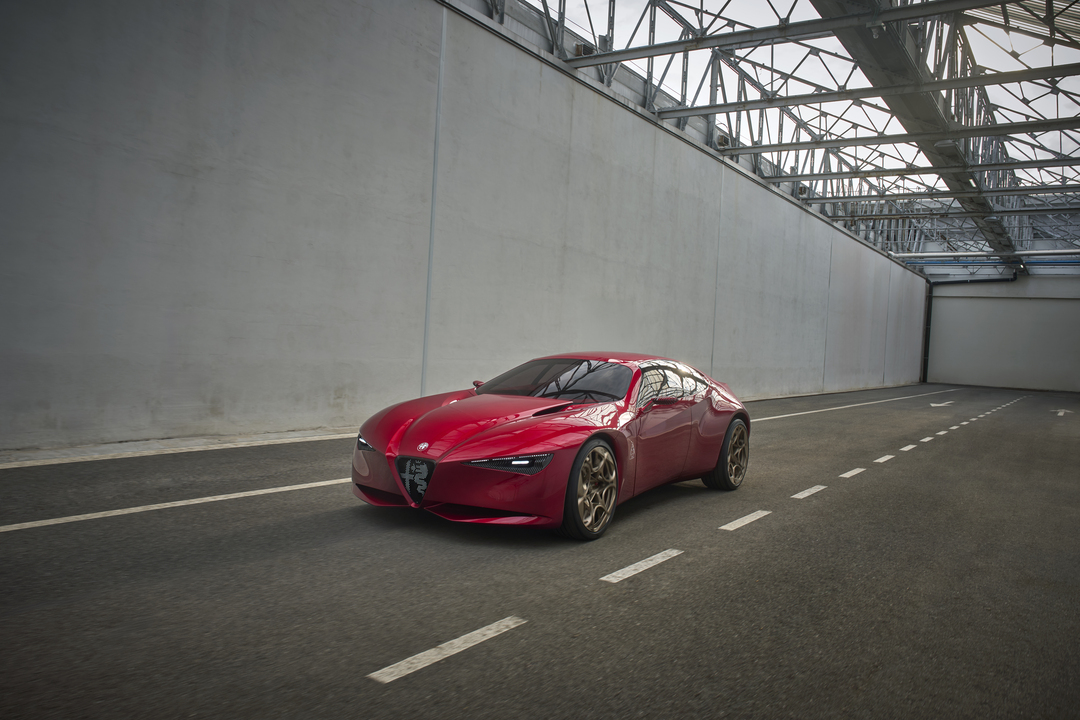
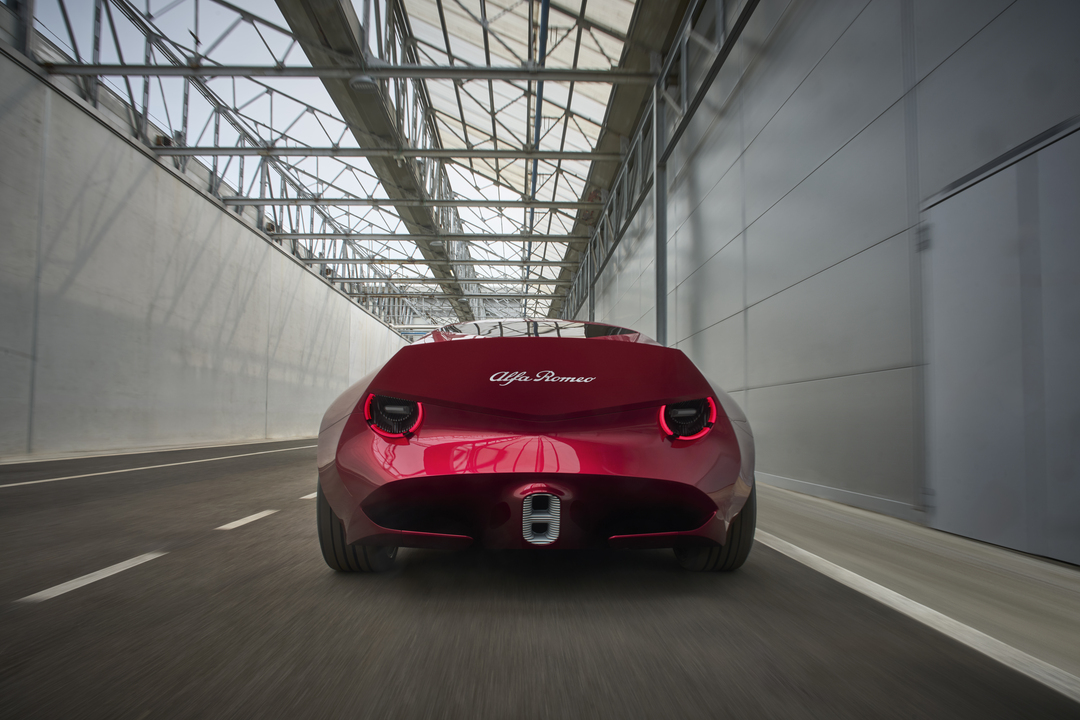
Cuorerosso is a 2+2 coupé that Alfa Romeo says blends Gran Turismo character with supercar presence. It measures 4,700 mm long, 1,980 mm wide, and 1,331 mm high, with a 2,930 mm wheelbase and weighs 1,750 kg. Alfa Romeo credits three elements for a drag coefficient (Cx) of 0.28: the uninterrupted body shape, the Coda Tronca (truncated tail), and a low diffuser integrated into the bodywork.
A wedge line runs along the side from front to rear, ending at the Coda Tronca, a nod to Alfa Romeo’s aerodynamic research history. At the front, the Trilobo and Scudetto form the car’s “face.” The Scudetto emerges from the body volume and extends along the hood, inspired by a boat’s wake. The headlights sit beside it and are described as having deliberately natural proportions, similar to a pair of eyes. The grille uses a weave of small backlit triangular elements that reference the Cross and the Biscione, and it produces a light signature that pulses like a heartbeat. The same pulse is used for the driver’s welcome light.
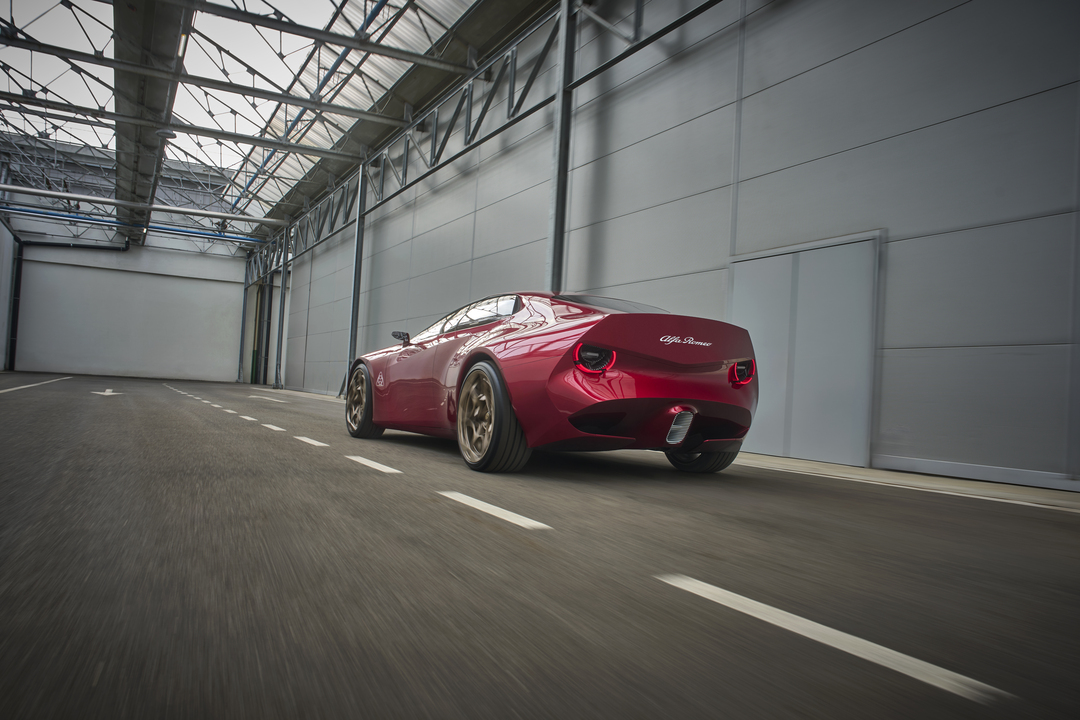
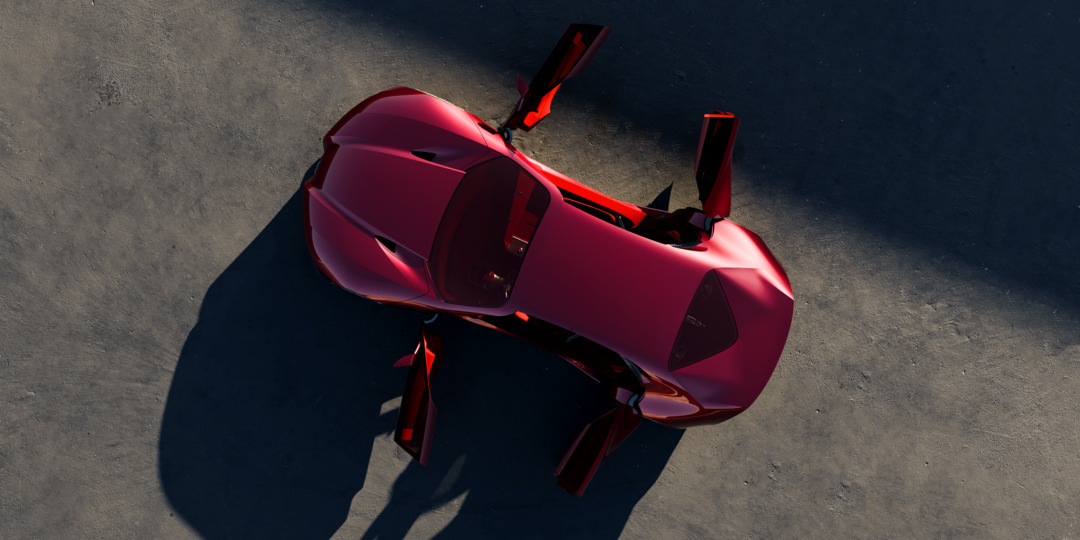
At the rear, a Scudetto-shaped rear window is integrated into the body, and the Coda Tronca holds two circular lights. Conventional door handles are removed. Doors open through a touch control on the roof, and the rear doors open facing rearward. The windows are fully flush and the logos are integrated into the bodywork. The mirrors carry inlays with the Italian flag, and their shape echoes the pattern of the aerodynamic slats used to reduce visual mass and frontal surface.
The forged wheels reinterpret Alfa Romeo’s “telephone” design with six circular elements on three spokes, arranged in a 2+2+2 scheme. Scudetto-shaped openings and triangular grooves reduce visual weight and improve aerodynamic efficiency. A titanium-inspired finish combines cool tones with warmer metallic reflections. A Quadrifoglio symbol appears on the car. For dynamics, Cuorerosso has air suspension and a Brembo carbon-ceramic braking system with Alfa Romeo-specific calipers.
Inside, four individual seats are arranged around a lengthened center console, with longitudinal volumes on the door panels. The seats reinterpret the traditional bucket seat with ergonomic shaping. The dashboard takes inspiration from the 1967 33 Stradale and its newly launched counterpart. It uses a thin, horizontal design that continues into the door panels. Controls and information are shown only when needed.
In front of the driver is the “Cannocchiale Vivente,” Alfa Romeo’s reinterpretation of its traditional instrument “telescopes” as a dynamic display with advanced kinematics. It has two configurations. “Immersivo” keeps the traditional two-element layout, while “Concentrato” merges the two telescopes into one, recalling the simple instrumentation of past racing cars. As driver engagement increases, the displayed information is reduced to essentials. Alfa Romeo says the technology could be further developed within STLA SmartCockpit, Stellantis’s digital platform.
Three driving experiences, Cruise, Sport, and Quadrifoglio, adjust how the car interacts with the driver. Steering is steer-by-wire, applied to the brand’s three-spoke wheel under a principle called “Con-tatto Volante.” Alfa Romeo says haptic and acoustic feedback from mechanical controls keeps a strong physical connection. The “Magma Display,” a control center on the central tunnel, combines a digital touch surface with a rotary dial, drive mode selector, and toggle controls.
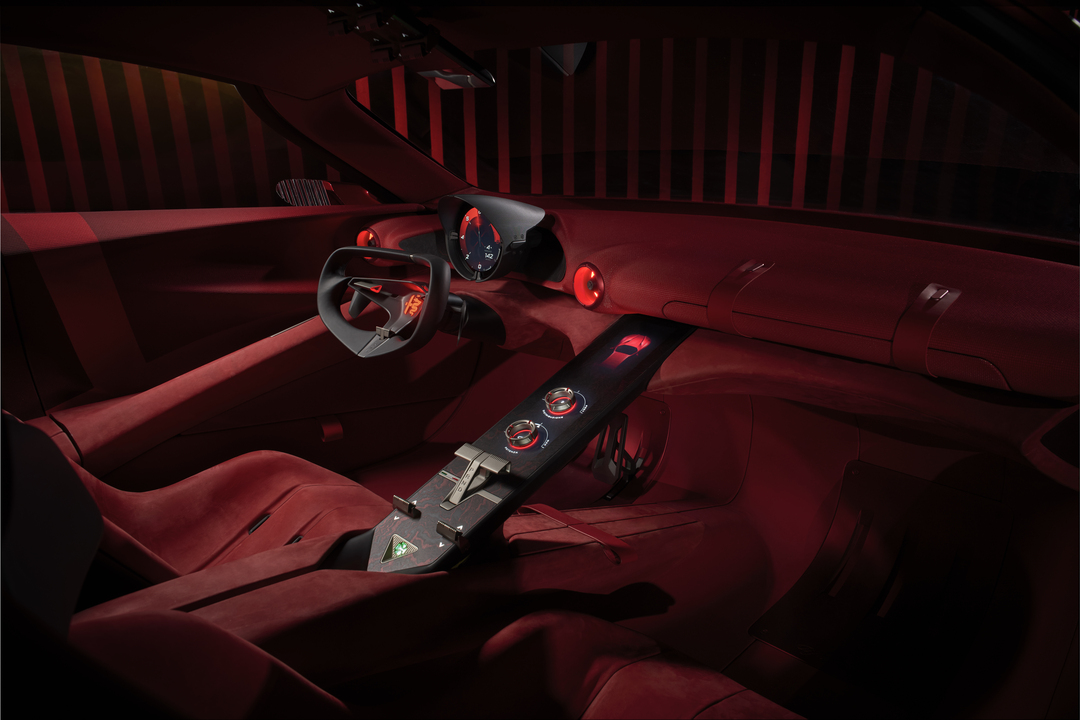
The exterior is finished in Liquid Ink Red, a new color made from a fine aluminum base and a colored transparent layer. Alfa Romeo says light penetrates and reflects from within the surface, and the color shifts to black as the viewing angle changes. Red is used inside as well, with intensity increasing toward the driver and cooling into darker shades toward the rear. Poltrona Frau nubuck, with manually applied color to create the shaded effect, is used only where occupants make direct contact. Other materials include metals in titanium, anthracite, and gunmetal shades, and a regenerated leather containing 60% post-industrial waste from premium upholstery processing.
Developed with Luna Rossa, the dashboard uses a lightweight, transparent, tensioned monofilament fabric derived from technical clothing for high-performance ocean sailing. When the center console activates, red light shows through a texture inspired by magma and lava. Alfa Romeo is also experimenting with recycled carbon fibers combined with red resins. The headrests use a complex leatherworking process previously tried on the 33 Stradale. A removable bag is built into the passenger-side dashboard, and its securing straps become its handle when you take it out of the car.
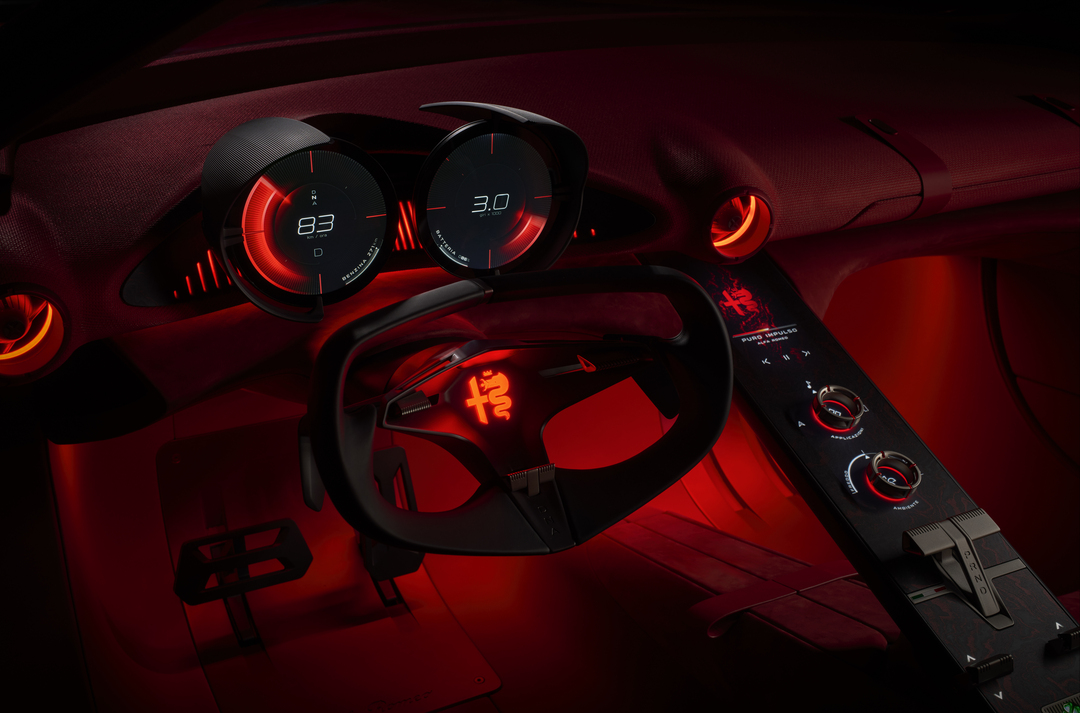
Lighting changes with the driving mode. In the Concentrato configuration, it is reduced to limit distraction. In Quadrifoglio mode, some lighting is dimmed further, and four points of light in the vents recall the Cross from the Alfa Romeo logo.
Cuorerosso previews a multi-energy approach that Alfa Romeo says could include Full-Electric, Plug-in Hybrid, Mild Hybrid, and Full-Hybrid options. For the top-performance configuration, the company points to a 2.9 V6 Full-Hybrid powertrain with Q4 all-wheel drive, a torque converter, and a carbon-fiber driveshaft. No output, battery, range, or performance figures were provided.



0 Comments
Leave a Reply