
GAC Philippines lent me an Aion V for one week, and I covered around 500 kilometers with it, mostly city driving, plus a longer run to Tagaytay. I tried its Eco, Sport, and Power Saving modes, used it for errands and traffic, and treated it like a regular daily driver.
This is not just a spec-sheet review. It is about whether the Aion V makes sense to live with, especially if you are shopping for an electric SUV in the Philippines.
Design: Conservative, but Not Boring
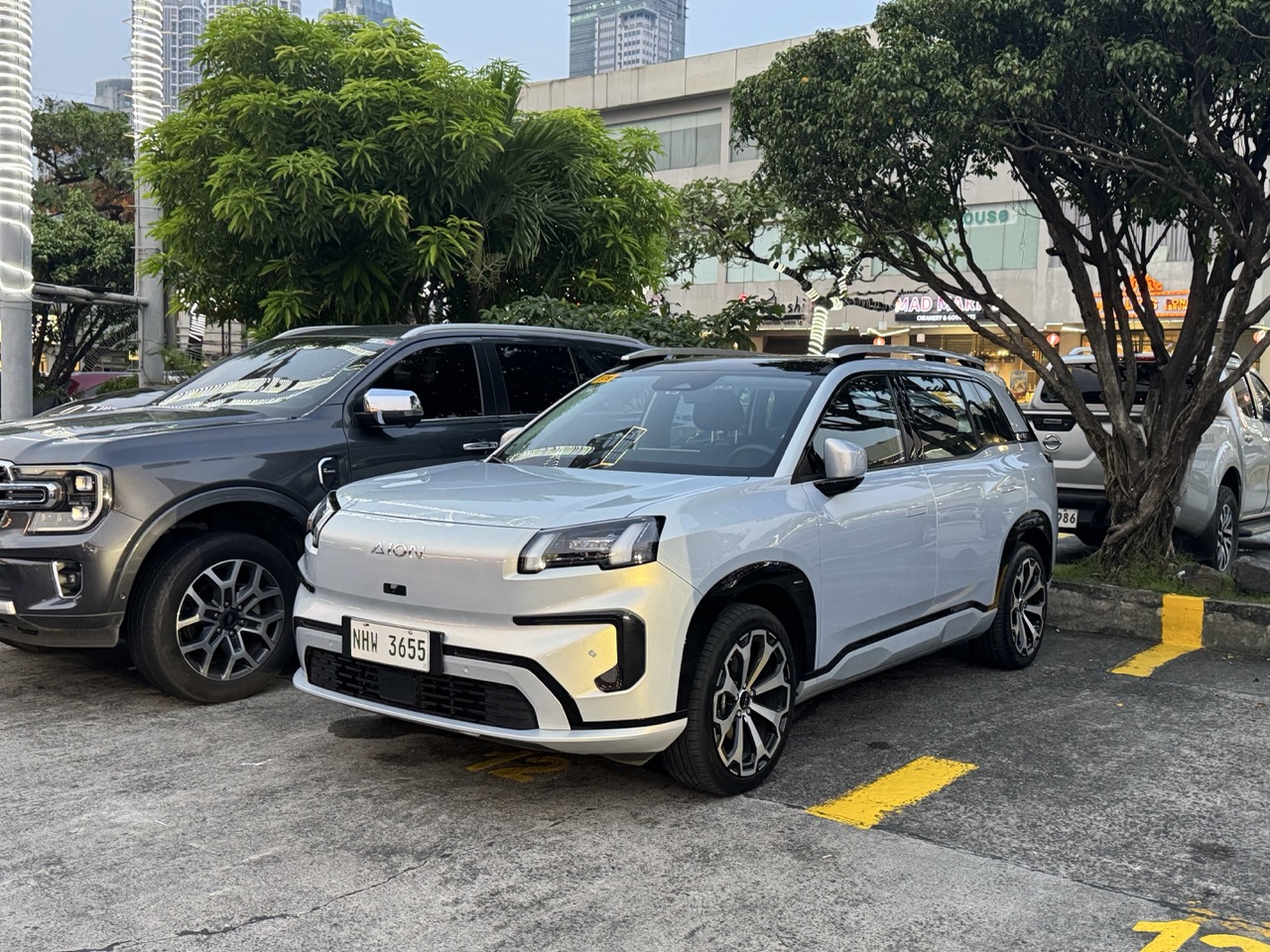
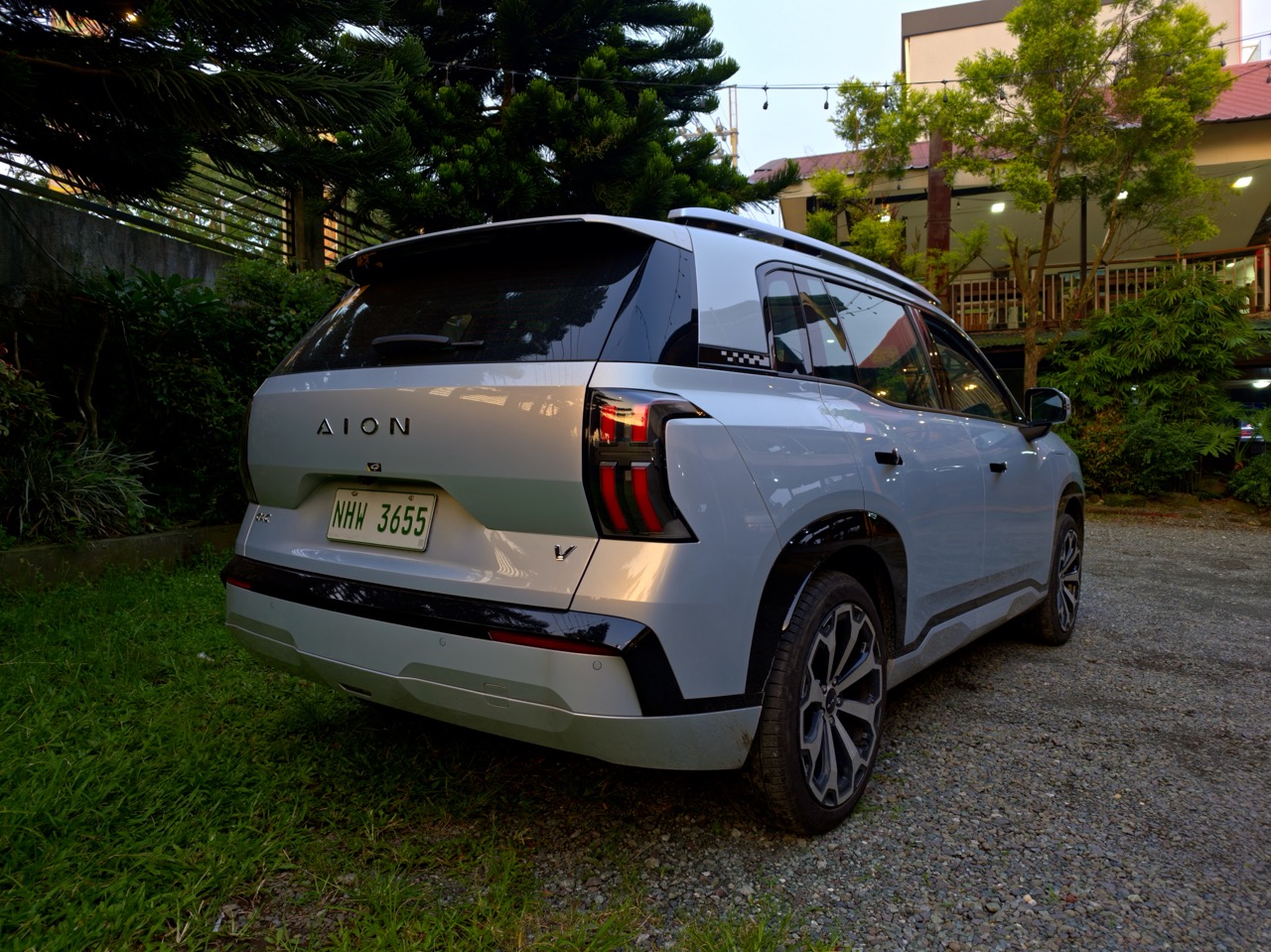
Let’s get this out of the way: the GAC Aion V is not a head-turner. Compared with some EVs that go all-in on sharp lines and futuristic lighting, the Aion V is conservative. It almost looks like a conventional gasoline SUV from a few years ago.
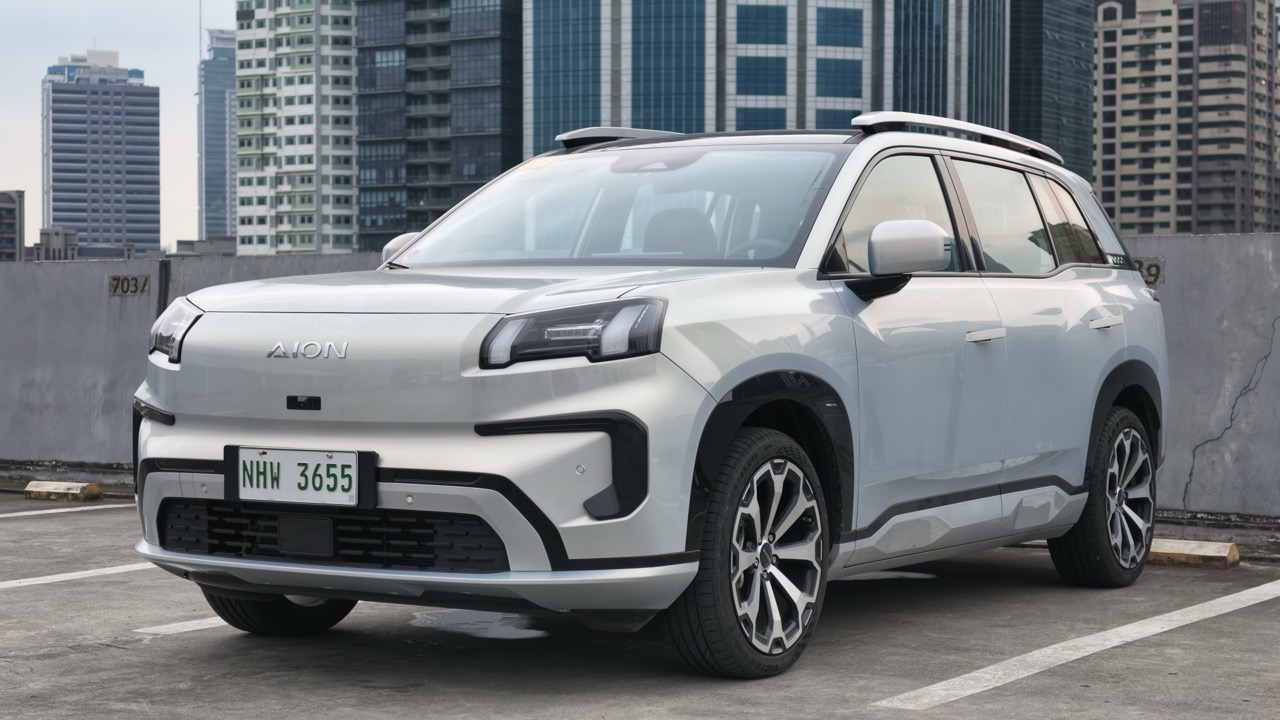
At the front, GAC calls the headlights “Cyber Dragon Claw.” The LED daytime running lights have a claw-like signature, which is unique without being overly aggressive. The sides are clean, with flush door handles that help aerodynamics, but the overall look is still fairly plain vanilla. If you are used to sharper-looking crossovers, the Aion V may feel understated.
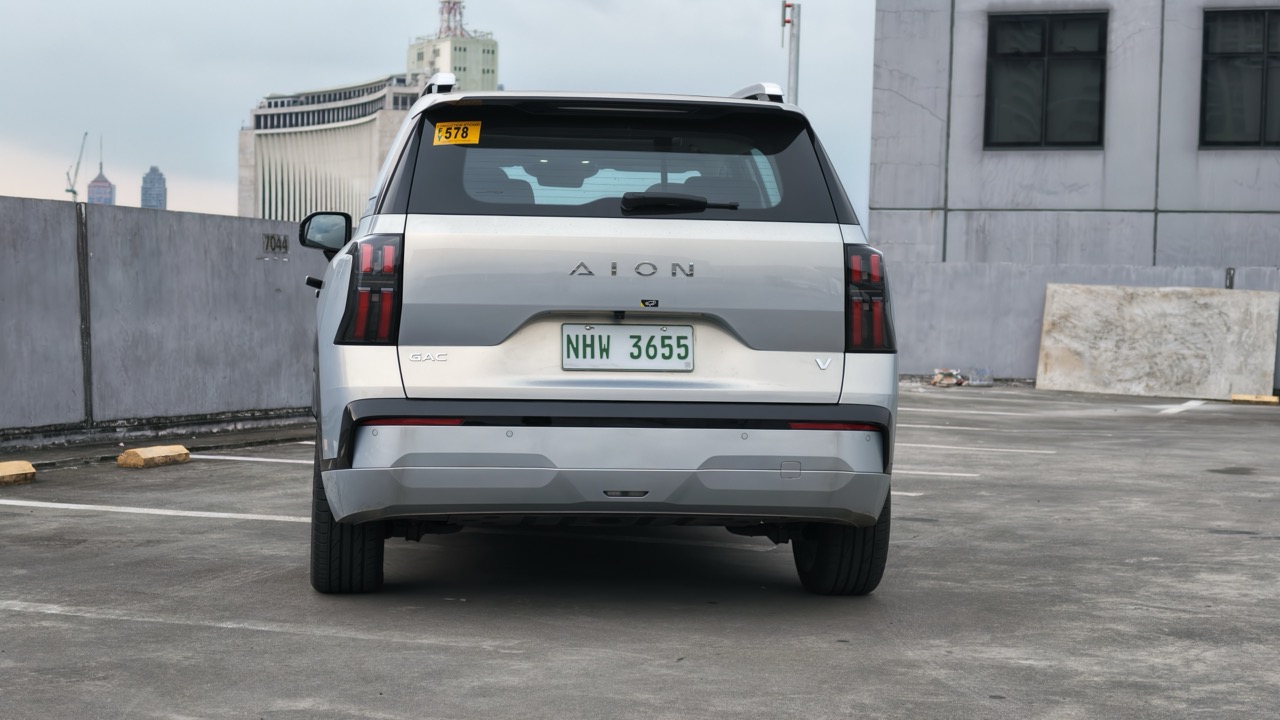
The rear taillights are full LED with a simple, clean design that matches the SUV’s low-key styling. It is not ugly; it just does not try too hard to be flashy.
The Aion V’s dimensions are:
- Length × Width × Height: 4,605 × 1,854 × 1,686 mm
- Wheelbase: 2,775 mm
- Ground clearance: 171 mm
- Turning radius: 5.6 m
That long wheelbase pays off inside, especially for second-row passengers. On the road, it feels substantial but still easy to maneuver and park in the city.
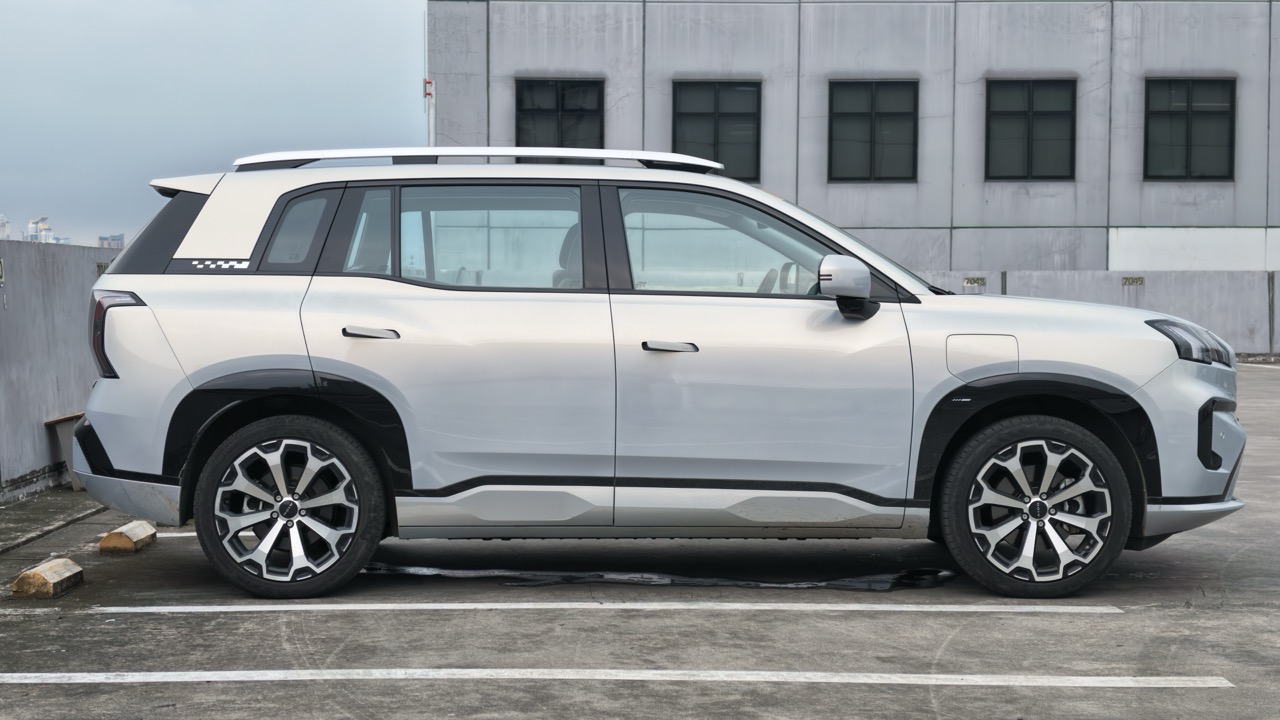
If you want an EV that makes a statement, this may not be it. But if you prefer something that does not scream for attention, the Aion V’s conservative styling works.
Interior: Where It Feels More Expensive
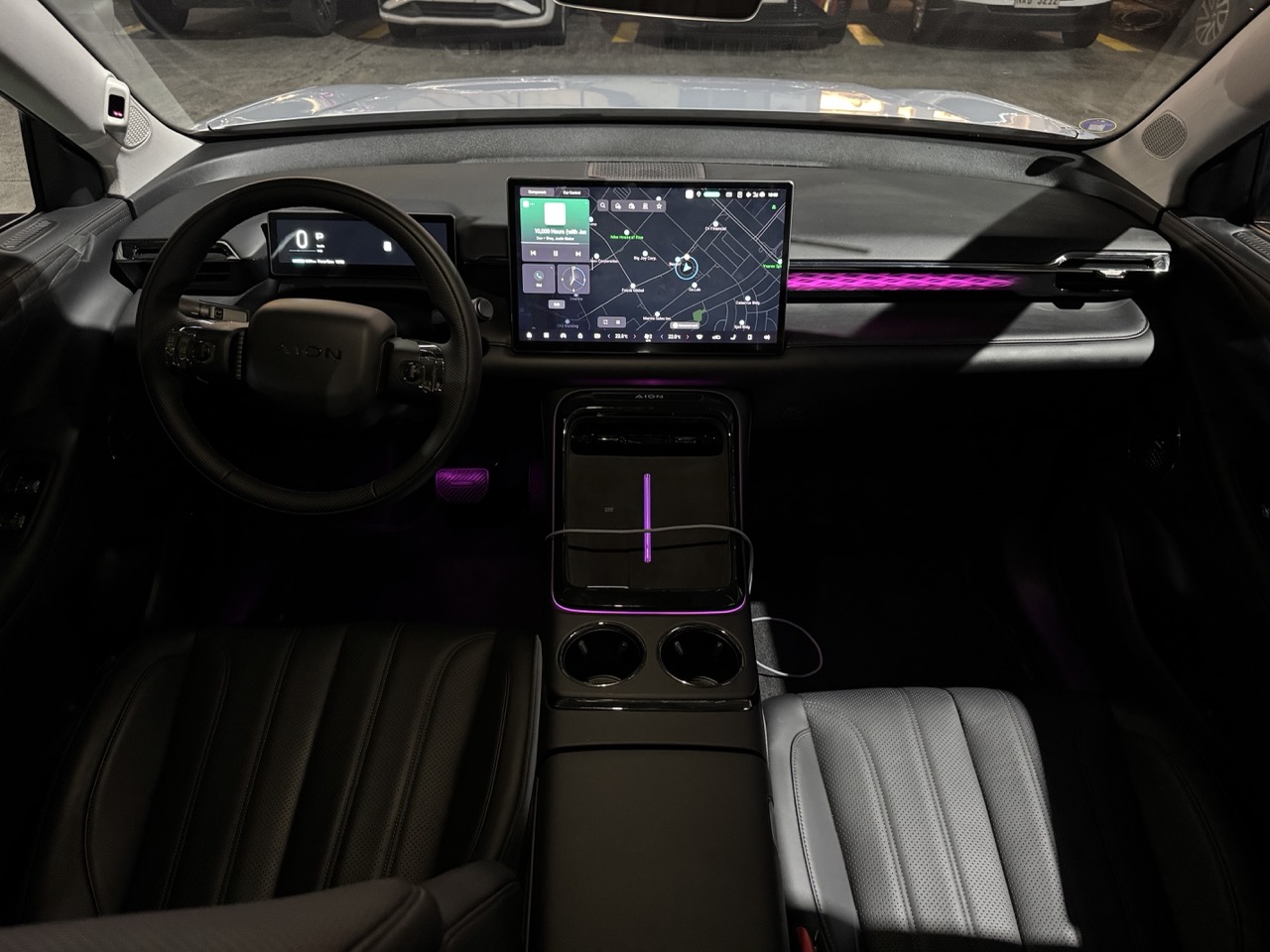
Step inside and the Aion V immediately feels more premium than its exterior suggests. The dashboard is clean, with soft-touch materials, good leather quality, and neat seat stitching. The cabin is mostly black, except for the light-colored headliner. I personally would have preferred a black headliner, but it is not a dealbreaker.
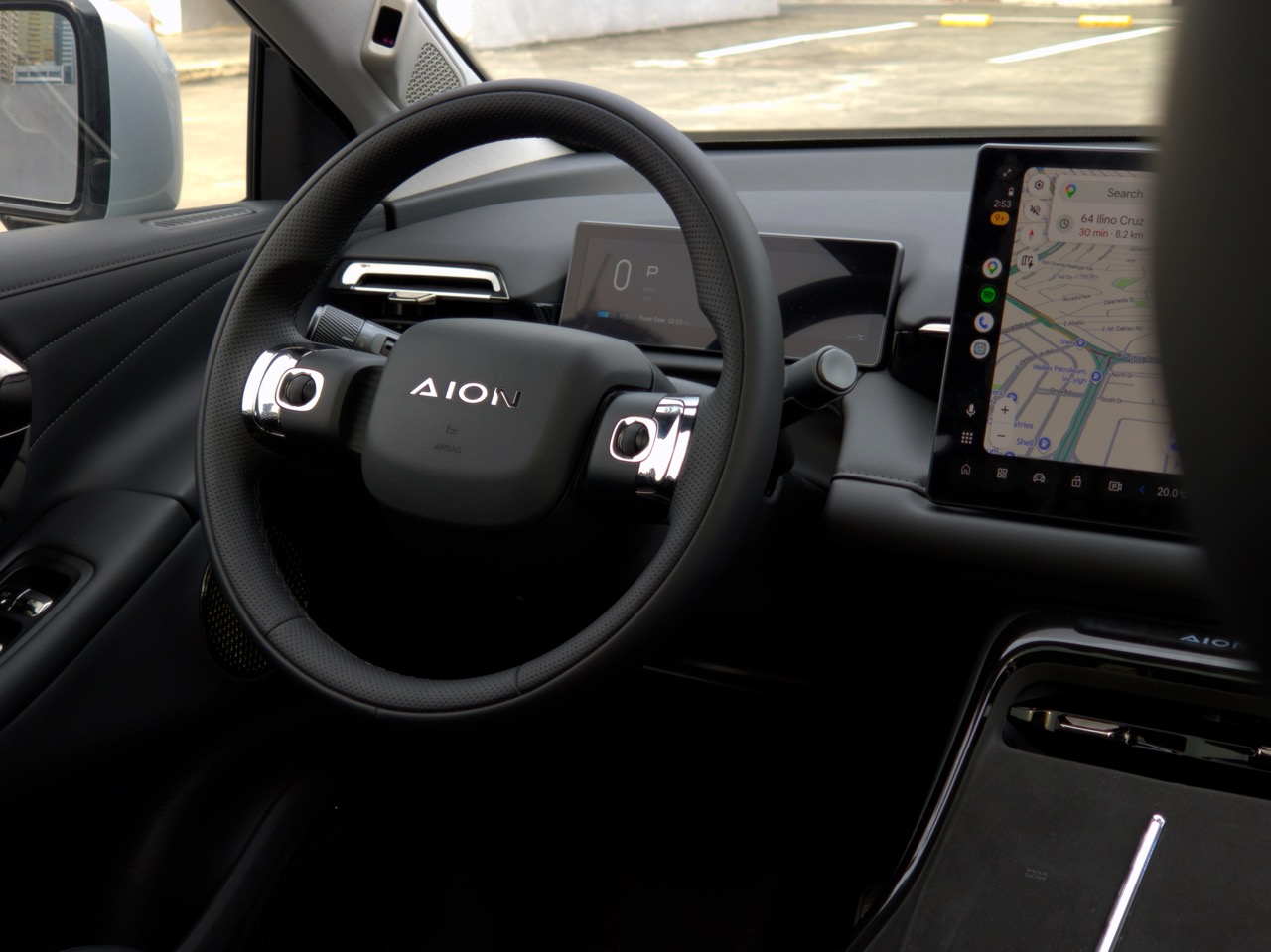
The two-spoke steering wheel is tilt- and telescopic-adjustable, though only manually. There is no head-up display, but the 8.88-inch digital instrument cluster is clear and easy to read. It shows your speed, remaining range, time, navigation, media, and driver-assist information.
The front seats are electrically adjustable for both driver and passenger. They also get heating, ventilation, and massage functions. The massage feature is a nice surprise, although it switches off after around 20 minutes. I wish it would stay on longer because it is genuinely relaxing during long drives.
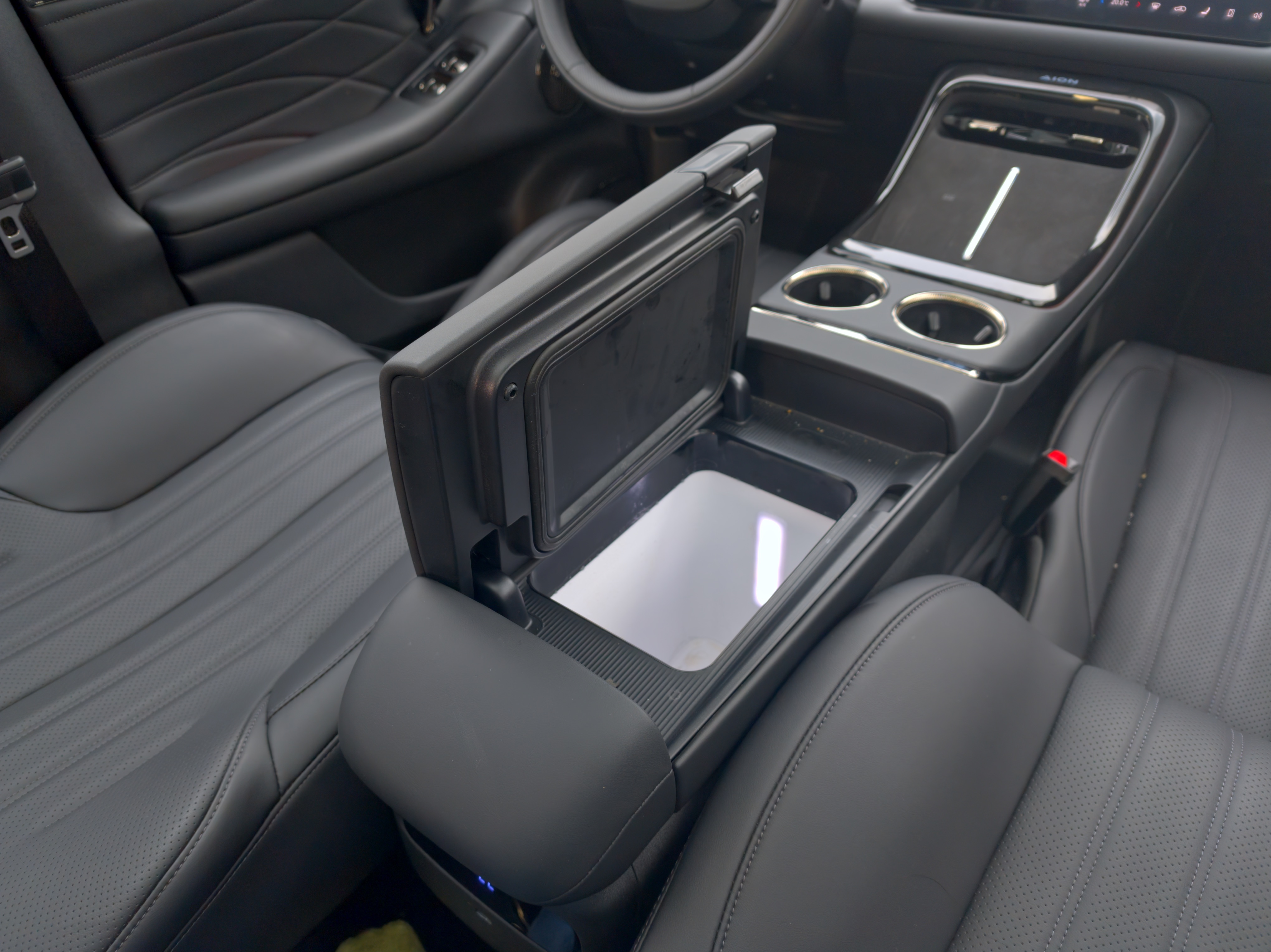
One of the most unexpected features is the center-console fridge. It can cool items down to as low as -15°C, making it useful for drinks and snacks during road trips. It can also heat items, so it is more than just a gimmick.
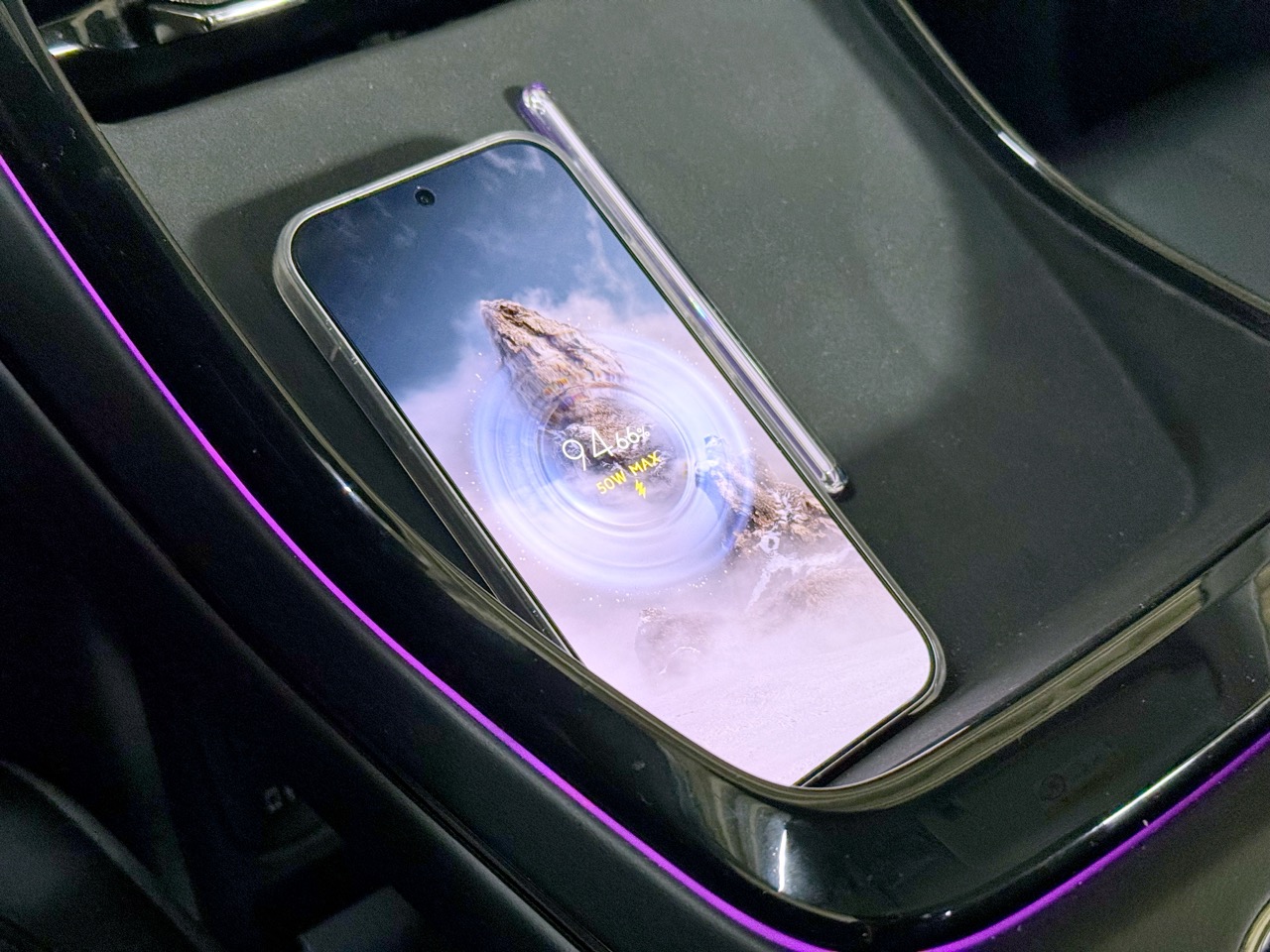
For charging, there is one 50W ventilated wireless charging pad. The second pad is not a charger, it is simply a place to rest another phone, perhaps for your front passenger.
Storage is generally good, but there are a couple of quirks. There is no glove compartment, which feels odd, while the center console can get cluttered with manuals and other items. The cupholders are also tight in diamter. It is not that they are shallow; they just don’t have enough room for larger, rigid tumblers that don’t flex.
A small but welcome detail is the illuminated vanity mirrors on the sun visors. It is a simple feature, but one that many passengers will appreciate.
Second Row and Cargo Space
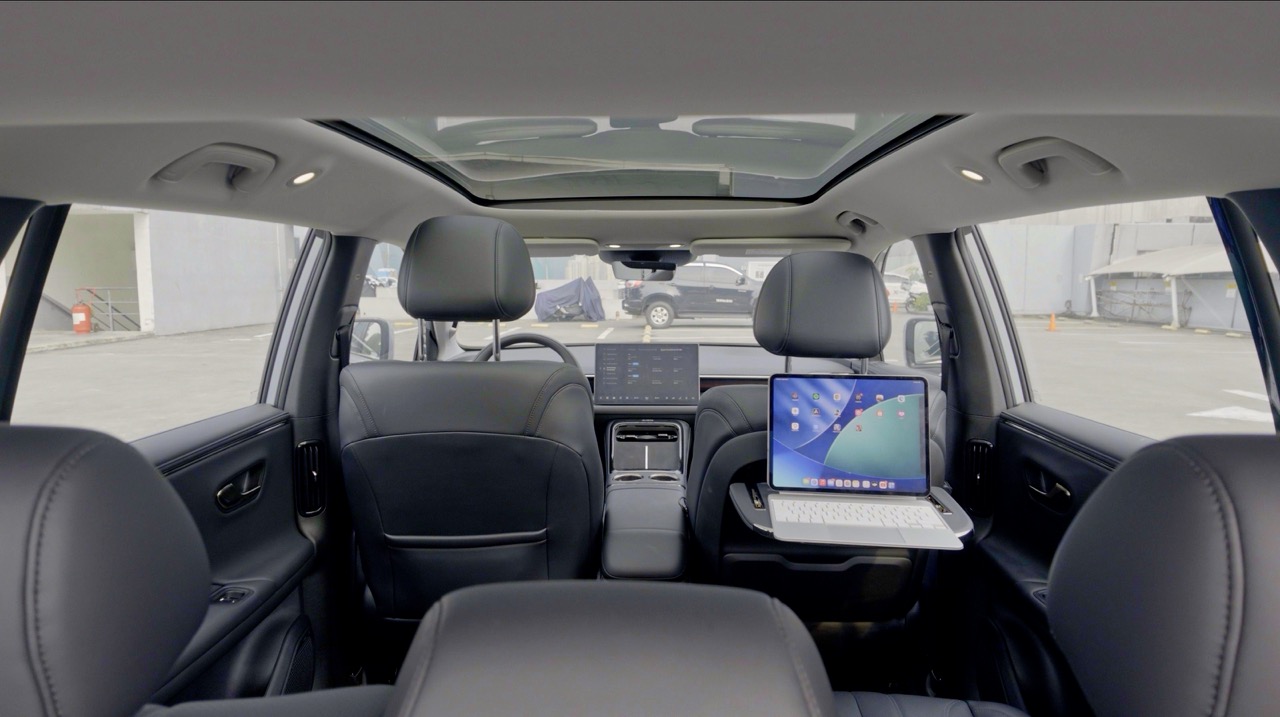
The second row is where the Aion V really surprised me. Legroom is generous, and the rear seats can recline more than what you would normally find in a compact or midsize SUV. It gives the cabin a lounge-like feel, which some people will love.
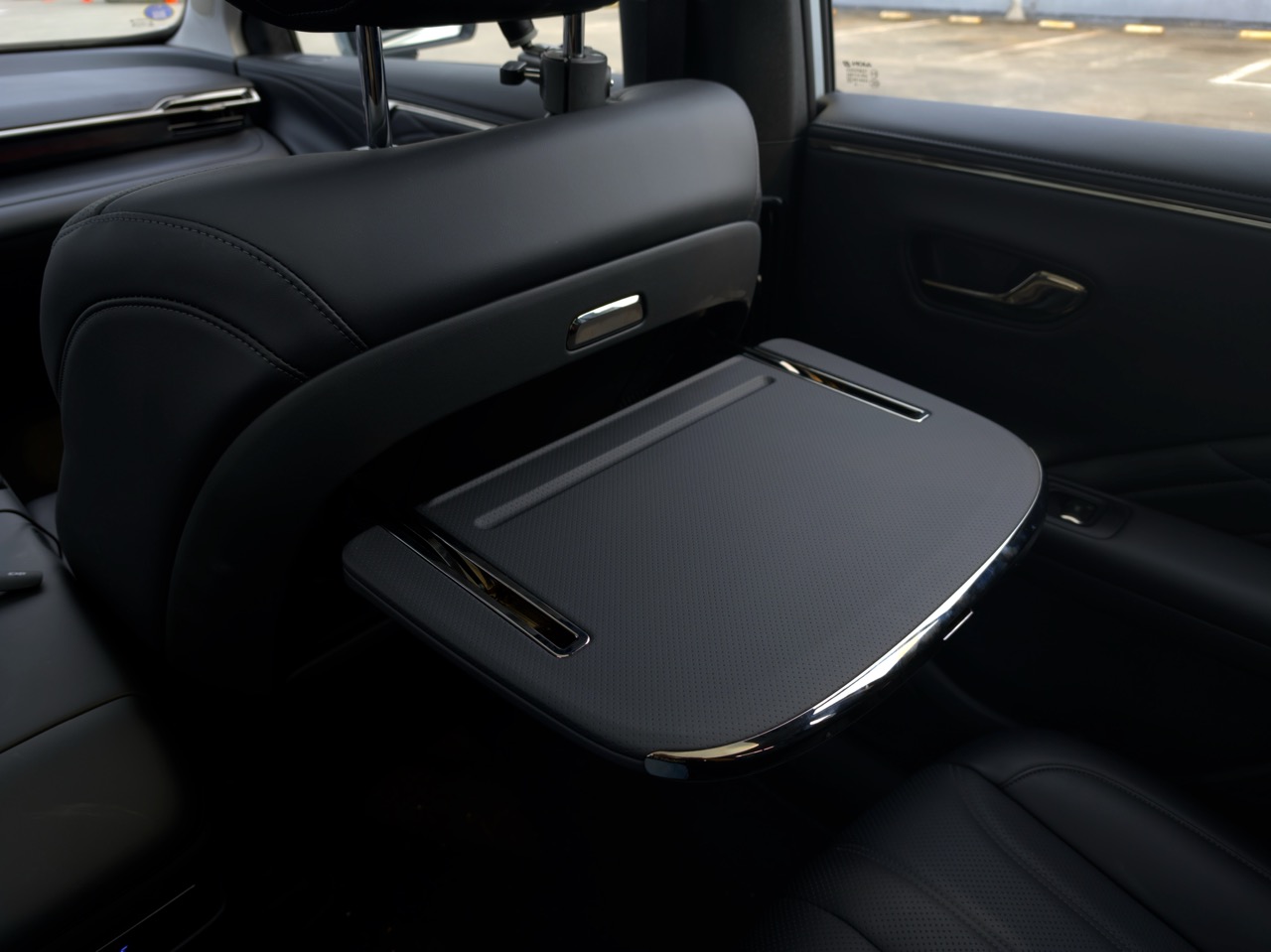
There is also a fold-down tray table behind the front passenger seat. It is useful for working on a laptop, eating, or keeping kids entertained during a trip. The panoramic glass roof adds to the airy feel, although it does not open. I actually prefer that because it reduces potential leaks and maintenance concerns.
There is a panoramic window sunshades, which are very important when you have a panoramic sunroof. It is the kind of feature you may not think about until you are driving under the harsh afternoon sun.
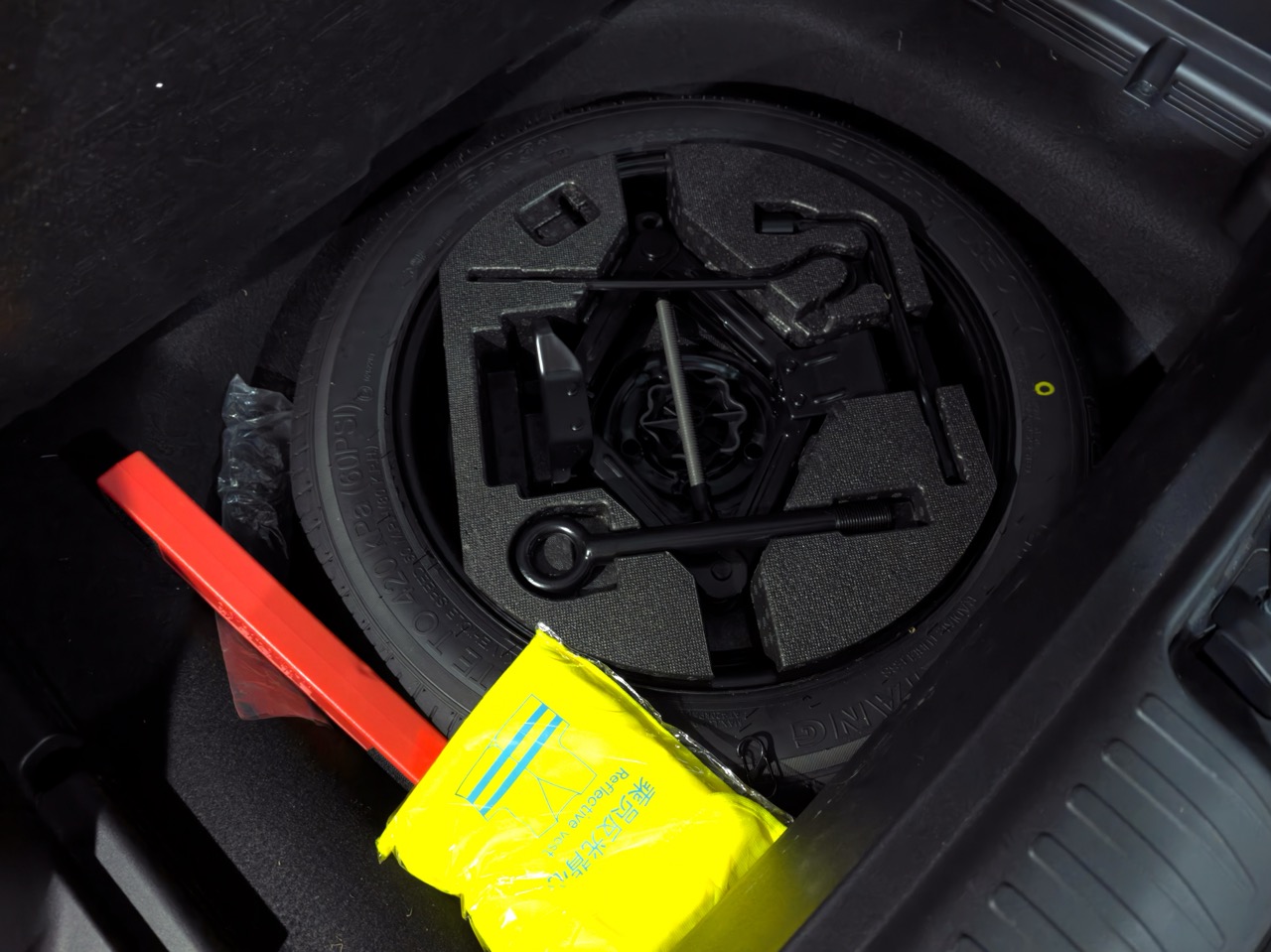
At the back, the Aion V has an electronic tailgate that can open via the infotainment or key button, and it also opens hands-free. It is convenient when you are carrying groceries or luggage. More importantly, it comes with a spare tire, something many EVs no longer include. That adds peace of mind, especially for provincial trips. It also has a 12V socket in the cargo area.
Tech and Features
The 14.6-inch central touchscreen controls almost everything in the Aion V. The interface is simpler than some other Chinese-brand systems, which I appreciate. You can adjust the side mirrors, seats, ambient lighting, ADAS settings, and more through the screen.
The sound system is decent. It is not audiophile-grade, but it is clear and usable for daily listening.
It has built-in navigation, so you do not strictly need Apple CarPlay or Android Auto. Still, I used wireless Android Auto during most of my test because it was more convenient for me.
The voice assistant activates when you say “Hello Baby.” It can control the air-conditioning, windows, sunshade, media, and other functions. It is handy when you want to keep your hands on the wheel.
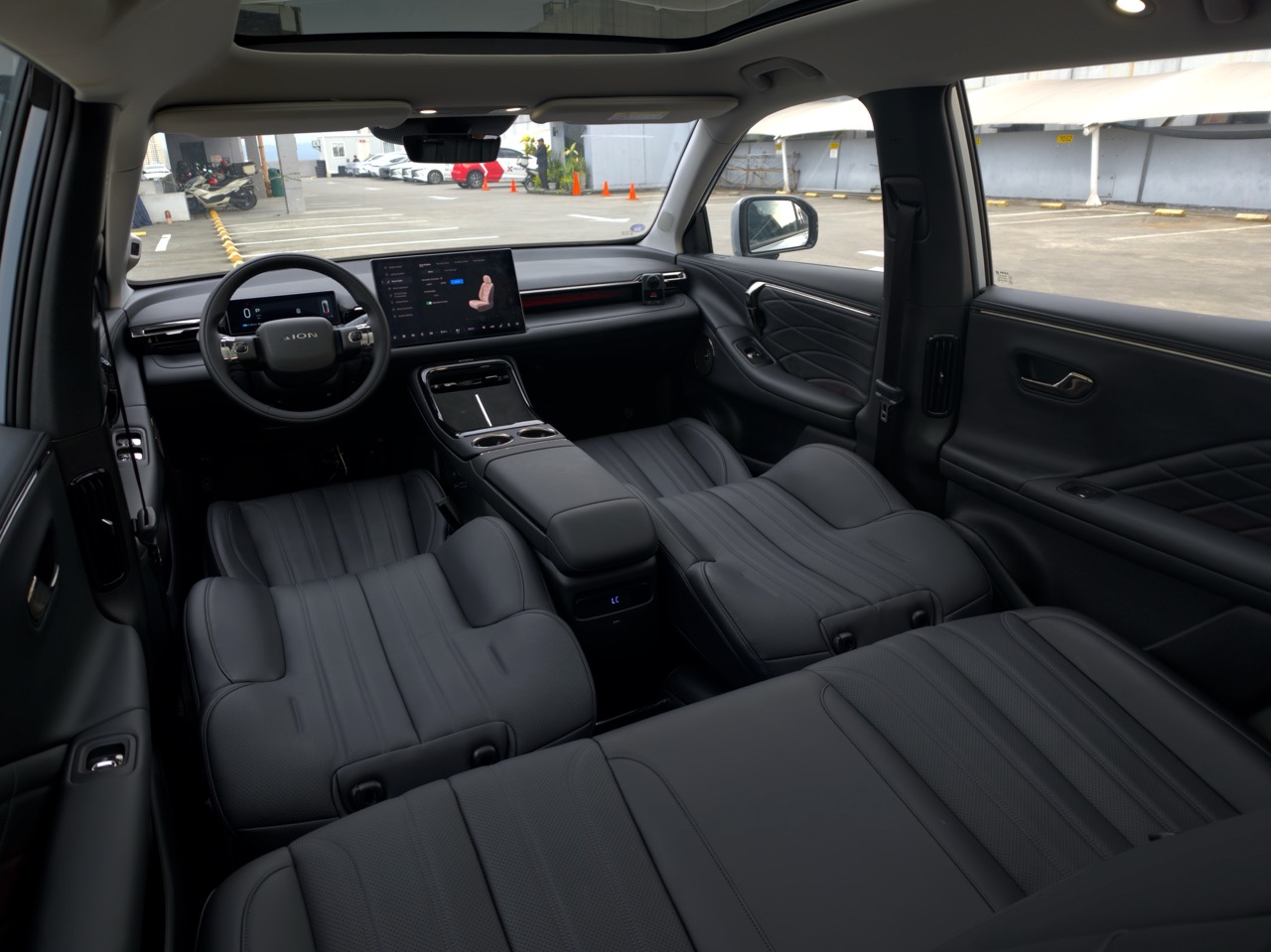
One standout feature is the Front Row Bed. Remove the front headrests, recline the front seats fully, and you get a near-flat lounge space that extends toward the second row. It is not exactly a queen-size bed, but there is enough space to take a nap or relax with the air-conditioning on.
The ADAS suite is one of the Aion V’s better surprises. On the highway, I found the lane keep assist genuinely trustworthy. It keeps the vehicle centered in its lane instead of drifting toward one side, which matters on Philippine roads where lane discipline and road conditions can vary.
It also works well in stop-and-go traffic. The adaptive cruise control and lane-keeping functions handle crawling traffic smoothly, reducing fatigue during rush hour. It is not a full self-driving system, but for its price, it is one of the more polished ADAS implementations I have tried in this segment.
Driving Impressions: Its Biggest Strength
This is where the Aion V excels the most. On paper, the numbers are decent. Behind the wheel, it feels like a real car, not just a gadget with four wheels.
I spent most of my time in Power Saving mode. Power delivery is smooth, and the regenerative braking makes city driving less tiring. It has a semi-single-pedal feel, but it is not overly aggressive. Coming from smaller cars, I appreciated that the steering has a natural weight to it and the throttle response is linear.
The brakes also feel predictable. Some EVs can feel grabby or overly sensitive, but the Aion V is easy to modulate. That makes it beginner-friendly without feeling dull for experienced drivers.
The suspension is comfortable without being overly soft. It absorbs road imperfections well, and the overall noise, vibration, and harshness levels are impressive. Road noise is minimal, although I did notice some tire noise on certain surfaces. The stock tires are eco-focused, so switching to a better set could improve refinement and grip.
After around 500 kilometers, my biggest takeaway is that the Aion V feels more like a comfortable, well-sorted SUV than a tech-heavy EV. You need to drive it to appreciate it.
Range and Charging
The Premium variant I tested comes with a 75.26 kWh LFP battery and a claimed range of 602 km under the NEDC cycle. During my one-week test, I only needed to charge once using the portable charger.
I did not experience range anxiety, even with mostly city driving and a longer run to Tagaytay. The large battery capacity is one of the Aion V’s biggest advantages in its price bracket.

For charging, the Aion V supports 6.6 kW AC charging and up to 180 kW DC fast charging. It also has V2L, or vehicle-to-load, so you can use the car’s battery to power compatible devices.
Price and Value
The GAC Aion V starts at around ₱1.498 million for the base variant, while the Premium variant I tested is priced at around ₱1.698 million.
Considering the space, features, battery capacity, and driving experience, it offers excellent value, especially if you do not care about flashy exterior styling. It has features you will actually use, such as massage seats, a fridge, reclining rear seats, electronic sunshades, and a spare tire. It also has features you may not have expected, like the Front Row Bed.
Final Thoughts
The GAC Aion V is a classic case of “don’t judge a book by its cover.” It may not win beauty contests, but it delivers where it matters: comfort, practicality, technology, range, and driving refinement.
Buy it if you want:
- A spacious and comfortable family EV
- A smooth, quiet daily driver
- Long real-world range
- Useful features such as massage seats, a fridge, and ADAS that works on Philippine highways
Skip it if you want:
- A futuristic, head-turning design
- Sporty handling above all else
- A minimalist cabin with physical controls
If you can accept its conservative looks, the GAC Aion V is one of the most compelling electric SUVs in its price range today.
For full specs of the GAC Aion V, you can click GAC Aion V specs

0 Comments
Leave a Reply