
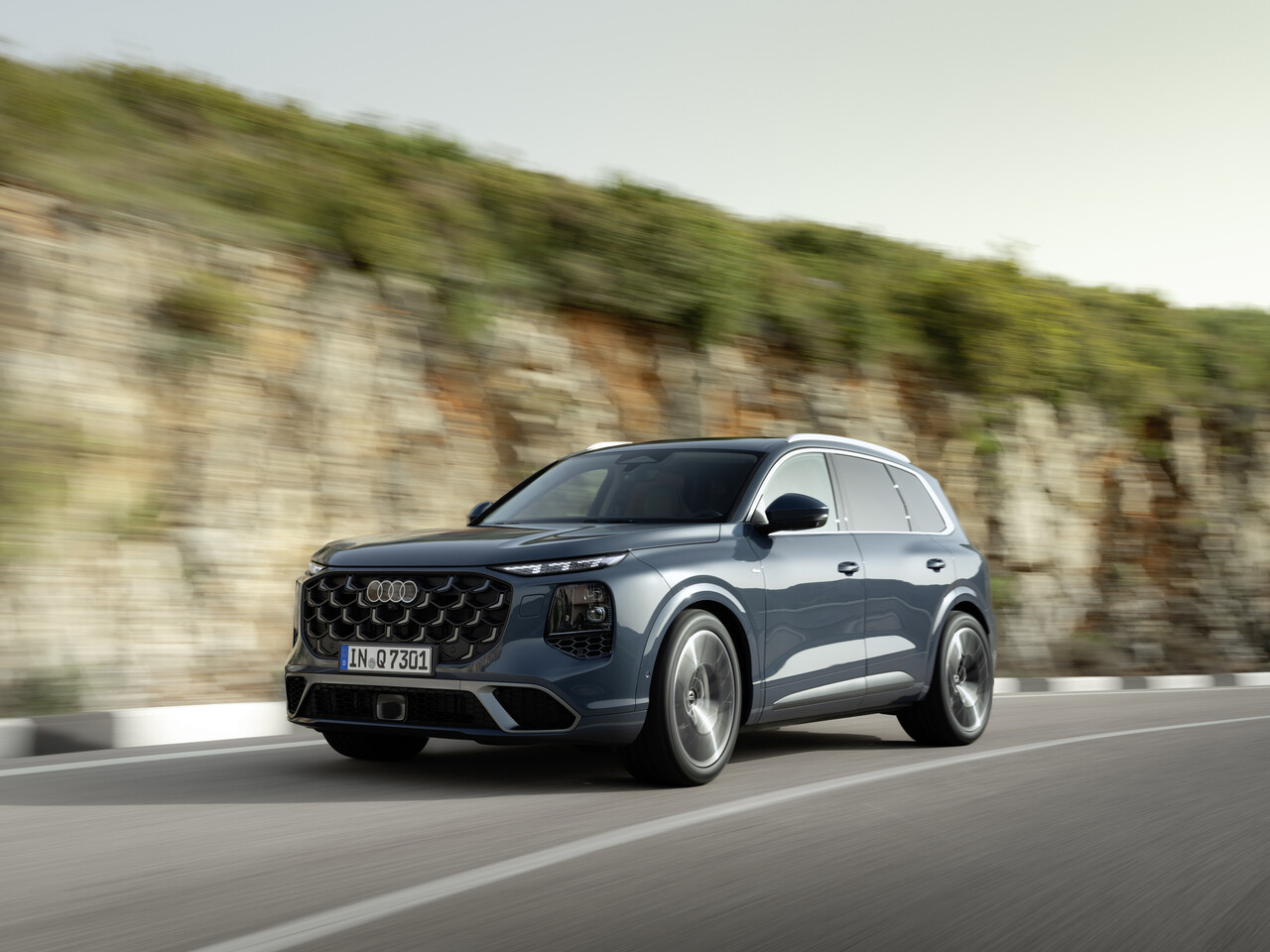
Audi has introduced the third generation of its Q7 large SUV, bringing updates across its powertrain, interior, safety systems, and lighting technology. The new model retains the Q7’s signature proportions but adds new seating configurations, revised driver assistance features, and a redesigned exterior.
Related: 2025 Audi Q5 unveiled–Features more tech and electrification
The new Q7 carries over the muscular look of its predecessor with some updates. The four-ring badge and hood sit higher than before, giving the front a larger appearance. The Singleframe grille is flanked by redesigned air intakes, and digital daytime running lights come paired with optional digital Matrix LED headlights. An illuminated Singleframe is available as an option. The shoulder line runs upward toward a more upright D-pillar, which Audi says creates a near-horizontal roofline and more interior headroom. The S line exterior package is available as an option alongside the standard premium advanced trim.
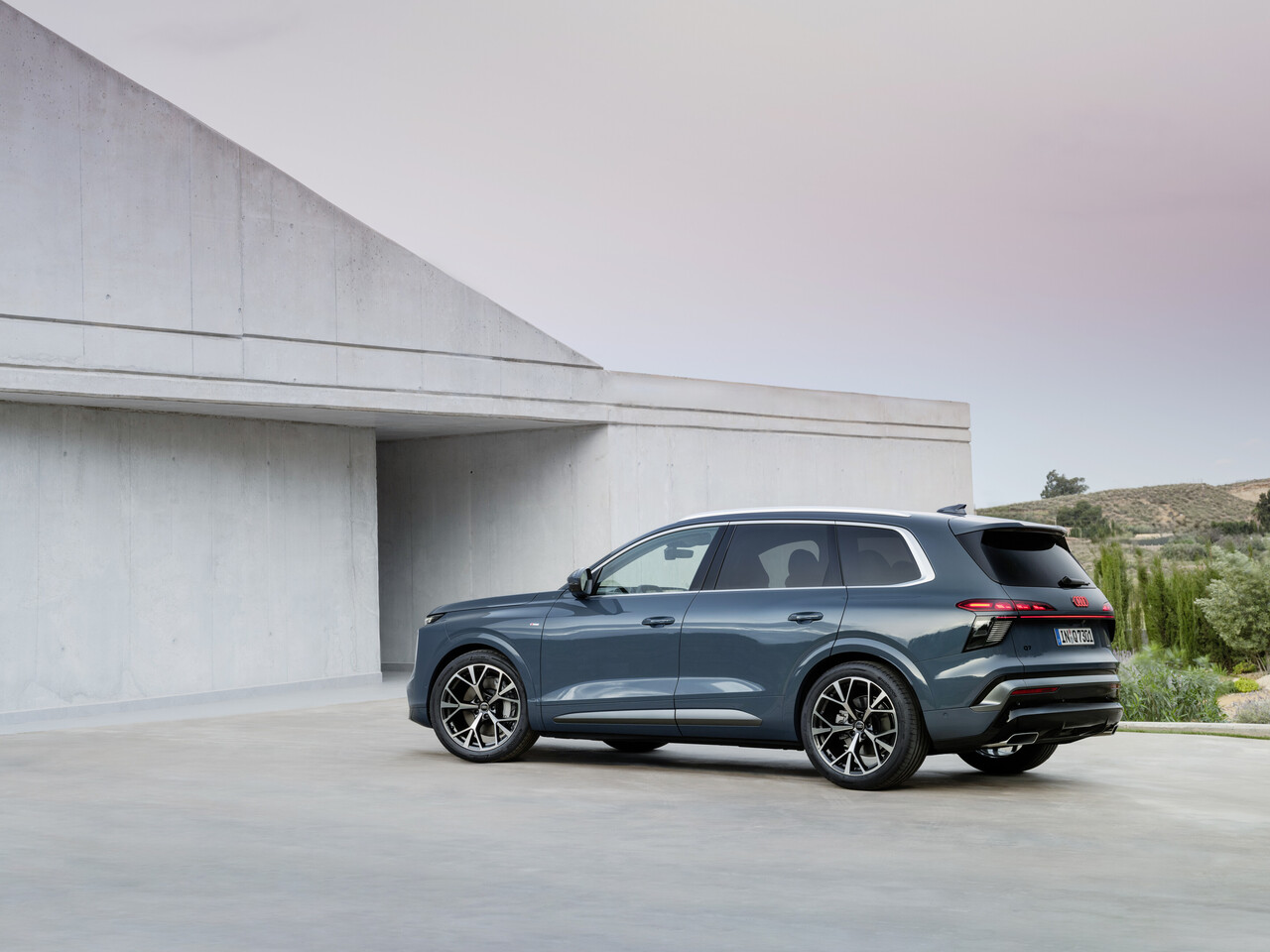
At the rear, third-generation digital OLED taillights and a full-width light strip are offered as options. The rear bumper integrates a diffuser and matching tailpipes.
For the first time, optional automatic doors are available. The doors use surround sensors to detect obstacles and stop from opening if a full opening is not possible. An electric soft-close mechanism is also included, and the doors can be operated remotely via the myAudi app.
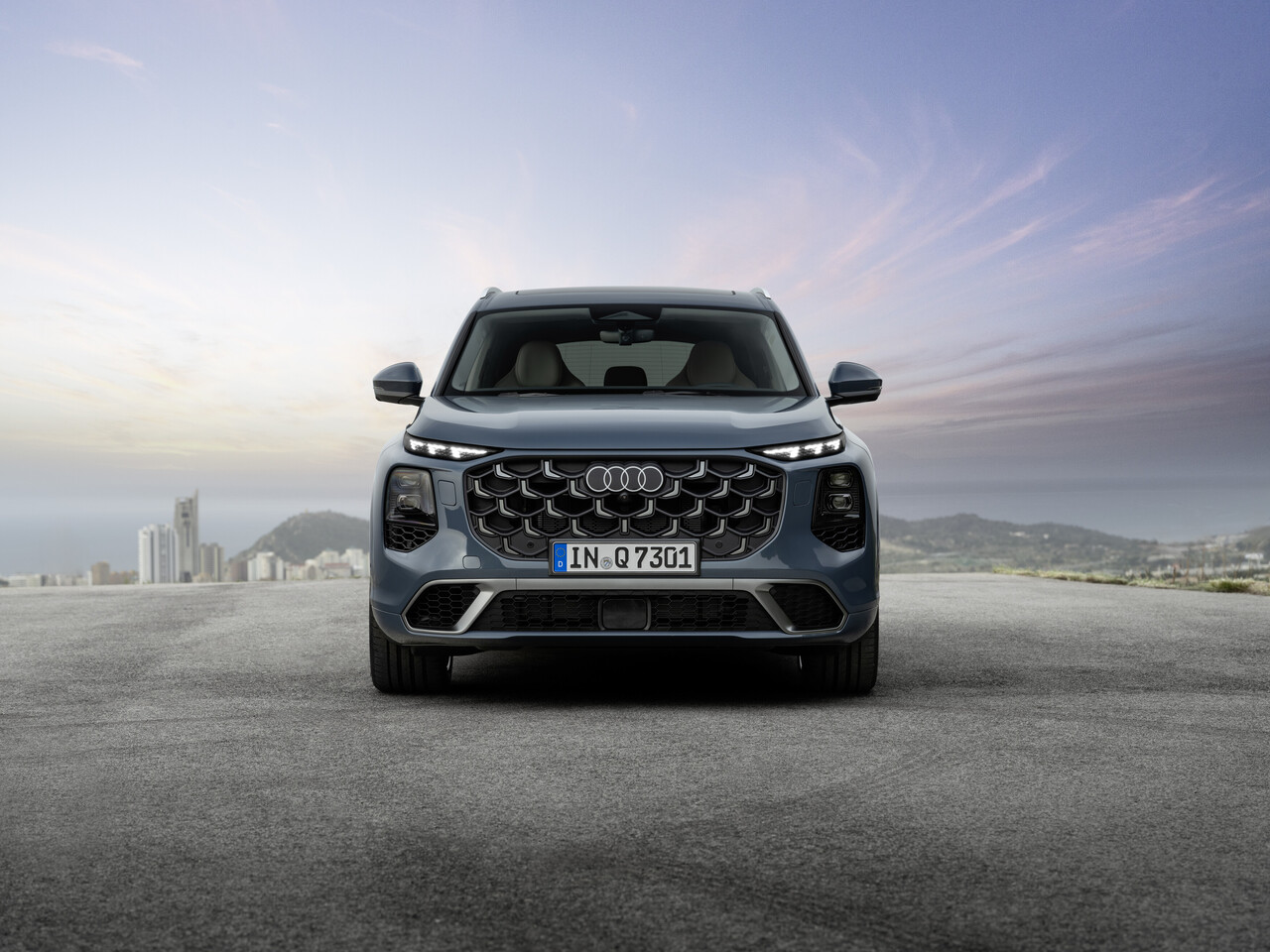
The Q7’s optional digital Matrix LED headlights use micro-LED modules that project high-resolution light patterns for adaptive light distribution. Lane guidance and orientation lights relay information from the assistance systems directly into the driver’s line of sight ahead of the vehicle.
Audi describes the advanced turn signal as a world first. At night, when the low beams are on, and a turn signal or hazard lights are activated, a stylized turn signal is projected onto the ground in sync with the front and rear blinkers — intended to alert cyclists and pedestrians to an upcoming lane change or turn.
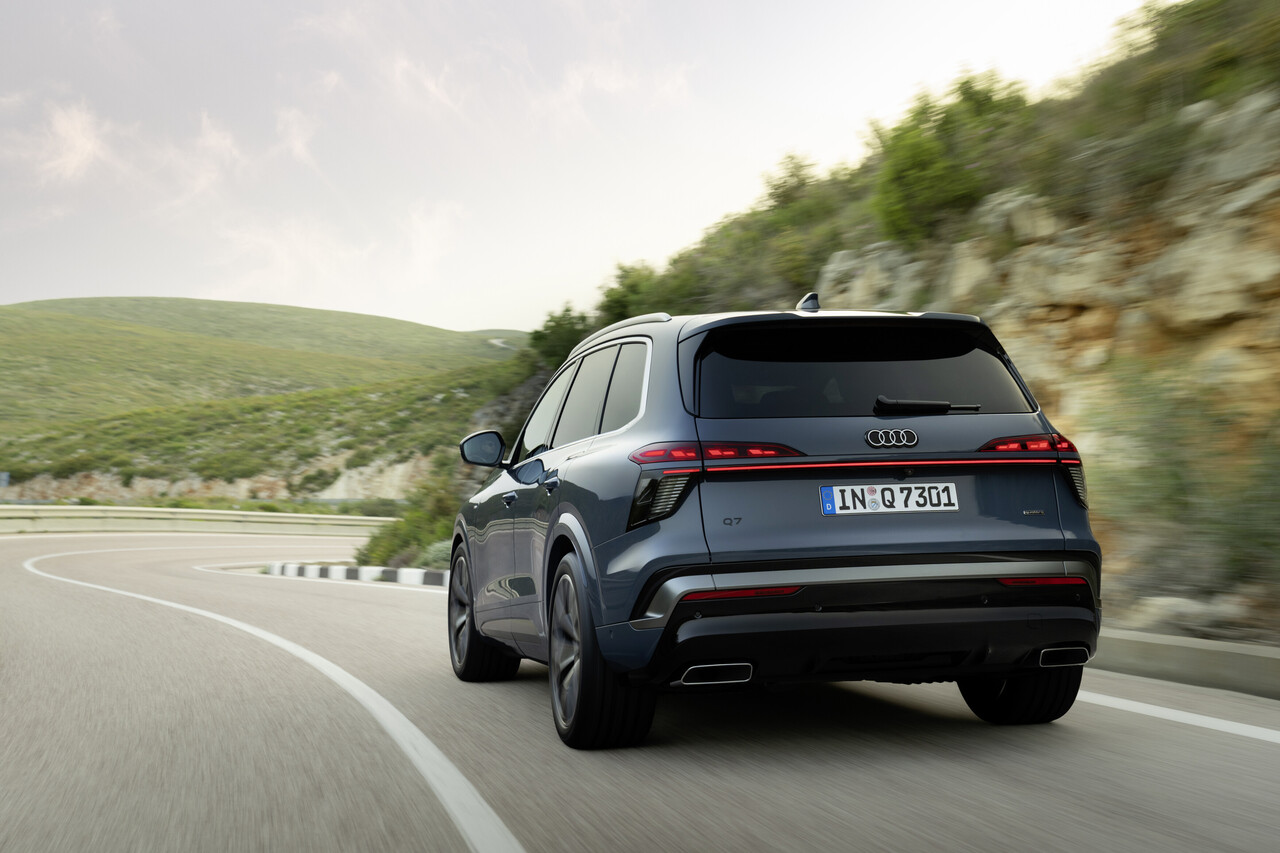
The third-generation digital OLED rear lights can switch to a warning signature in critical situations to alert following traffic. The communication light also activates during automated parking maneuvers or when another vehicle comes too close to the Q7 while it is stationary.
A new door projection light uses LED modules in the door sills to cast a white rhombus on the ground when doors are opened. If the exit warning system detects an approaching cyclist or vehicle, the same projection is cast next to the door as a warning.
The Q7 now comes in three seating configurations: five seats standard, with six or seven seats available as options. The six-seat layout uses two individual seats in the second row and two seats in the third row. The seven-seat layout accommodates three child seats in the second row. All seats are electrically adjustable.
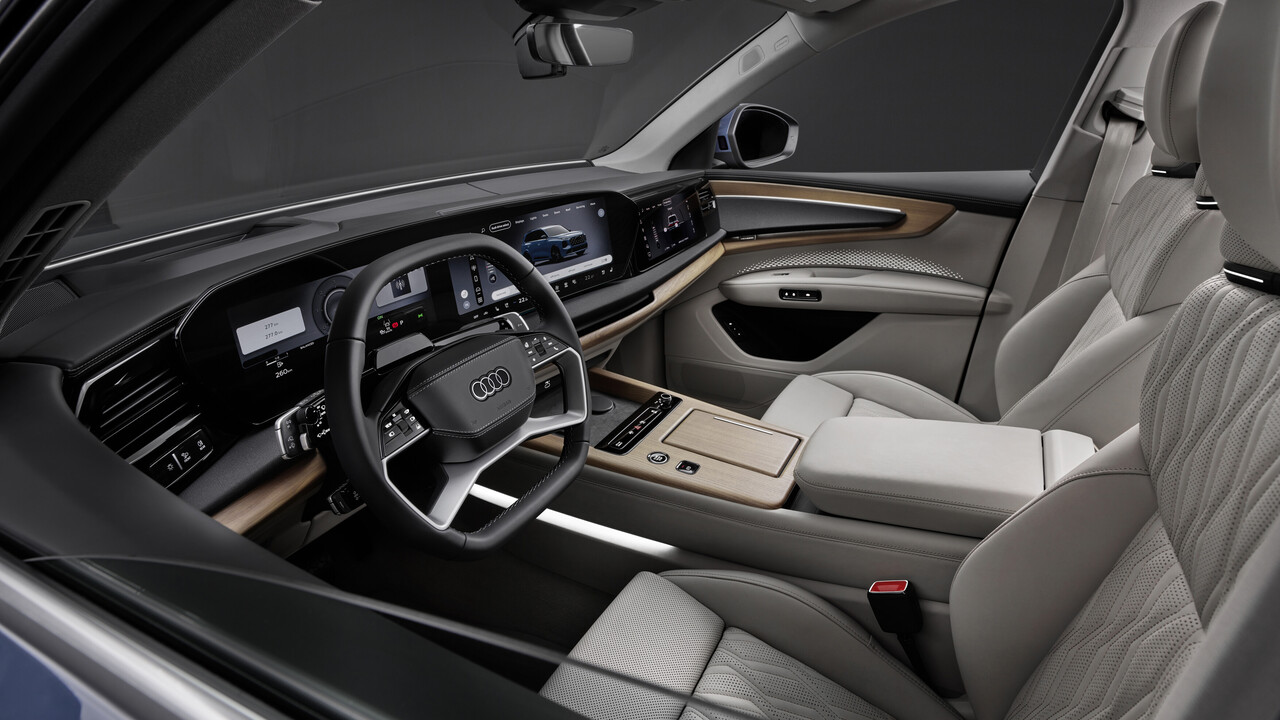
Second-row seatbacks fold in a 65/35 split, with the 65-percent section also offering a manual 30-percent fold-down, creating a 35/30/35 split. Third-row access is managed via a comfort entry feature, operable through the MMI, C-pillar buttons, or trunk controls.
Trunk capacity in the five-seat configuration is up to 806 liters, or 2,075 liters with the second row folded. The seven-seater offers up to 722 liters behind the second row and 1,980 liters with the first row only in use.
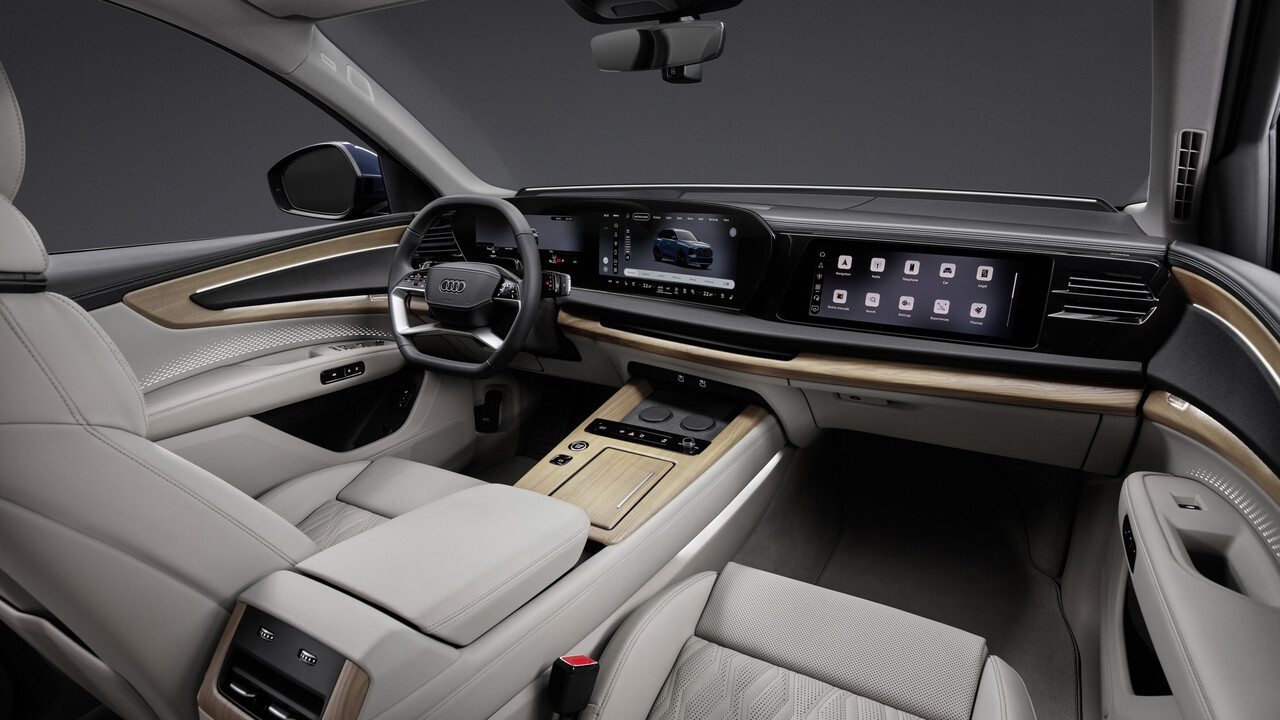
The new center console includes dual Qi2.2 wireless charging pads at 25 watts each, with active airflow to manage heat. USB-C wired fast charging is available in the seatback covers — up to 60 watts in the second row and 100 watts in the third row. An optional aluminum rail system in the trunk allows flexible cargo securing.
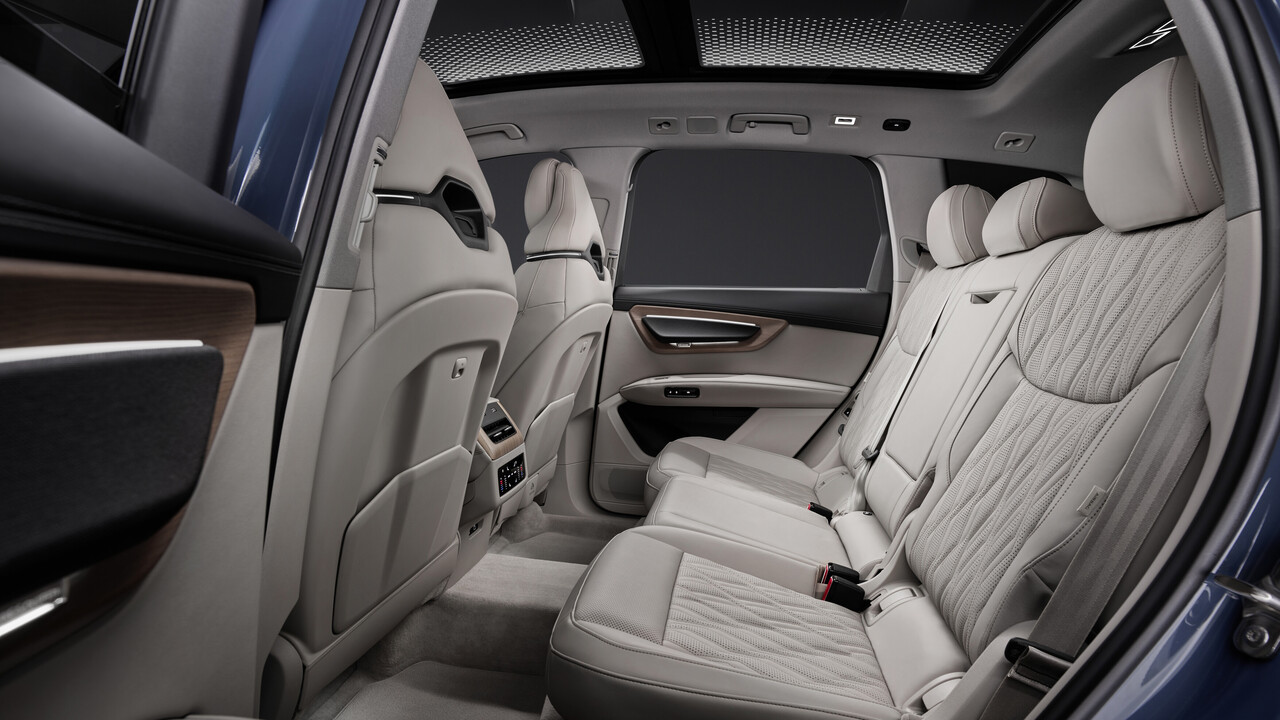
An optional panoramic sunroof spans all three rows and features switchable transparency across nine segments. When the car is parked, it automatically turns opaque. The glass blocks over 99.5 percent of UV radiation without requiring a conventional blind. For the first time, the roof glass can also be lit in colors that sync with the ambient lighting setting. An integrated wind deflector reduces wind noise when the roof is open.
The dashboard integrates the Audi MMI panoramic display with OLED technology, combining the virtual cockpit and the MMI touch display. A passenger display with dynamic privacy mode is standard. A head-up display is available as an option, as is a factory-integrated dashcam.
The Audi Application Store provides access to apps for music, video, gaming, navigation, parking, productivity, weather, and news without requiring a smartphone. A self-learning voice assistant handles vehicle functions, destination searches, and general queries, forwarding unresolved questions to ChatGPT.
The Bang & Olufsen premium sound system has been updated to a 4D configuration with 22 speakers and up to 1,360 watts. Seat actuators in the front seats generate vibrations synchronized to the audio, while headrest speakers enable personal calls, navigation audio, and surround sound.
At launch, the Q7 is offered with a 3.0-liter V6 TDI diesel engine in two outputs: 220 kW (299 hp) and 630 Nm, and 180 kW (245 hp) and 500 Nm. Both use MHEV plus technology, which pairs a belt alternator starter, a powertrain generator, and a lithium iron phosphate battery. The system can contribute up to 18 kW (24 hp) and 370 Nm of additional torque during acceleration or low-speed maneuvers such as parking and city driving.
An electric-powered compressor operates across the full engine speed range to reduce turbo lag, building boost pressure to 3.4 bar and spinning up to 90,000 rpm in 250 milliseconds. A standard eight-speed Tiptronic and permanent quattro all-wheel drive with a limited-slip center differential with preload are included. The Q7 is also approved for use with HVO (hydrotreated vegetable oil) fuel, which can reduce CO2 emissions by up to 70–95 percent compared to conventional diesel.
Three suspension options are available. Steel springs come standard. Optional adaptive air suspension adds electronically controlled damping for variable ride characteristics. Adaptive air suspension sport lowers the ride height by 30 mm and is described as the sportier of the two air options.
Both air suspension variants self-level under varying loads and use geodata to pre-adjust for road features such as railroad crossings. A new exit function lowers the vehicle by 62 mm in balanced driving mode to ease ingress and egress. Optional all-wheel steering improves low-speed maneuverability and high-speed stability.
Wheel sizes range from a standard 20 inches to optional 21-, 22-, and, for the first time as a factory option, huge 23-inch alloys from Audi Sport. Front ventilated composite brake discs measure up to 400 mm, with 350 mm discs at the rear. Six-piston fixed calipers are standard in gray, with the red finish available as an option.
Standard safety systems include automatic emergency braking with pedestrian and cyclist detection, blind spot monitoring, rear cross-traffic alert, a 360-degree camera system, and park assist. Trailer maneuvering assist, trailer stability control, and integrated trailer brake control are also included.
The exit warning system uses rear radar sensors to detect approaching cyclists, vehicles, and pedestrians, and can prevent a door from opening if a collision risk is detected. This extends to rear passengers, including children.
New to this generation is emergency assist with shoulder steering. If the driver becomes unresponsive, the system issues escalating visual, audible, and haptic warnings. If there is no response, it gradually reduces speed and, on highways with an adjacent unoccupied shoulder, steers the vehicle to the shoulder between 50 and 30 km/h before stopping. If a shoulder move is not possible, the vehicle stops in its lane. An emergency call is triggered after a few seconds of inactivity.
Lane departure warning now has two modes. In reduced mode, a steering wheel vibration and a red display line alert the driver. In normal mode, automatic steering corrections are applied regardless of traffic conditions.
The trained parking feature lets drivers record up to 5 custom parking maneuvers, each up to 200 meters, that the Q7 can then execute autonomously under driver supervision. Reverse assist memorizes a route of up to 50 meters and can reverse along it independently at up to 10 km/h.
The new Q7 is built in Bratislava, Slovakia. Orders open in Germany this month, with deliveries starting in September.


0 Comments
Leave a Reply