
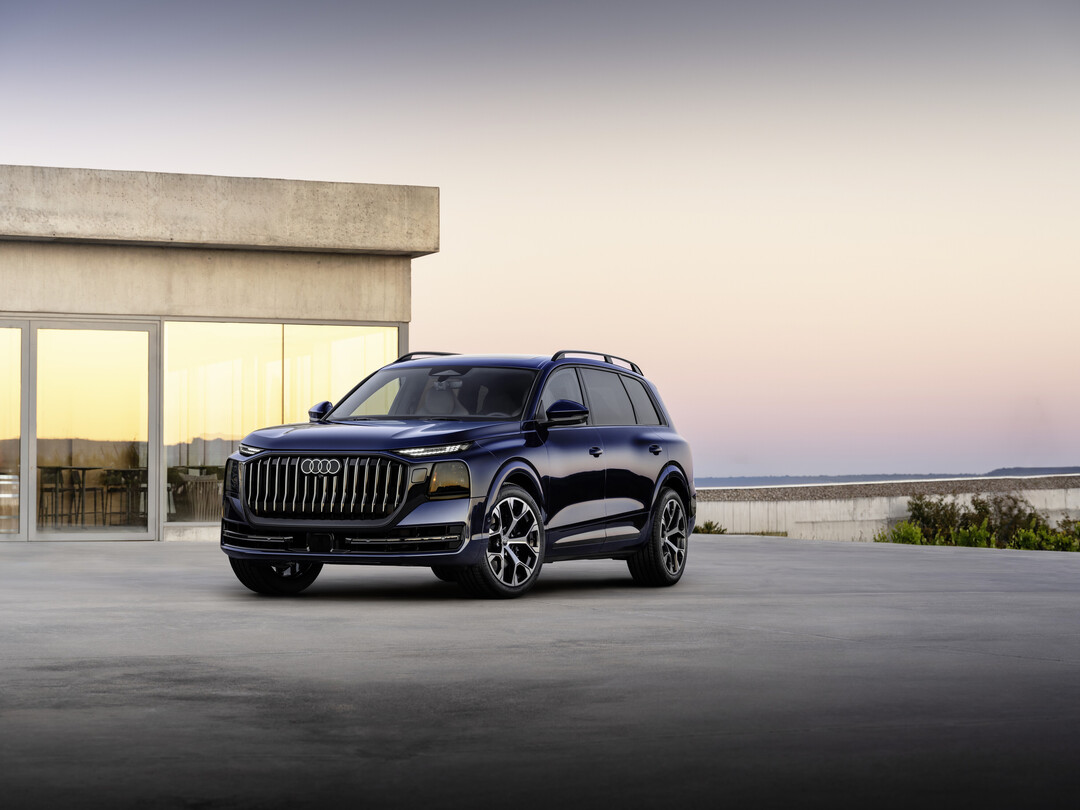
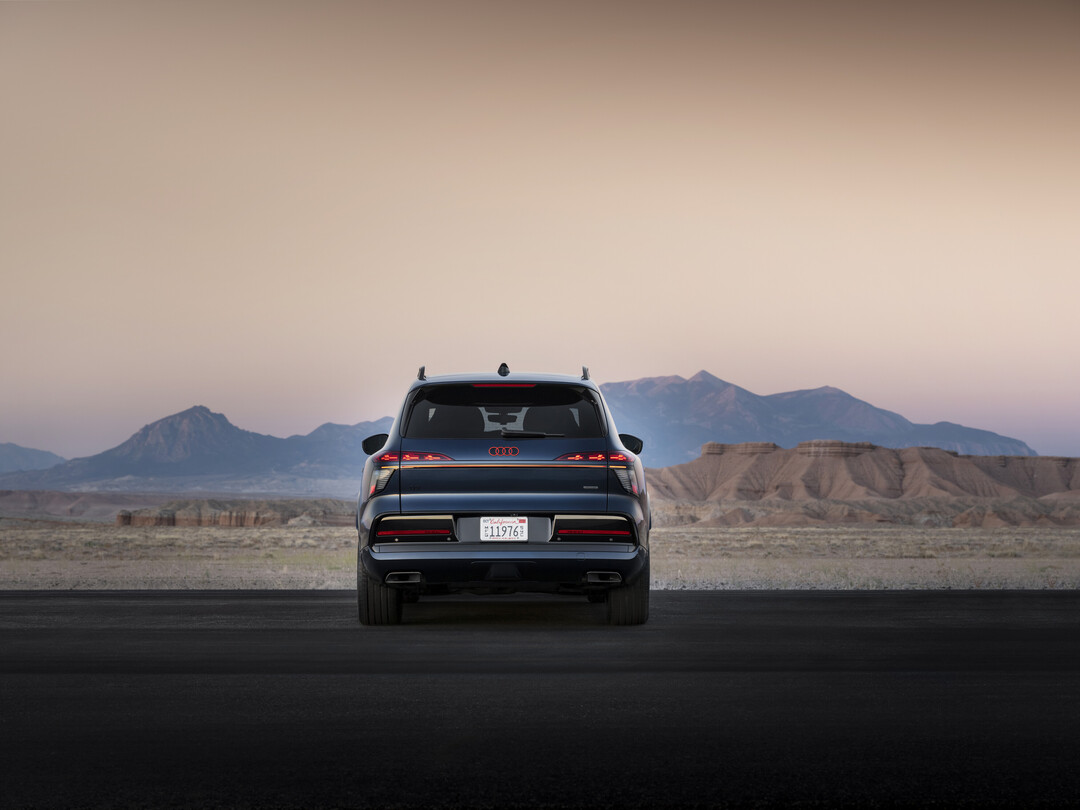
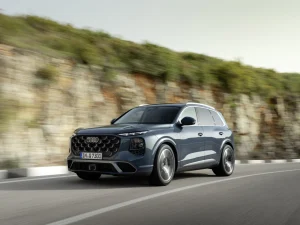
Audi has introduced the Q9, its largest SUV to date, marking the first use of the “9” designation in the brand’s model lineup and expanding the top end of its range. The full-size SUV combines interior space, all-wheel-drive performance and new technology including curved digital OLED rear lights, automatic doors and hands-free driving assistance.
Related: Audi unveils third-generation Q7- Brings updates across the board
“In the future, ‘Vorsprung durch Technik’ will increasingly be defined by the in-car experience – because cars are much more than just a means of transportation. For many of our customers, they are becoming mobile living spaces,” said Audi CEO Gernot Döllner. “That is exactly what the Audi Q9 represents as the new flagship of our portfolio. Premium materials, individual electric seats in the second row, and automatic doors underscore our commitment to quality in the interior. When combined with the latest driver assist systems and a holistic user experience, it becomes clear where we are taking the Audi brand.”
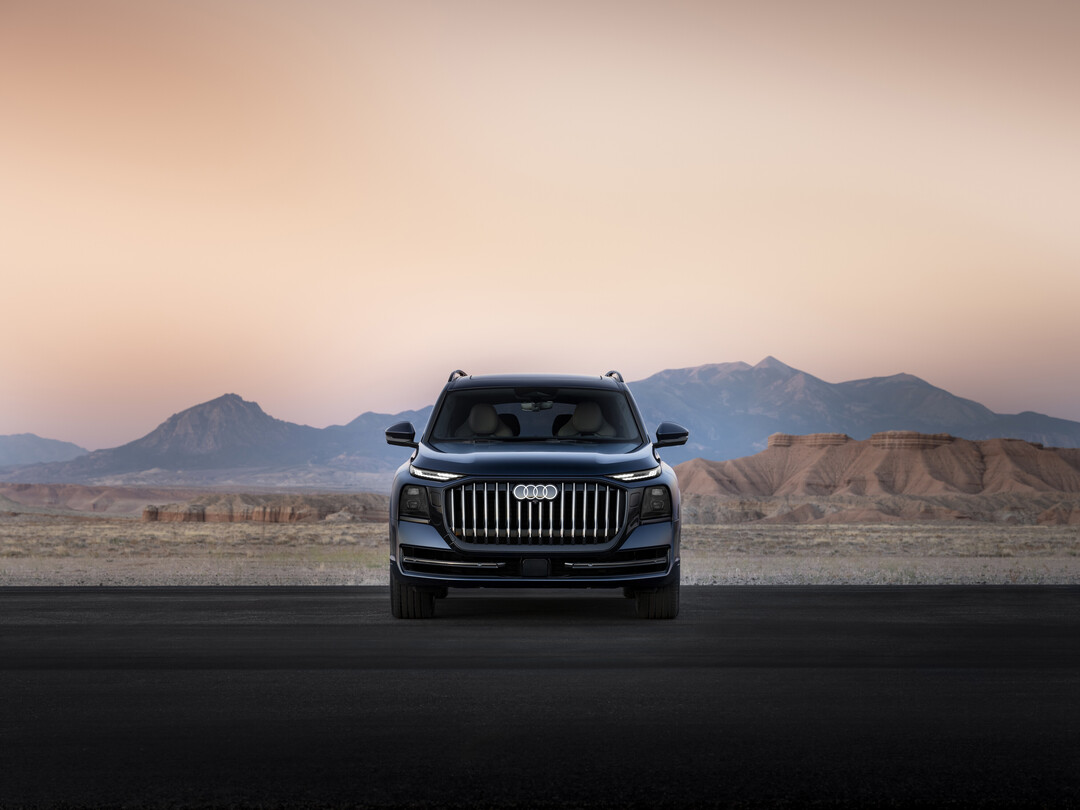
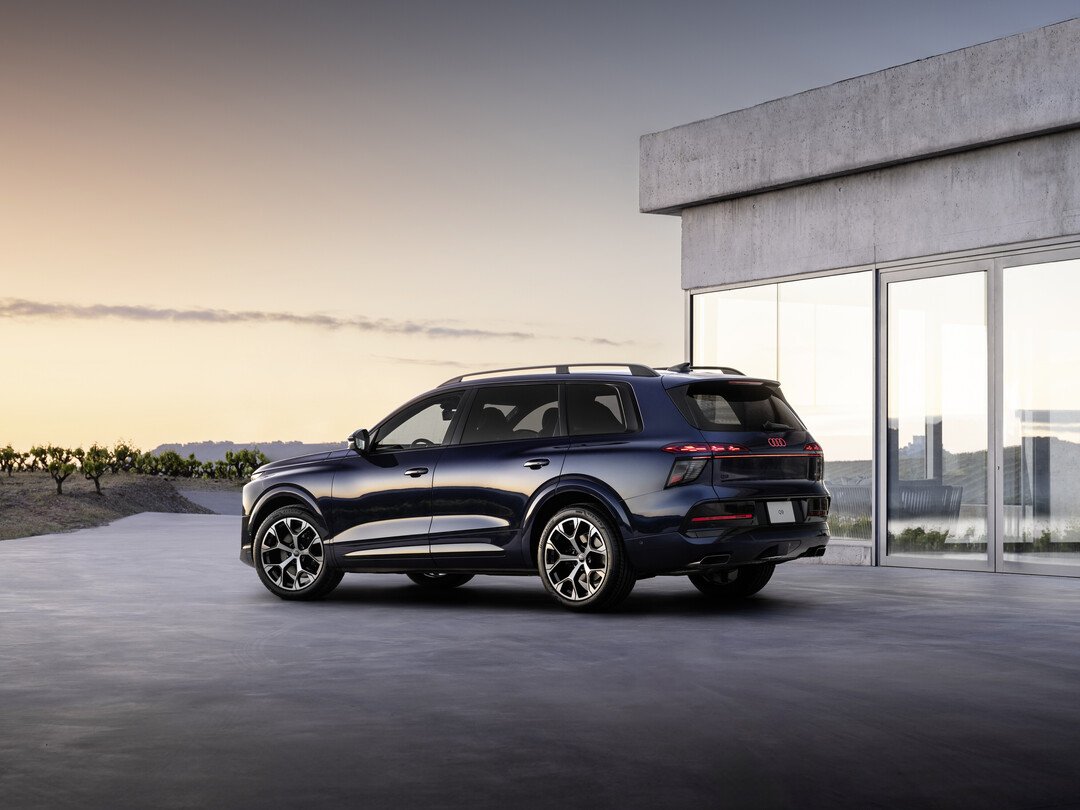
Measuring 5.31 meters long, 2.21 meters wide and 1.81 meters tall on a 3.14-meter wheelbase, the Q9 is the largest Audi built to date. Two trim lines are offered: advanced, which features vertical bars in the Singleframe grille, and S line, which uses an open grille design without slats, a more pronounced front end and an added rear spoiler. Wheel sizes range from 20 to 23 inches, with 22- and 23-inch tires fitted with acoustic foam inserts to reduce road noise.
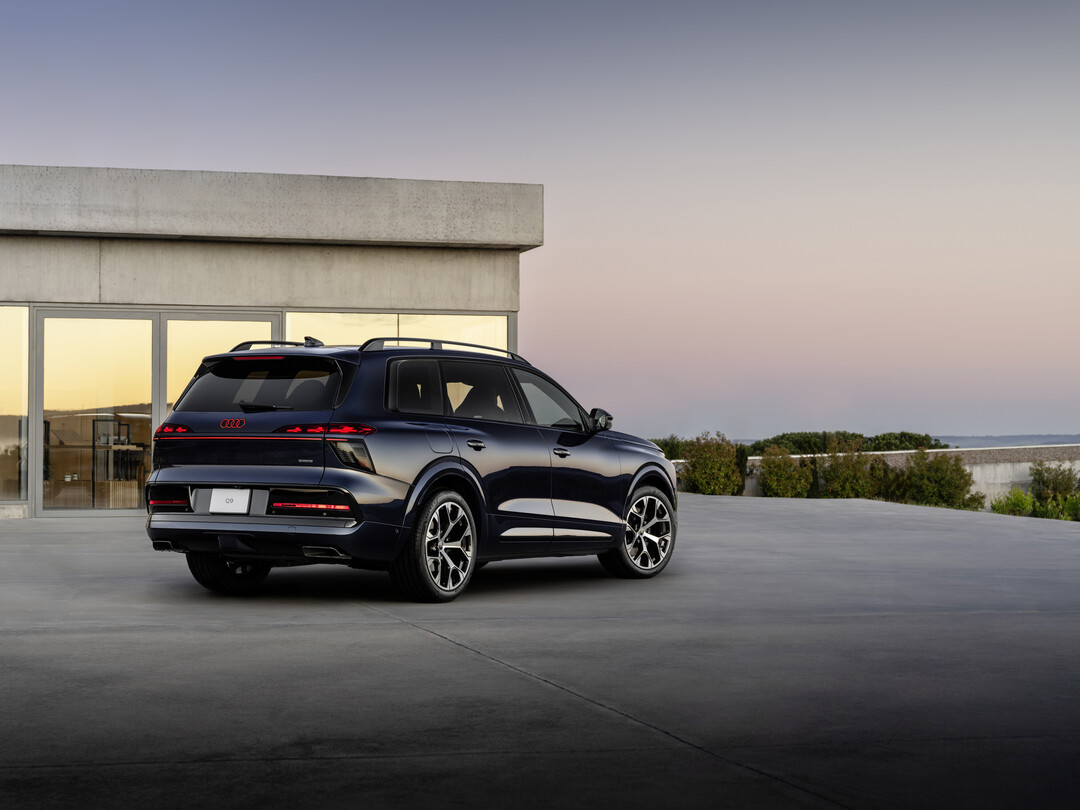
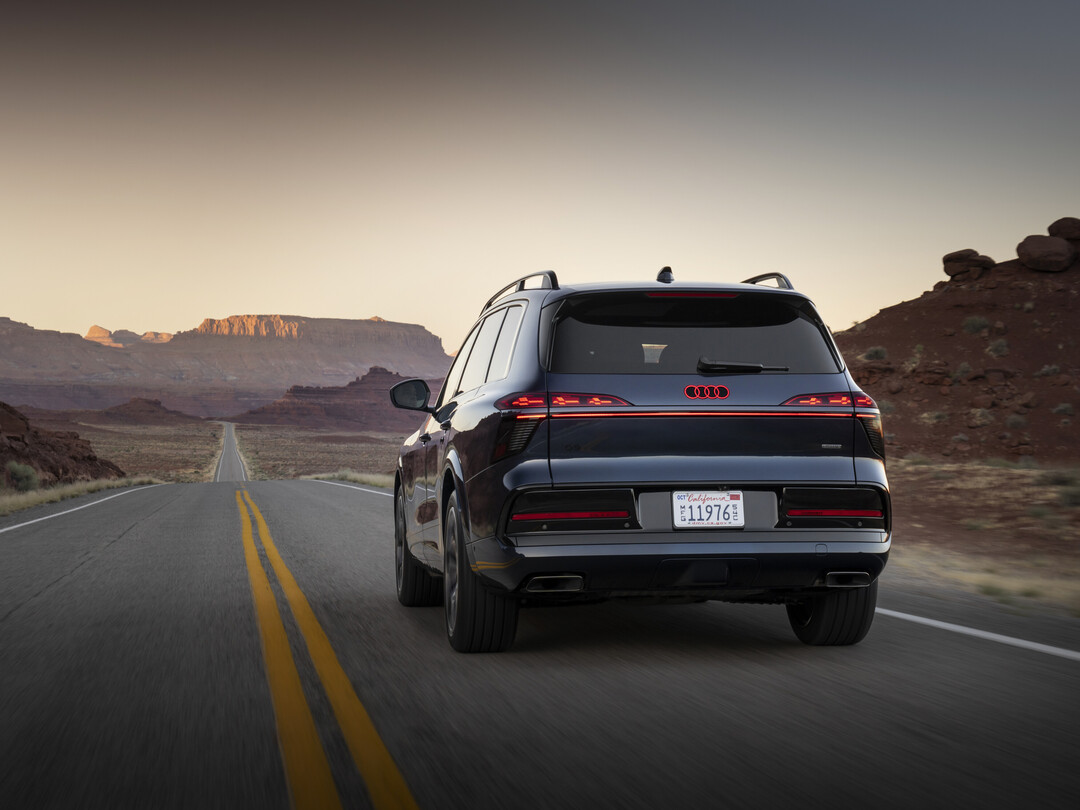
At the rear, the Q9 introduces third-generation digital OLED lighting, including what Audi describes as the first application of curved digital OLED panels in a production vehicle. The panels use a glass substrate just 0.1 millimeters thick, allowing them to follow the body’s contours and improve side visibility. The outer panel contains 99 segments, the center panel 84 and the inner panel 73, for 512 segments total across six panels.
A separate feature called advanced turn signals projects a stylized turn signal onto the ground at night when the vehicle turns or changes lanes, working alongside the OLED rear lights and digital Matrix LED headlights. Additional lighting functions include a communication light that displays a hazard warning signature to alert other drivers to accidents or breakdowns, an exit warning that flags approaching cyclists or vehicles when doors are opening, and a projection light that casts a rhombus-shaped graphic on the ground when doors open.
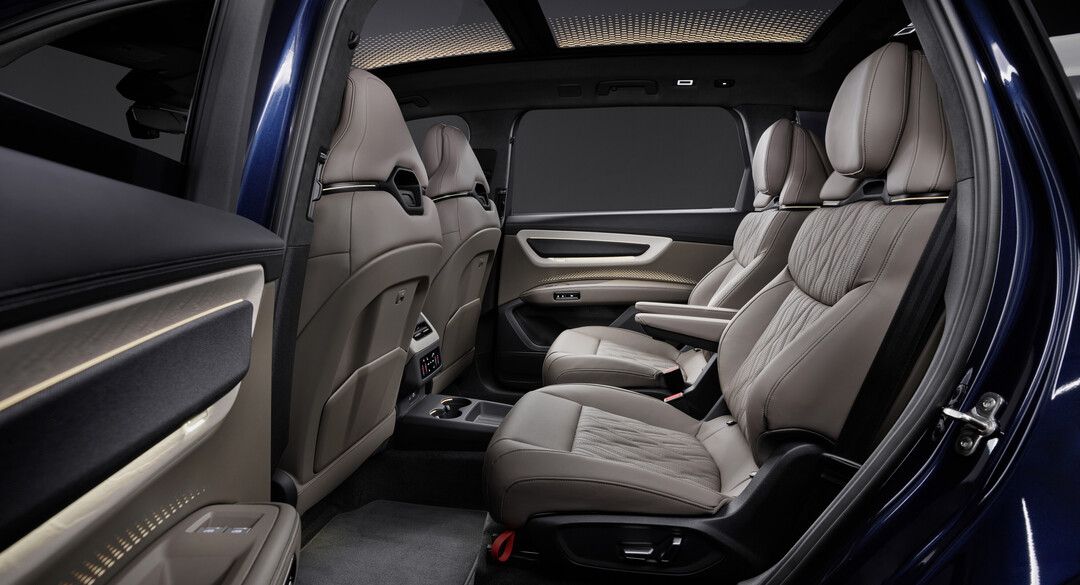
Seven-seat configuration is standard, with all three second-row positions fitted with Isofix child-seat mounting points. A six-seat layout is available as an option, with two electrically adjustable individual seats in the second row. Second-row seats are power-adjustable fore and aft, with seatbacks folding in a 65/35 split; the 65-percent section can be further divided into a 30-percent center portion, effectively creating a 35/30/35 configuration. The outer second-row seat can slide forward and tilt electrically to ease access to the third row without removing an installed child seat, a function that can be activated through the MMI system or a button near the rear door. Third-row seatbacks fold individually at the push of a button, and seat functions can also be controlled from the trunk.
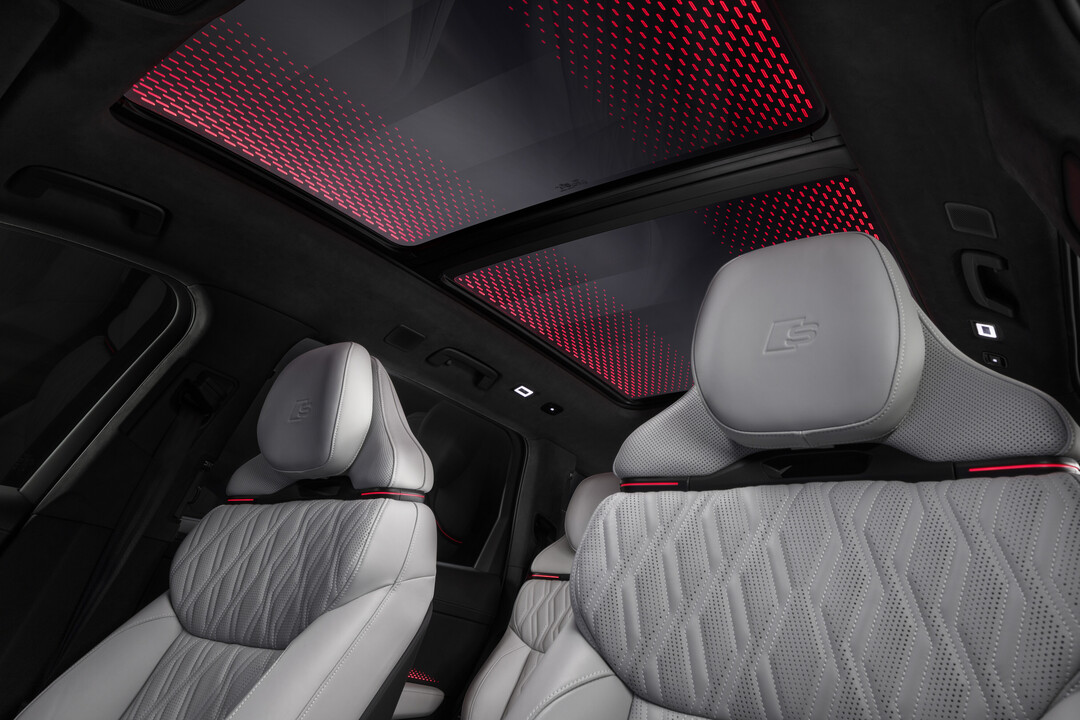
Front sports seats are standard, with an optional ventilated version and a sport seat plus option adding heating, ventilation and massage functions with seat-mounted controls. Door and center armrests can be heated as an option.
Automatic doors are offered for the first time on an Audi model. Sensors detect obstacles and stop the door if it cannot open fully, and an electric soft-close mechanism closes the doors gently. Doors can be opened and closed from multiple points inside the vehicle or remotely through the myAudi app.
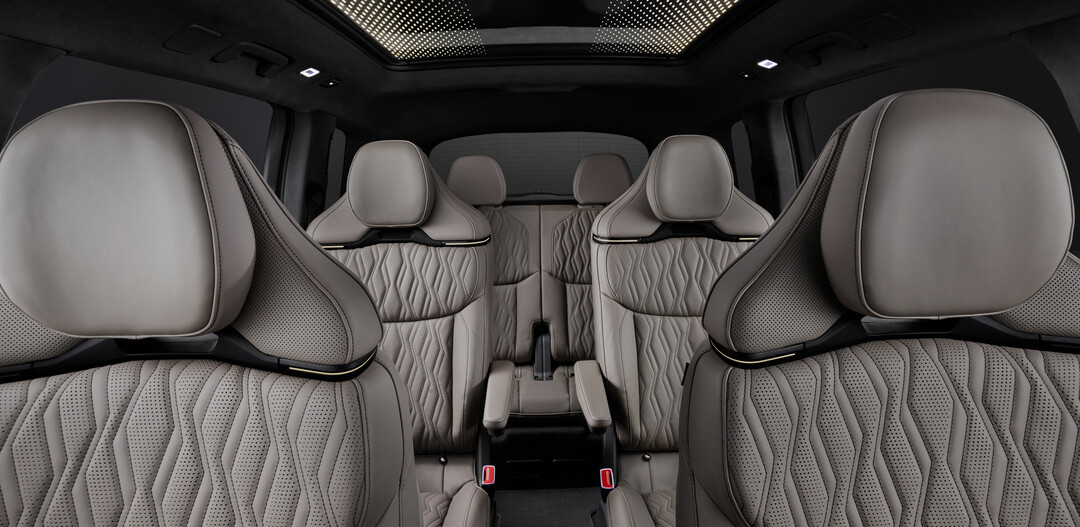
A panoramic sunroof, described by Audi as the largest fitted to any of its vehicles, comes standard with a glass surface over 1.5 square meters that can be opened or tilted using a stepless mechanism. An optional switchable-transparency version divides the glass into nine segments and turns opaque automatically when the vehicle is parked. The coated glass blocks more than 99.5 percent of UV radiation and reflects infrared light, according to Audi, removing the need for a separate sunshade. A top-trim option adds roof illumination in 30 colors that can be matched to the cabin’s ambient lighting, using 84 LEDs.
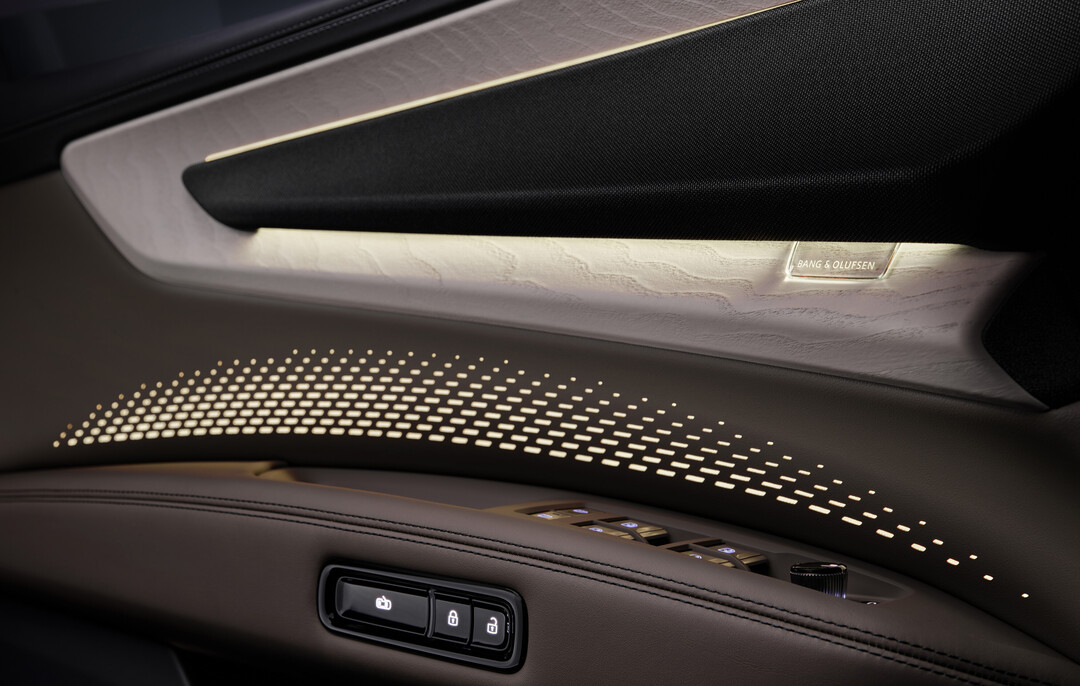
Ambient lighting is standard throughout the cabin, and an ambient light package plus option adds a continuous LED strip spanning the interior width that displays welcome, lock/unlock and turn-signal functions. Sport seat plus models include a lighting element in the headrest visible from outside the car, along with noise-canceling sound design built into the headrest.
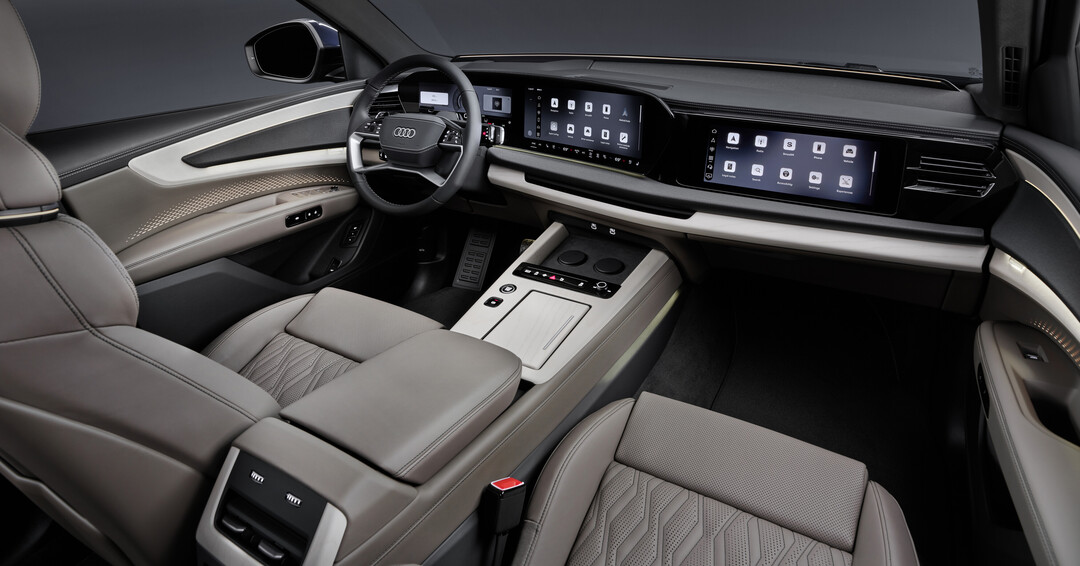
An updated Bang & Olufsen sound system with 4D audio is available, pairing the ambient lighting’s “experiences” mode—which syncs colors to a track’s cover art and rhythm—with 22 speakers, including four headrest speakers, and seat actuators in the front row that generate vibrations timed to music. Total system output is rated at 1,360 watts, and Fraunhofer Symphoria technology is used for adaptive sound distribution.
Interior materials include alpaca-fiber wool upholstery, Dinamica microfiber, leather and leatherette blends and Nappa leather, offered alongside new color options such as tamarind brown, natural beige and stone beige. Trim choices include ash wood, lime wood and a carbon-fiber weave with basalt gray accents.
Storage features include a redesigned center console with wireless dual-phone charging compliant with the Qi2.2 standard, along with wired USB-C charging rated at 60 watts in the front, 100 watts in the second row and 45 watts in the third row. The trunk includes a standard aluminum rail system with sliding hooks and adjustable anchors for securing cargo, plus a roof rack for the roof rails.
Standard and optional safety features include automatic emergency braking with pedestrian and cyclist detection, blind-spot monitoring, rear cross-traffic alert, a 360-degree camera system, park assist for parallel and perpendicular parking, trailer maneuvering assist, trailer stability control and integrated trailer brake control.
Adaptive driving assistant plus enables hands-free driving on approved highway sections at speeds up to 130 km/h (85 mph), initially in Germany, the United States and Canada, with additional markets and models planned. The system is classified as SAE Level 2 partial automation, requiring the driver to remain alert; a steering-column camera tracks eye and head position, issuing escalating visual, audible and haptic alerts if attention lapses.
A new emergency assist function can steer the vehicle onto a highway shoulder at speeds between 30 and 50 km/h and bring it to a stop if the driver becomes unresponsive, or stop the car in its lane if a shoulder isn’t available; an emergency call is triggered after several seconds of inactivity. Lane departure warning offers reduced and normal modes, with the former limiting corrective steering input based on traffic conditions and the latter applying automatic steering correction regardless of conditions.
Digital Matrix LED headlights with a micro-LED module are also used for functions such as projected lane-change warnings, lane-departure alerts, an ice-warning projection in low-temperature conditions, adjusted lighting in construction zones and a marking light that highlights pedestrians near the road at night.
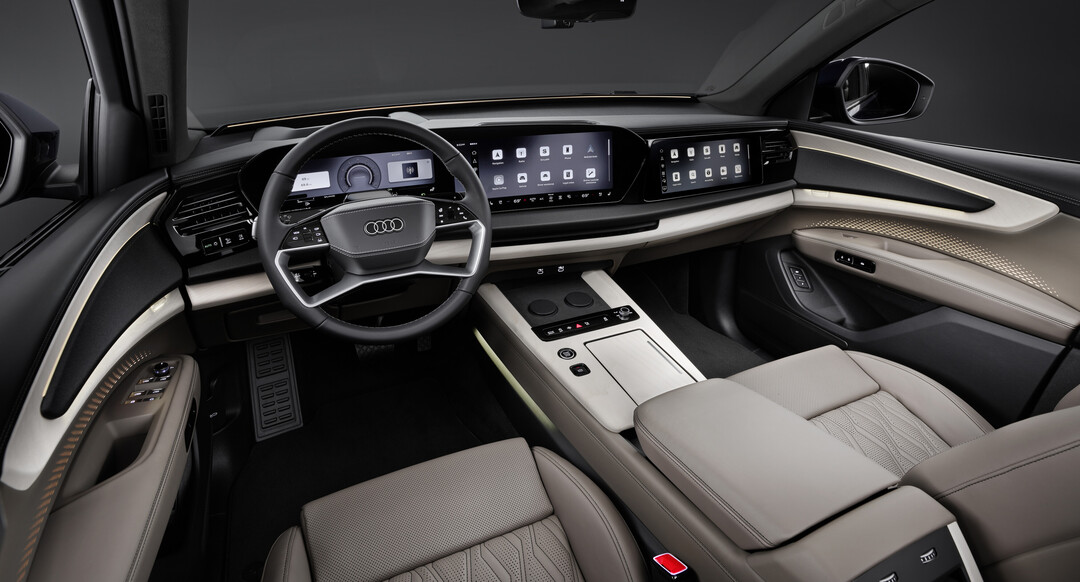
The MMI panoramic display combines a curved 12.3-inch Audi virtual cockpit with a 14.5-inch MMI touch display using OLED technology. A 12.3-inch passenger display is standard and includes a privacy mode that blocks distracting content, such as video, from the driver’s view. The system runs on Android Automotive OS and includes access to an Audi Application Store for third-party apps covering music, video, gaming, navigation, parking, charging, productivity, weather and news, with availability varying by market.
Voice control is handled by the Audi assistant, which integrates ChatGPT for general queries that fall outside the system’s vehicle-control and navigation functions. An optional factory-installed dashcam system is also available.
At launch, the Q9 is offered in Germany with a 3.0-liter V6 diesel engine producing 220 kW (299 PS) and 630 Nm of torque. There is a 180 kW (245 PS), 500 Nm version available in select European markets.
Both versions use an MHEV plus mild-hybrid system consisting of a powertrain generator, belt alternator starter and lithium iron phosphate battery, adding up to 18 kW (24 PS) of supplementary power. The V6 also uses an electric-powered compressor rated at 7.5 kW peak and 3.5 kW continuous power, combined with two-stage turbocharging, capable of building 3.6 bar of boost pressure within 1.2 seconds. An eight-speed tiptronic transmission and permanent quattro all-wheel drive are standard.
Adaptive air suspension is standard, offering a 90-millimeter range between lowest and highest ride height and the ability to lower the vehicle by 62 millimeters from balanced mode for easier entry and exit. An optional sport version adds controlled damping. All-wheel steering, which turns the rear wheels up to 5 degrees, is available in combination with the suspension system, turning opposite the front wheels at low speeds to reduce the turning circle and in the same direction at higher speeds for added stability.
Braking is handled by an integrated brake control system with ventilated discs — 400 millimeters at the front and 350 millimeters at the rear — and six-piston fixed calipers, offered in gray as standard or red as an option. The drive select system provides seven driving modes, with an automatic mode that adjusts settings based on road conditions and driving style.
Order books open at the end of July 2026, and deliveries in Germany are expected to begin in the fourth quarter, with production based in Bratislava, Slovakia. We do expect the Q9 to enter the Philippine market in the future as well.


0 Comments
Leave a Reply