
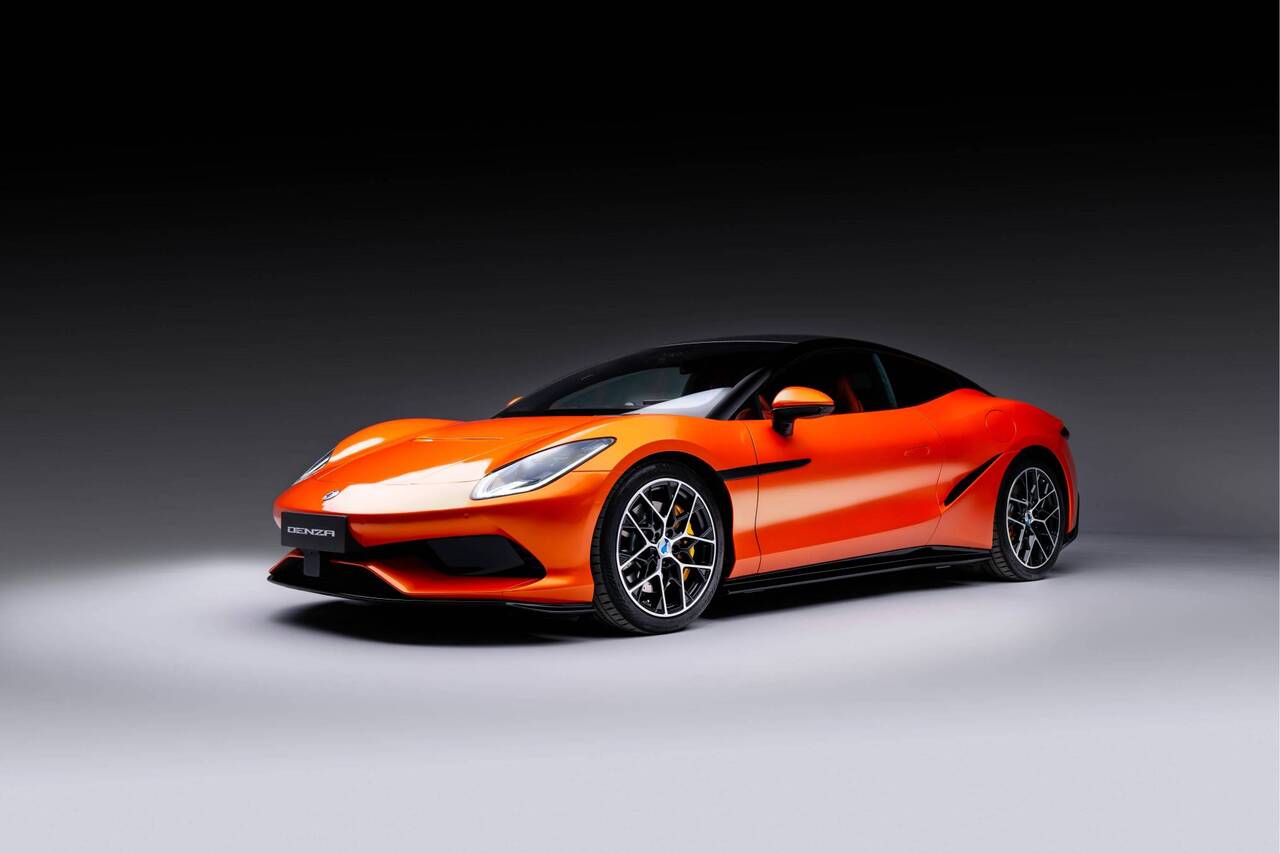
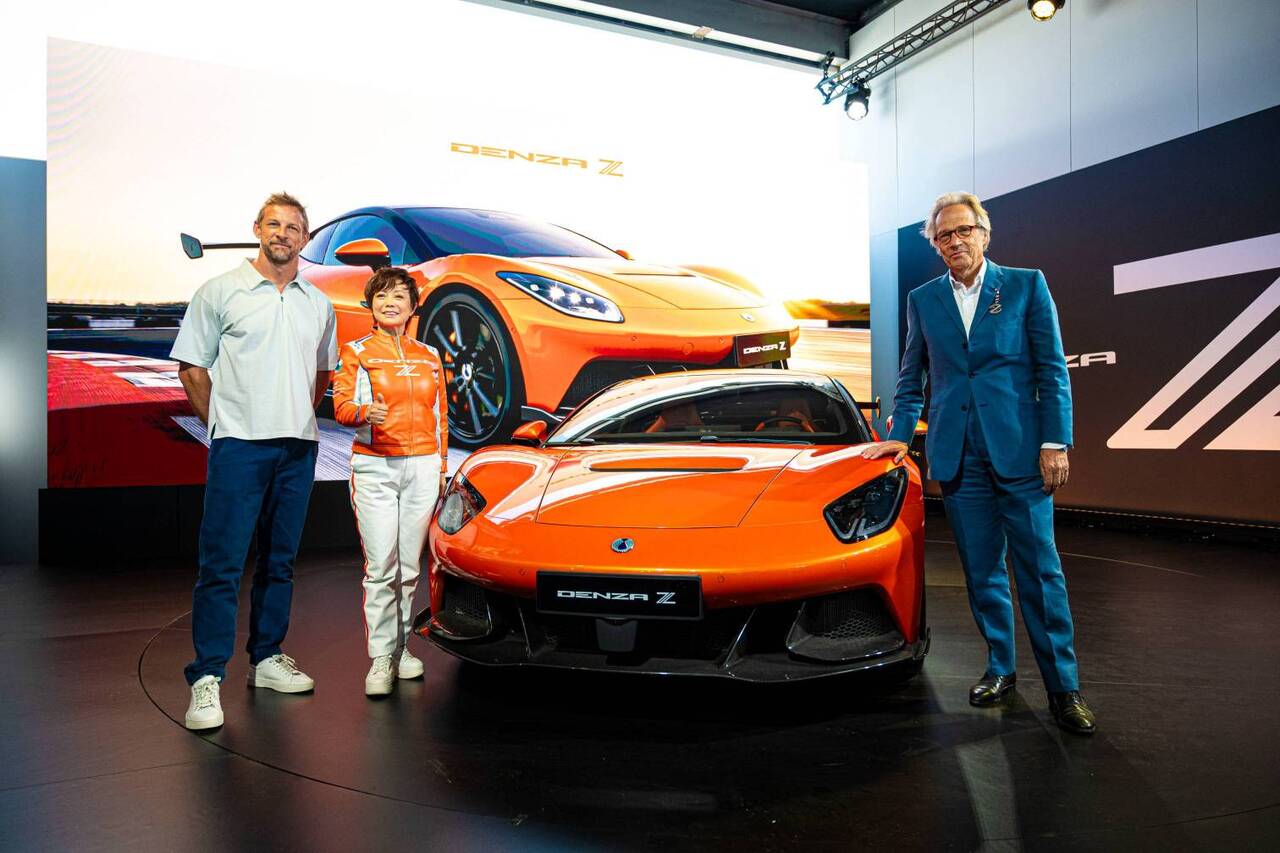
BYD’s premium electric brand DENZA unveiled its first supercar, the DENZA Z, at the Goodwood Festival of Speed. BYD Executive Vice President Stella Li and former Formula One World Champion Jenson Button presented the vehicle at the event, which serves as an annual showcase for classic racing cars and the latest performance vehicles.
Related: The DENZA B5 and B8 finally launches in the Philippines
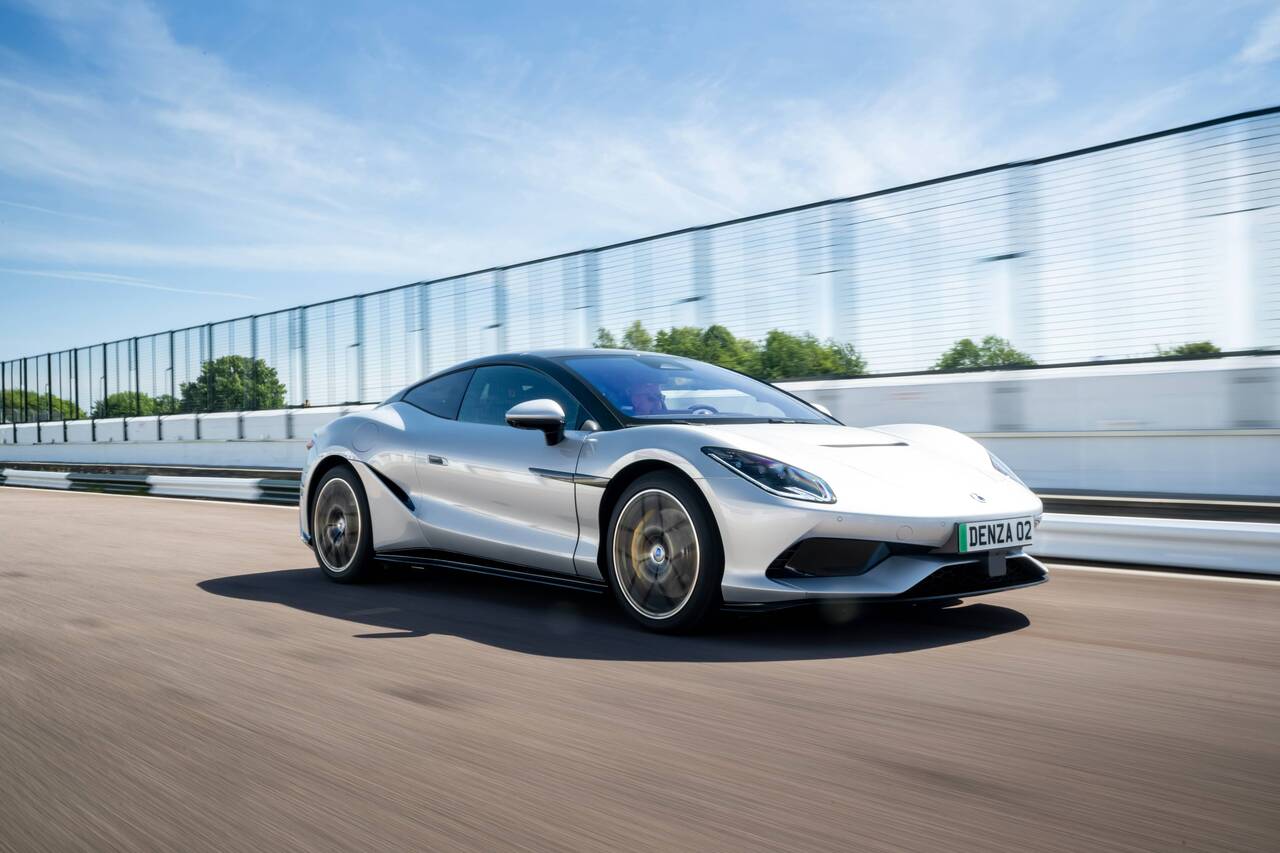
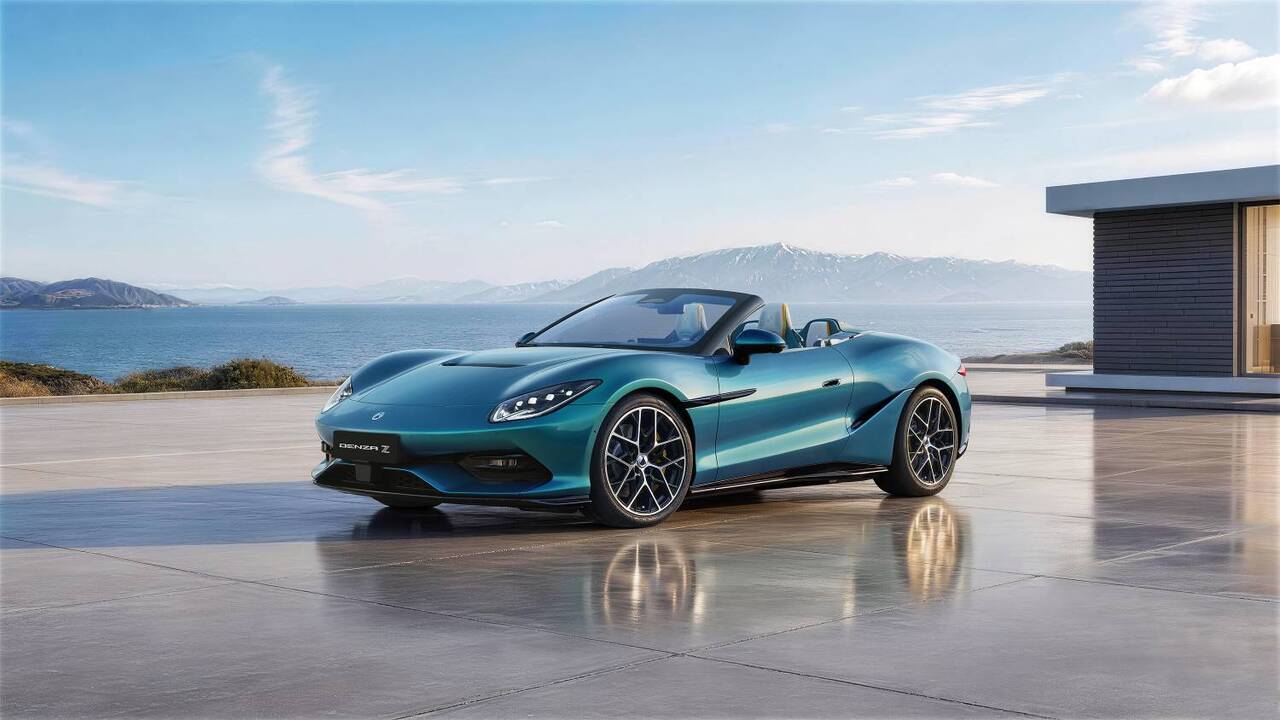
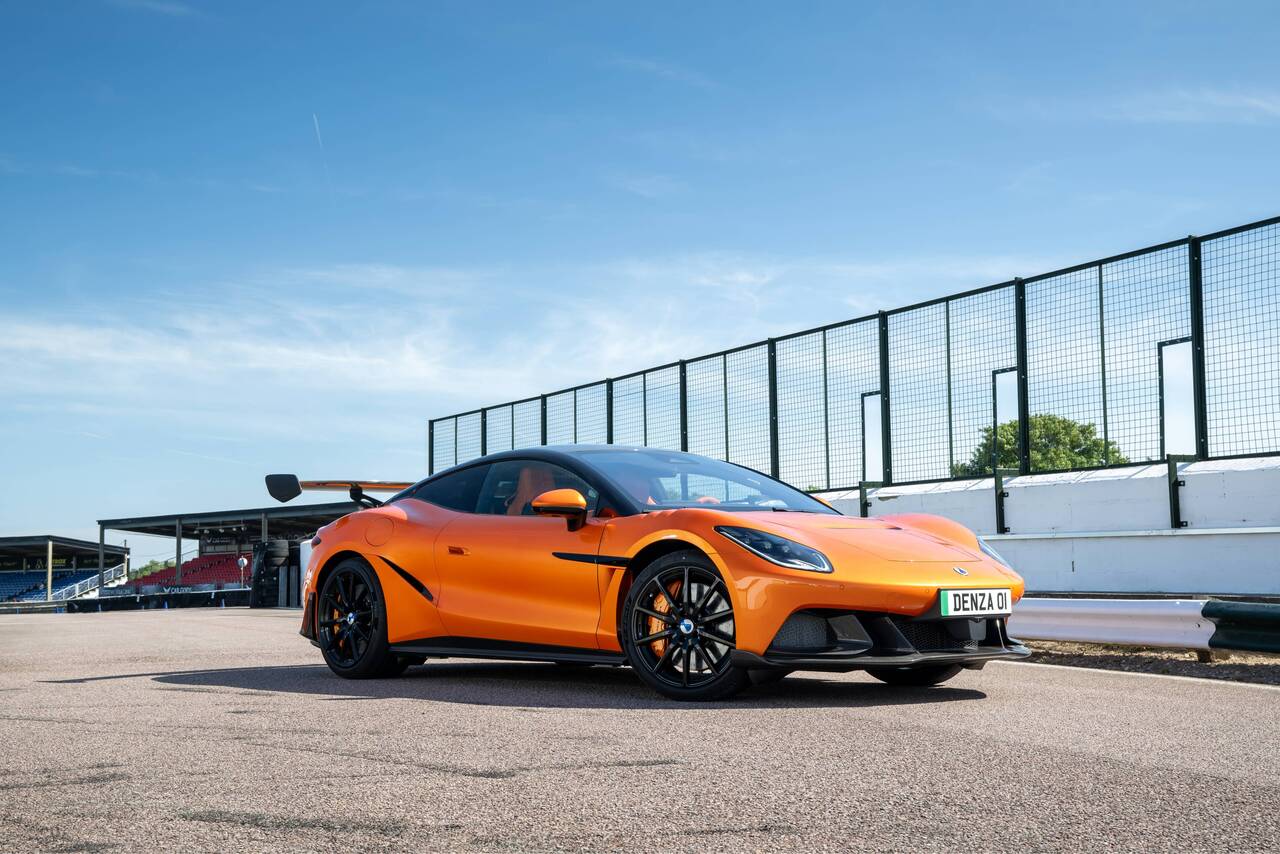
Three versions of the Z were confirmed: Coupe, Spider, and Racing, along with a Special Edition that will attempt lap-record runs at the Nürburgring Nordschleife in autumn. The Coupe, Spider and Racing versions will be available to order this summer in selected markets, with first deliveries expected before the end of the year.
Stella Li said the DENZA Z was built to perform and to win, citing its power, acceleration and dynamic ability, along with its FLASH Charging capability, which she said allows the car to be used without compromise. She described the Z as an example of DENZA’s technology-led approach and called it the supercar for the new-energy generation.
The DENZA Z is built on the brand’s e³ Sports Car Platform and uses a triple-motor configuration, producing a combined 1,604 PS and 1,240 Nm of torque. The Coupe accelerates from 0-100km/h in 2.25 seconds and reaches a top speed of 300km/h. The Racing version, when fitted with optional semi-slick tires, accelerates from 0-100km/h in 1.96 seconds and reaches a top speed of 350km/h. The Special Edition, which features track-grade thermal management with powertrain and battery cooling rates increased by 180% and 30%, respectively, has a total system output of more than 2,000 PS and accelerates from 0-100km/h in under 1.7 seconds. Further technical details on the Special Edition will be released later.
Design and dimensions
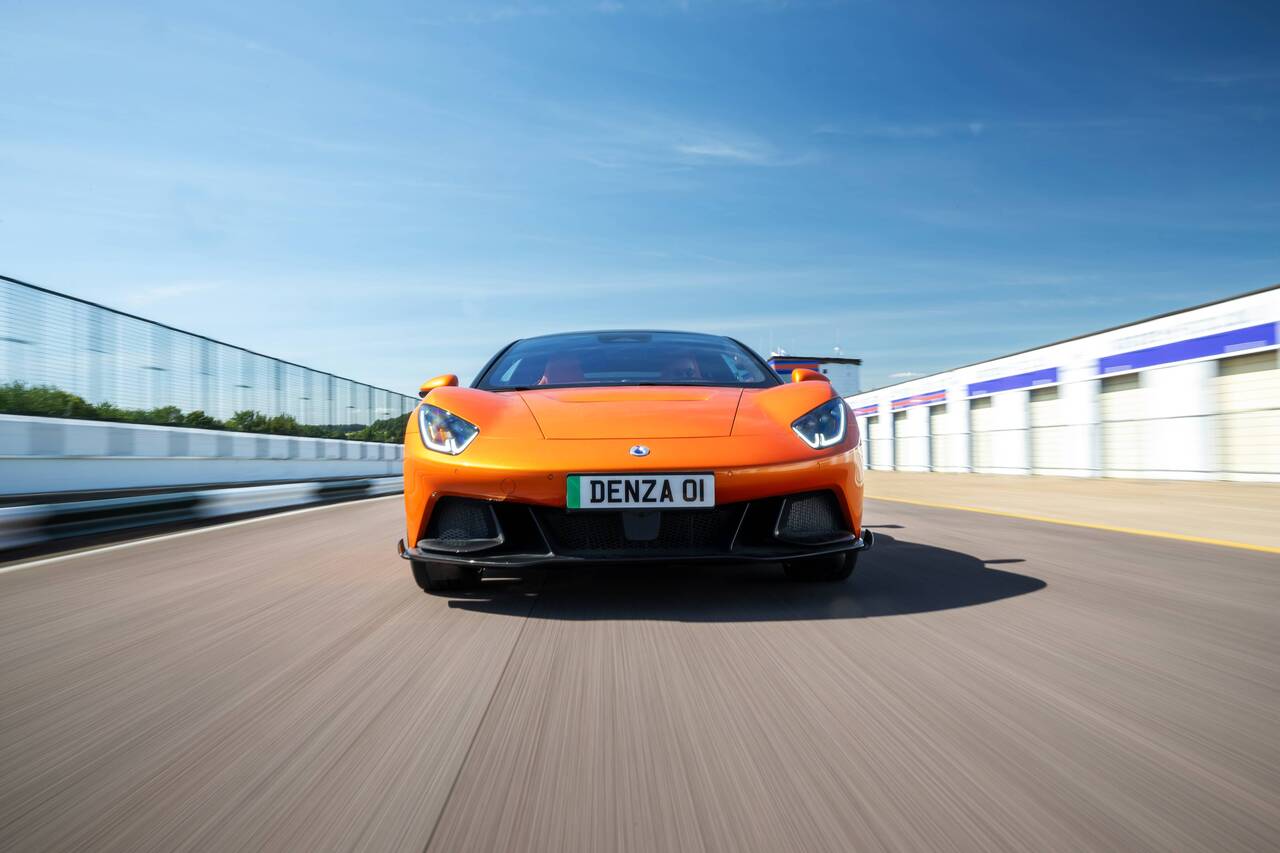
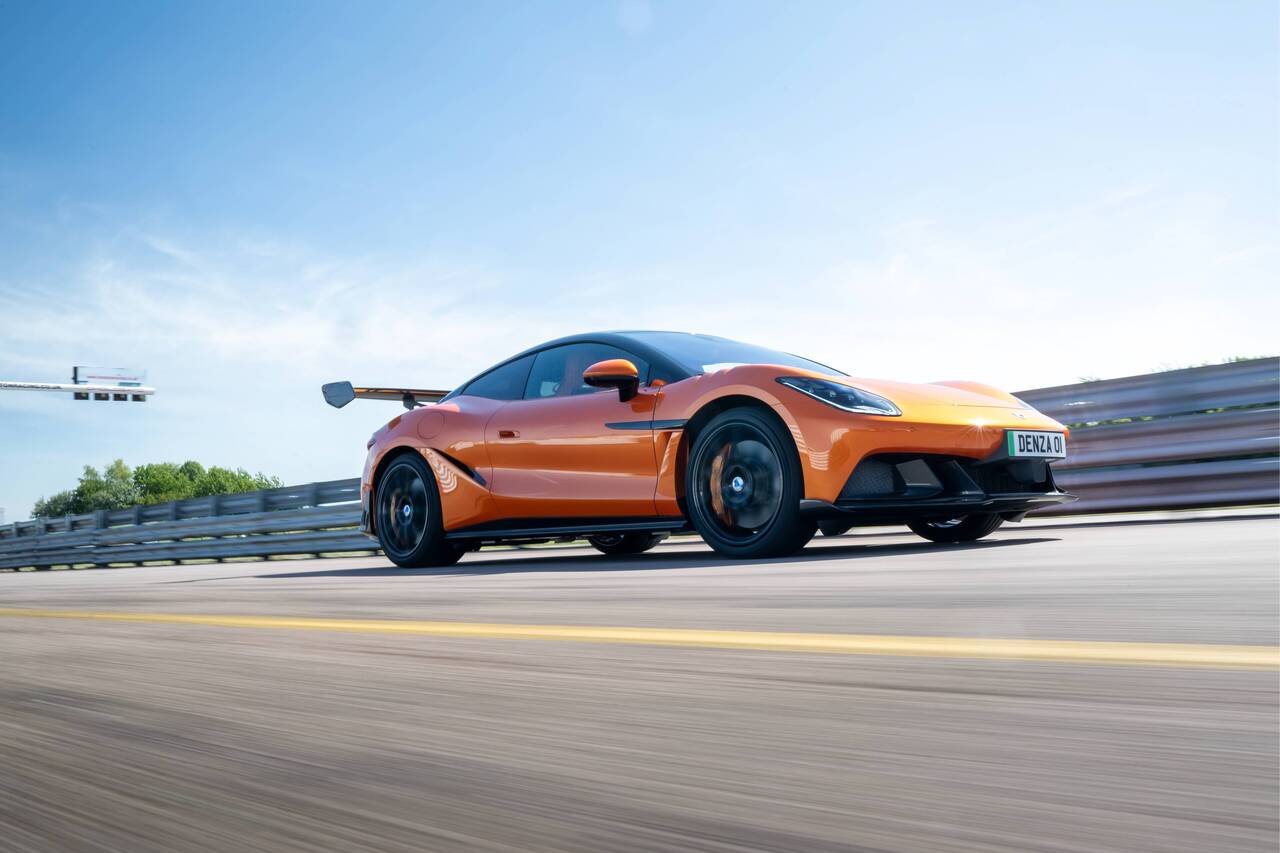
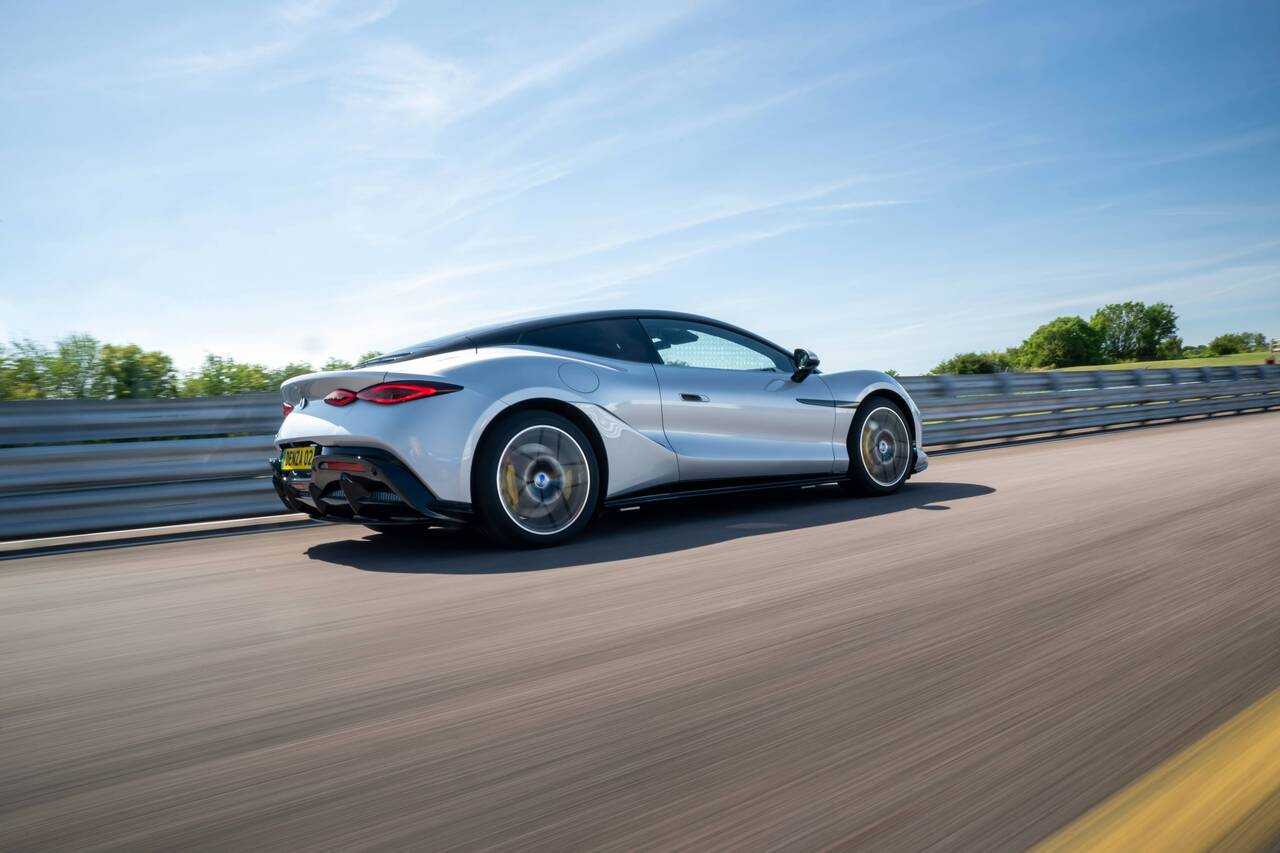
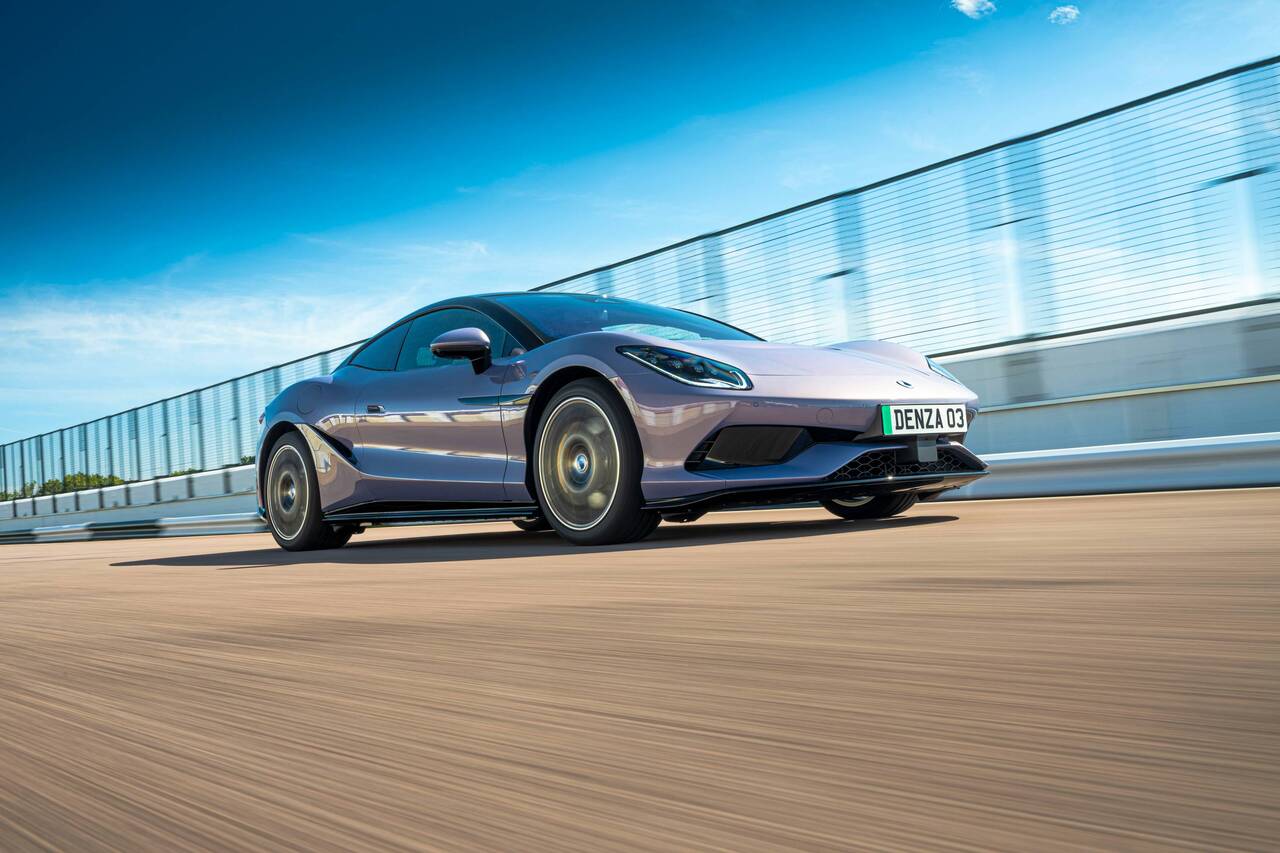
The Z Coupe and Spider measure 4,780mm in length, making them the most compact DENZA models to reach European customers. BYD Global Design Director Wolfgang Egger described the design as built around restrained curves and proportion, with powerful front and rear fenders and a low seating position. The front combines angular lower bumper elements with an LED daytime-running light signature, while the rear features diamond-shaped taillights. Paint finishes include a pearlescent effect achieved through a multi-layer coating process.
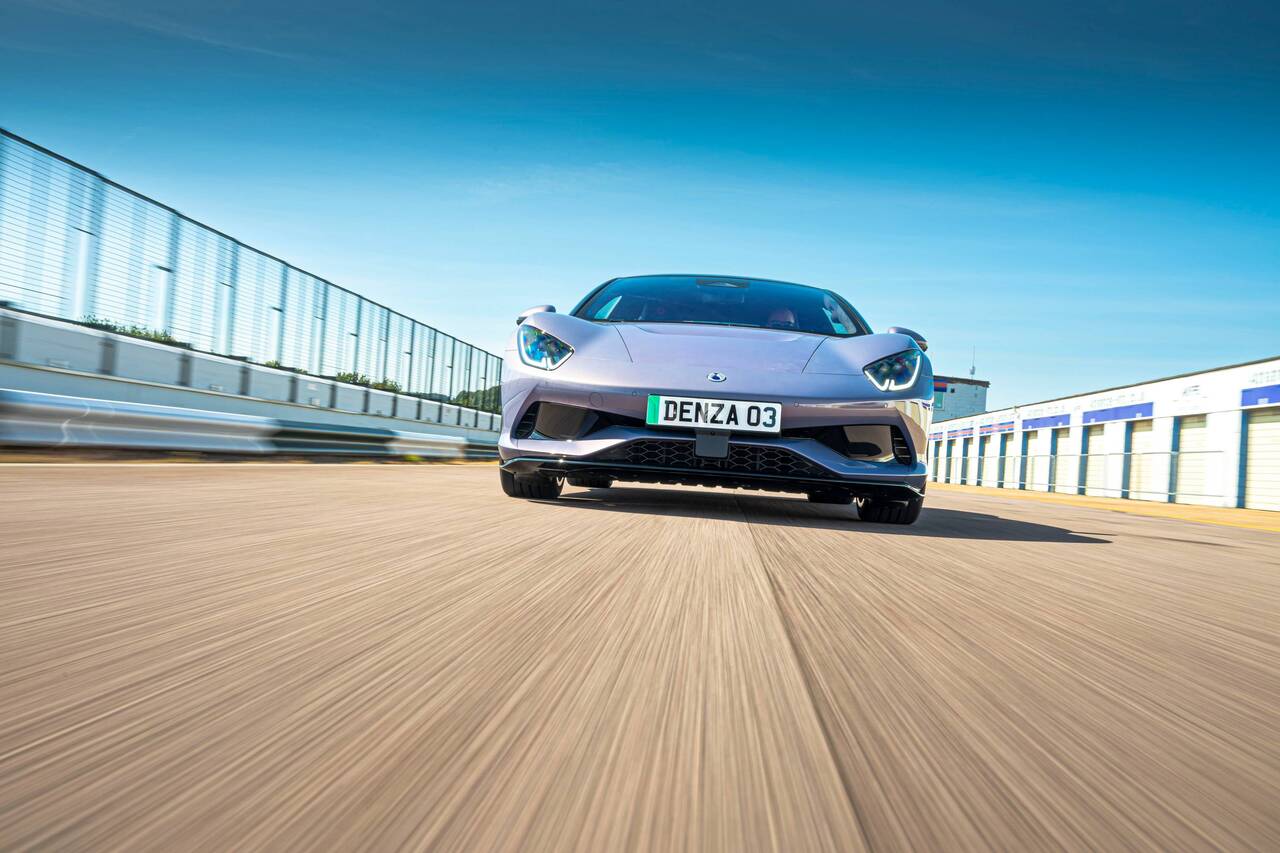
The exterior features functional aerodynamic elements, such as a front bumper air intake that directs airflow to outlets on the bonnet, forming an S-shaped path intended to balance drag, downforce, and heat management.
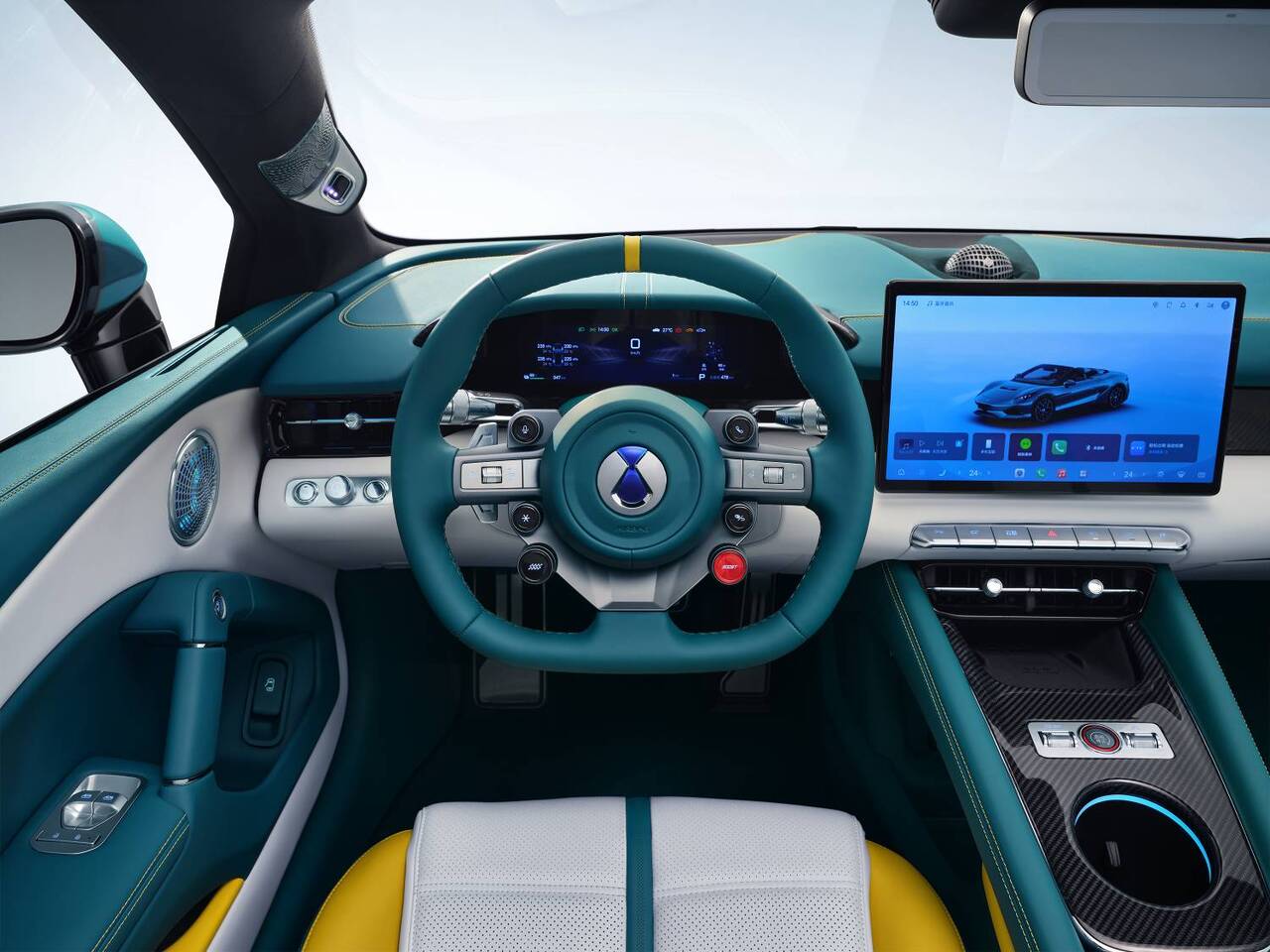
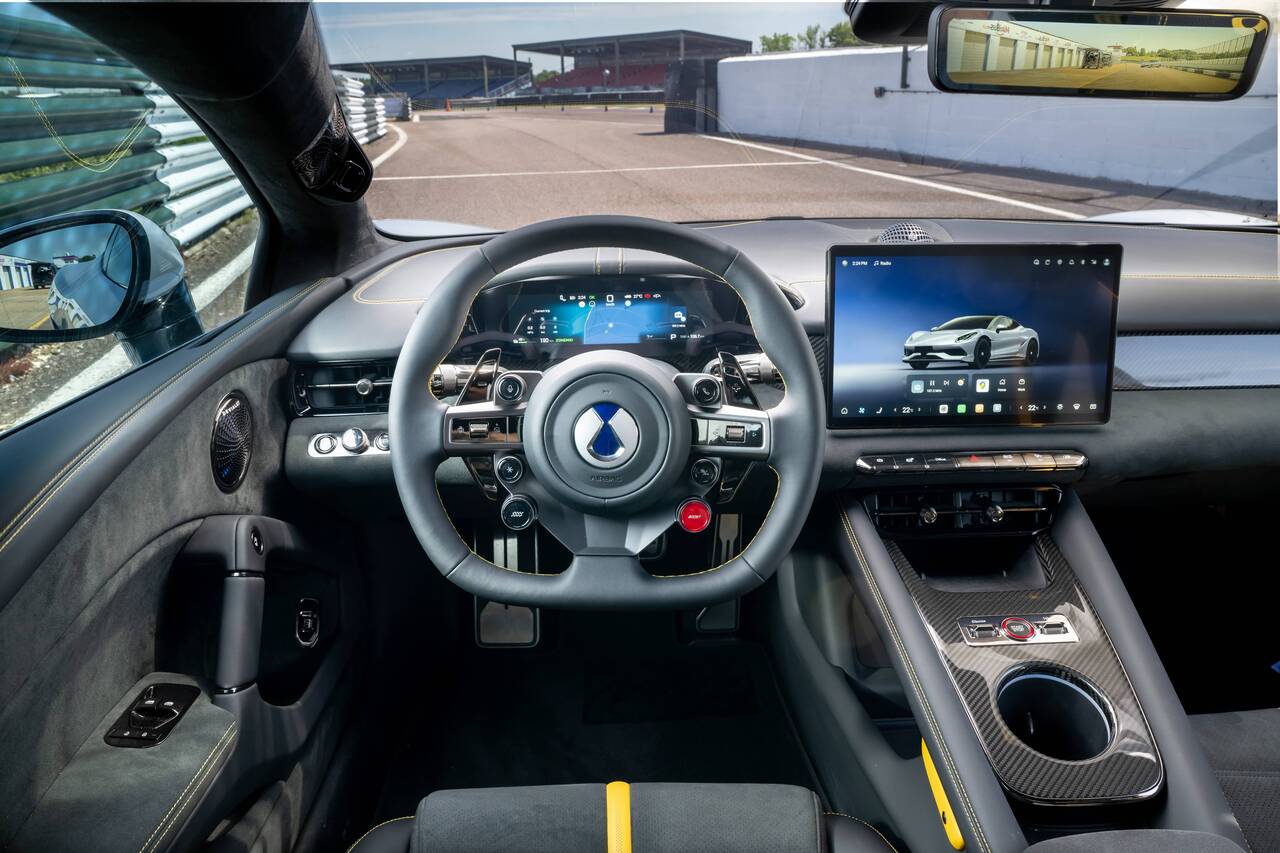
Inside, the cabin is arranged around the steering wheel, which includes six physical buttons for functions such as Track and Boost modes. Materials include carbon fiber, suede-effect fabrics, and metal finishes. The instrument display measures 8.88 inches, paired with a 12.8-inch infotainment screen and a wireless smartphone charging pad. The driver and front passenger seats have eight-way power adjustment, four-way electric lumbar support, heating, ventilation, and massage function, with speakers built into the headrests as part of the Devialet sound system, which has 12 speakers in the Coupe and Racing and 10 in the Spider. In the Coupe and Spider, the driver’s seat also has active lateral support adjustment for high-speed cornering.
The Racing version has a redesigned front air intake and multi-duct cooling system, which BYD said increases electric-motor cooling efficiency by 50% and brake-disc cooling rates by 32%. It also includes a carbon-fiber front splitter, underfloor vortex generators, additional body vents and an optional three-position adjustable carbon-fiber rear wing. These additions bring its length to 4,870mm, and the car generates up to 1,060kg of downforce at 350km/h. BYD said the aerodynamic and thermal design was tested and refined at the Nürburgring Nordschleife. Additional personalization options for the Racing version include removing the rear seats in favor of a roll cage and carbon-fiber trim.
Despite its compact size, the Z has a 2,780mm wheelbase and retains a four-seat layout across all versions. Boot capacity is 250 liters in the Coupe and Racing, expandable to 550 liters with the rear seats folded.
The Special Edition uses dual-layer composite bodywork with carbon fiber panels and a drag-reduction system combining a front active diffuser and rear wing flap, which BYD said cuts drag by up to 40% while producing more than 2,000kg of downforce at 300km/h.
Platform and technology
The e³ Sports Car Platform incorporates what BYD describes as the industry’s first intelligent triple-motor torque control system built for track use, Cell-to-Body battery-body integration, DiSus-M magnetorheological suspension, and FLASH Charging paired with the 2nd Generation Blade Battery.
The twin rear motors are part of what BYD calls the industry’s first 15-in-1 fully integrated electric-drive unit, which combines two motors with individual reduction gears and Motor Control Units, along with the onboard charger, DC-DC converter, Vehicle Control Unit, Battery Management Controller, Power Distribution Unit, and functions for boost charging, energy management, and charging heating. Maximum motor speed is 30,000rpm.
A Vehicle Motion Control system manages braking, suspension, and steering with a signal transmission time as low as 10 milliseconds. This supports functions such as a Tire Burst Control System that adjusts torque and power distribution in milliseconds when a tire incident is detected, as well as yaw-reduction assistance. The triple-motor torque control system also enables a “compass turn,” in which the car pivots around its front wheels while the rear wheels revolve.
The Z is the first DENZA model to use DiSus-M intelligent damping, which relies on a magnetorheological fluid that changes viscosity within milliseconds when exposed to a magnetic field, allowing rapid adjustment of rebound and compression damping. The suspension layout uses double wishbones at the front and a multi-link setup at the rear. The Coupe and Spider use air suspension, while the Racing uses coil springs.
All versions use carbon-ceramic drilled brake discs, which BYD said reduce unsprung mass by about 30kg in total, improve cooling and extend service life to up to 300,000km. The brakes use six-piston front and four-piston rear fixed calipers, available in orange, yellow, red or blue.
Battery and charging
The 2nd Generation Blade Battery has a 76kWh capacity, providing a range of 410km in the Coupe, 400km in the Spider and 380km in the Racing. It is integrated into the platform using BYD’s Cell-to-Body architecture, which places battery cells directly into the chassis with the passenger-compartment floor serving as their top cover. BYD said this approach is up to 20% more space-efficient than a traditional Cell-to-Pack configuration and contributes to torsional stiffness of more than 40,000 Nm per degree in the steel-aluminum body.
FLASH Charging delivers up to 1,500kW through a single connector. BYD said the system can charge the Z from 10% to 70% in five minutes, from 10% to 97% in nine minutes, and from 20% to 97% in 12 minutes, even at -30°C. The company said the technology is the result of six years of research and development, centered on what it calls a “FlashPass” Ion Transport System with three components: a “Flash-Release” cathode designed for dense packing and rapid deintercalation, a “Flash-Flow” electrolyte developed using AI-driven screening for high ionic conductivity, and a “Flash-Intercalate” anode designed for high-speed lithium-ion intercalation. BYD said these developments reduce internal resistance and heat generation, and that further changes to the anode structure reduce lithium-ion transport resistance.
The battery also uses a modified Solid Electrolyte Interphase layer, which BYD said is engineered to be thin and dense with dynamic self-repairing properties. The company said the battery passed safety testing including a combined FLASH Charging and nail-penetration test, with no thermal runaway, smoke or fire recorded after 500 FLASH Charging cycles. BYD said overall capacity degradation on the 2nd Generation Blade Battery is reduced by 2.5% compared with the original version.
Cabin features and driving modes
All versions include ambient lighting that changes with drive modes, an 8.88-inch instrument panel, a 12.8-inch infotainment screen with Google built-in services, including Google Maps, Google Assistant, and the Google Play Store, a digital rear-view mirror, and powered soft-closing doors. The Devialet audio system includes a spherical central speaker module mounted on the upper fascia.
The cabin includes a virtual engine sound feature that can be adjusted for volume and output location, with a choice between a conventional engine note or a sci-fi-inspired effect. Boost mode, activated by a steering wheel button, increases throttle torque by 30% for 20 seconds, with corresponding changes to the instrument cluster and touchscreen displays.
Track mode opens a dedicated application on the infotainment screen for circuit driving, providing real-time vehicle positioning and G-sensor data that can be exported to a USB drive. The mode also includes launch control for straight-line acceleration and a drift setting that adjusts front-to-rear power distribution, including a one-touch drift function. Three custom profiles allow adjustment of power distribution, traction control, brake energy regeneration, DiSus-M damping, brake assist, torque vectoring, anti-lock brakes, and vehicle dynamic control.
Standard equipment across all versions includes heated and ventilated front seats with massage function, Vehicle-to-Load capability, wireless smartphone charging, Dolby Atmos audio, and remote access through the DENZA app.
Colors and safety
The Z is offered in 10 exterior colors, including Le Mans Blue, Silverstone Silver, Nocturne Purple, Riviera Blue, Phantom Black Matte, Monaco Red and Monte Carlo Orange. Ten interior color options are available, along with four brake caliper colors, and the Spider’s roof can be specified in additional optional colors.
Safety equipment includes a driver’s airbag, a front passenger airbag, two front-seat side airbags, a driver’s-side rear airbag, and front and rear curtain airbags. Driver-assistance features include fatigue and distraction monitoring, front- and rear-cross-traffic alert and braking, lane departure assist, intelligent cruise control, and blind-spot detection.


0 Comments
Leave a Reply