
Toyota’s 2026 RAV4 quietly became the first production car powered by Flutter
Toyota just made a quiet but pretty big move in automotive software.
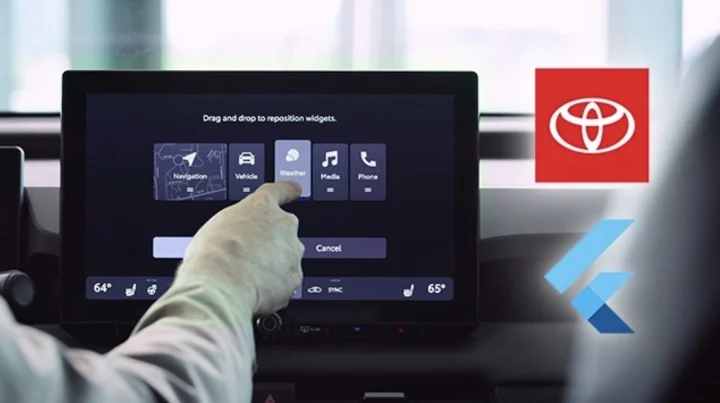
The 2026 RAV4, now rolling off production lines, ships with a multimedia system built on Flutter, the same UI toolkit that developers use to ship apps for Android and iOS.
The next car in line to get it is the 2027 Highlander BEV.
Flutter is Google’s open-source framework, made for building app interfaces that look and feel the same across phones, tablets, and the web. Toyota took that same toolkit and dropped it onto a car dashboard.
The 2026 RAV4 is the first vehicle in mass production to use it as the engine behind its infotainment screen.
The headline benefit is speed of development. Flutter has a feature called Hot Reload, which lets developers tweak the interface and see the change in seconds, not hours. That cuts the design-to-production loop down hard, which matters a lot when you’re updating a car’s user experience across global markets. Toyota Connected, the in-house software arm, says teams in Europe, Australia, India, and Japan are all contributing to the same platform now.
The system itself sits on top of Automotive Grade Linux and Toyota’s Arene software development kit, the foundation Toyota calls its first step toward fully software-defined vehicles.
On the 2026 RAV4, you get either a 10.5-inch or 12.9-inch touchscreen, a configurable home screen with widgets, AT&T 5G connectivity (in the US), an embedded “Hey Toyota” voice assistant that finally responds without lag, built-in Drive Recorder, EV Domain controls for the plug-in hybrid, and integrated Spotify and SiriusXM 360L.
For context, Toyota started using Flutter for its embedded systems years ago through the Embedder API, but the 2026 RAV4 is the first full production rollout. The 2027 Highlander BEV, announced in February 2026 and slated for late-2026 US sales, will inherit the same platform, just on a bigger 14-inch screen.
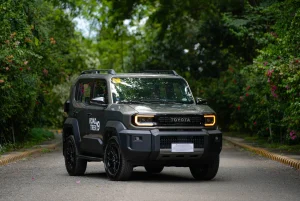
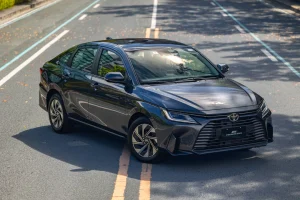
Locally, the 2026 RAV4 has not been confirmed for the Philippine market yet under Toyota Motor Philippines. The current PH RAV4 lineup still runs the older infotainment. Still, once this platform spreads across Toyota’s global lineup, future PH models like the next Land Cruiser, Tamaraw, or even the Vios refresh could ride on Flutter too.
Toyota Audio Multimedia (2026 RAV4) specs:
Built on Flutter and Dart
Runs on Automotive Grade Linux
Toyota Arene software development kit
10.5-inch or 12.9-inch touchscreen
12.3-inch digital gauge cluster
Hot Reload-based development workflow
Customizable widget-based home screen
Embedded “Hey Toyota” voice assistant
AT&T 5G connectivity (US market)
Wireless Apple CarPlay and Android Auto
Built-in Drive Recorder
EV Domain for PHEV controls
SiriusXM 360L and integrated Spotify
Full-screen navigation in the gauge cluster
Developed by Toyota Connected North America with global teams (Europe, Australia, India, Japan)
First production launch: 2026 RAV4 (May 2026)
Next in line: 2027 Highlander BEV
Funny how a tool most of us know from app development just landed on a five-million-units-a-year SUV. So if your next car’s screen feels suddenly snappier and looks weirdly close to a phone UI, now you know why.
Would you trust a Flutter-built dashboard for the next 5 to 10 years of driving? And if Toyota can pull this off cleanly, do you think Honda, Nissan, or Mitsubishi will follow next?



0 Comments
Leave a Reply