
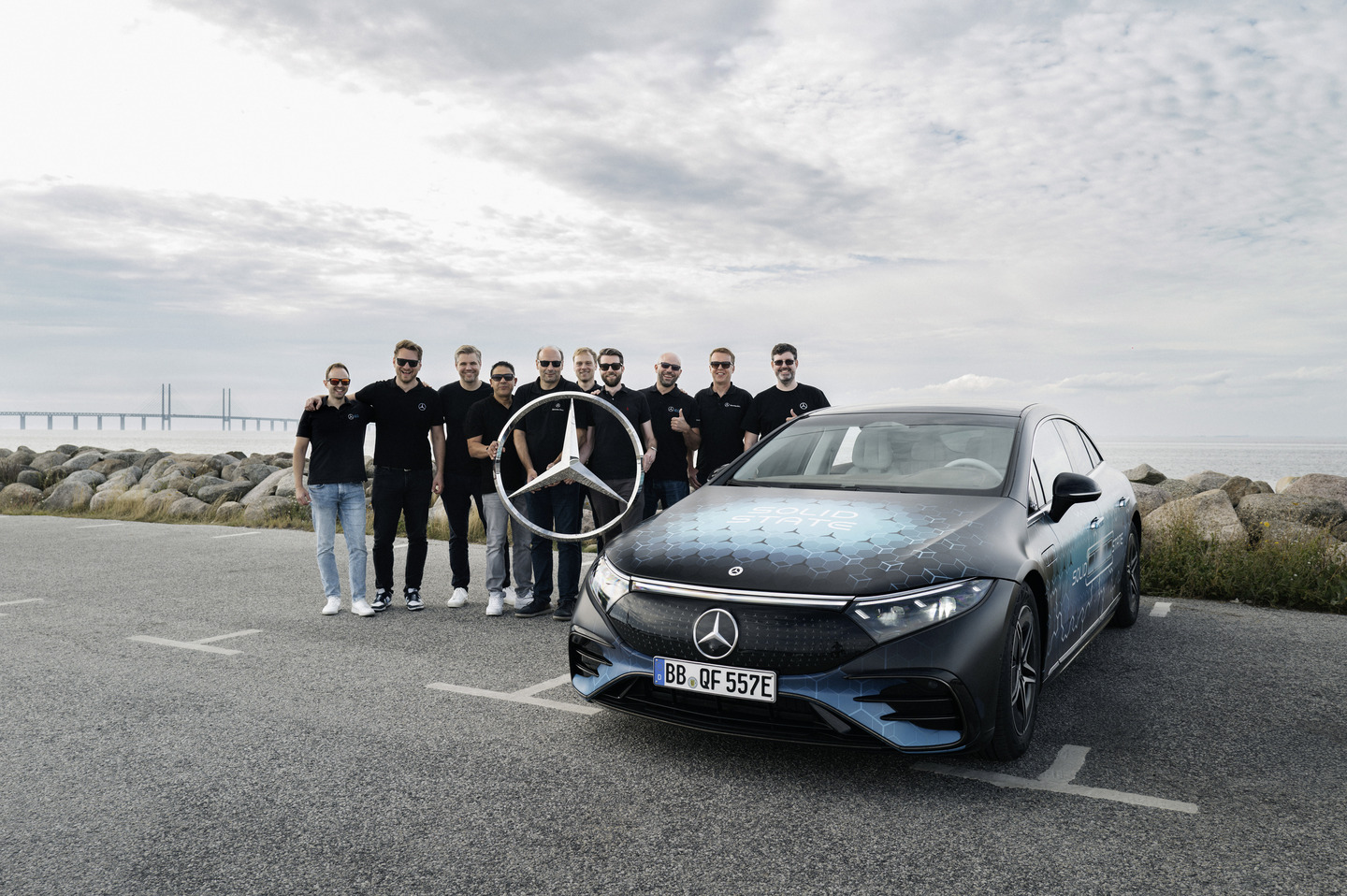
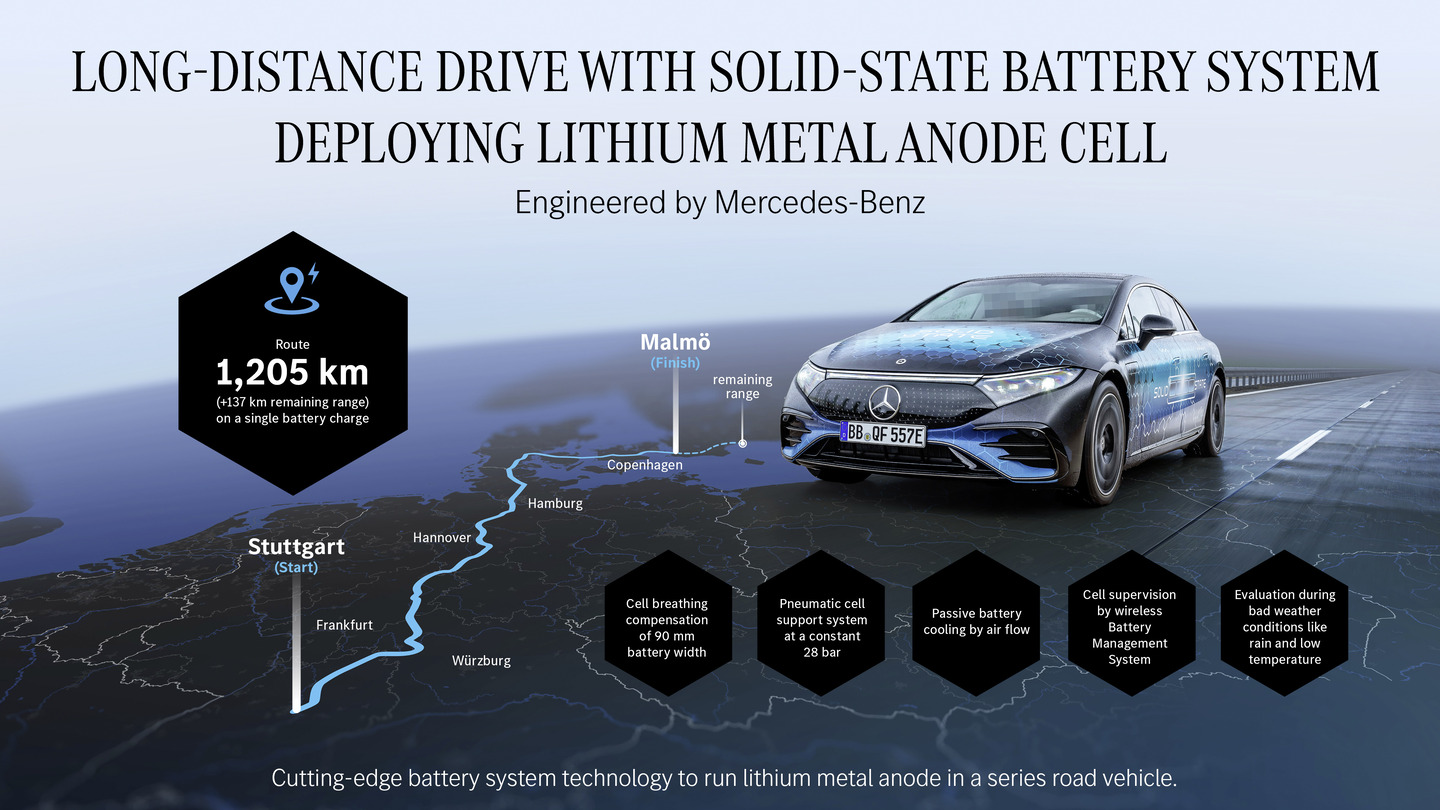
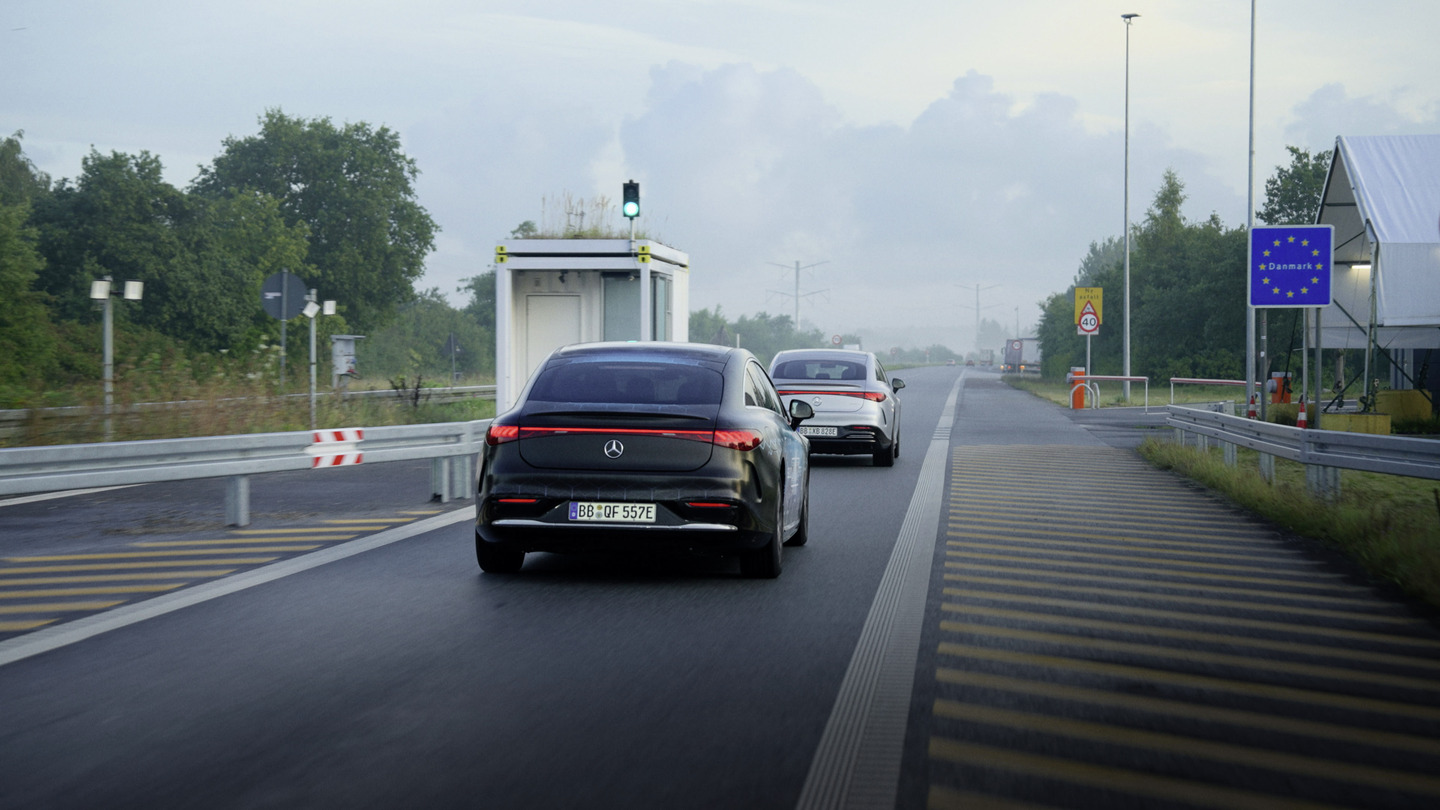
Mercedes-Benz has successfully completed a real-world demonstration of its next-generation solid-state battery technology. At the end of August, a lightly modified EQS test vehicle equipped with a lithium-metal solid-state battery drove 1,205 kilometers from Stuttgart, Germany, to Malmö, Sweden, without a single charging stop.
Related: Mercedes-AMG has set new distance records with its CONCEPT AMG GT XX
The vehicle arrived with 137 kilometers of remaining range, surpassing the distance record previously set by the Vision EQXX prototype by three kilometers. This marks an important milestone in validating solid-state batteries for everyday use, as well as long-distance journeys.
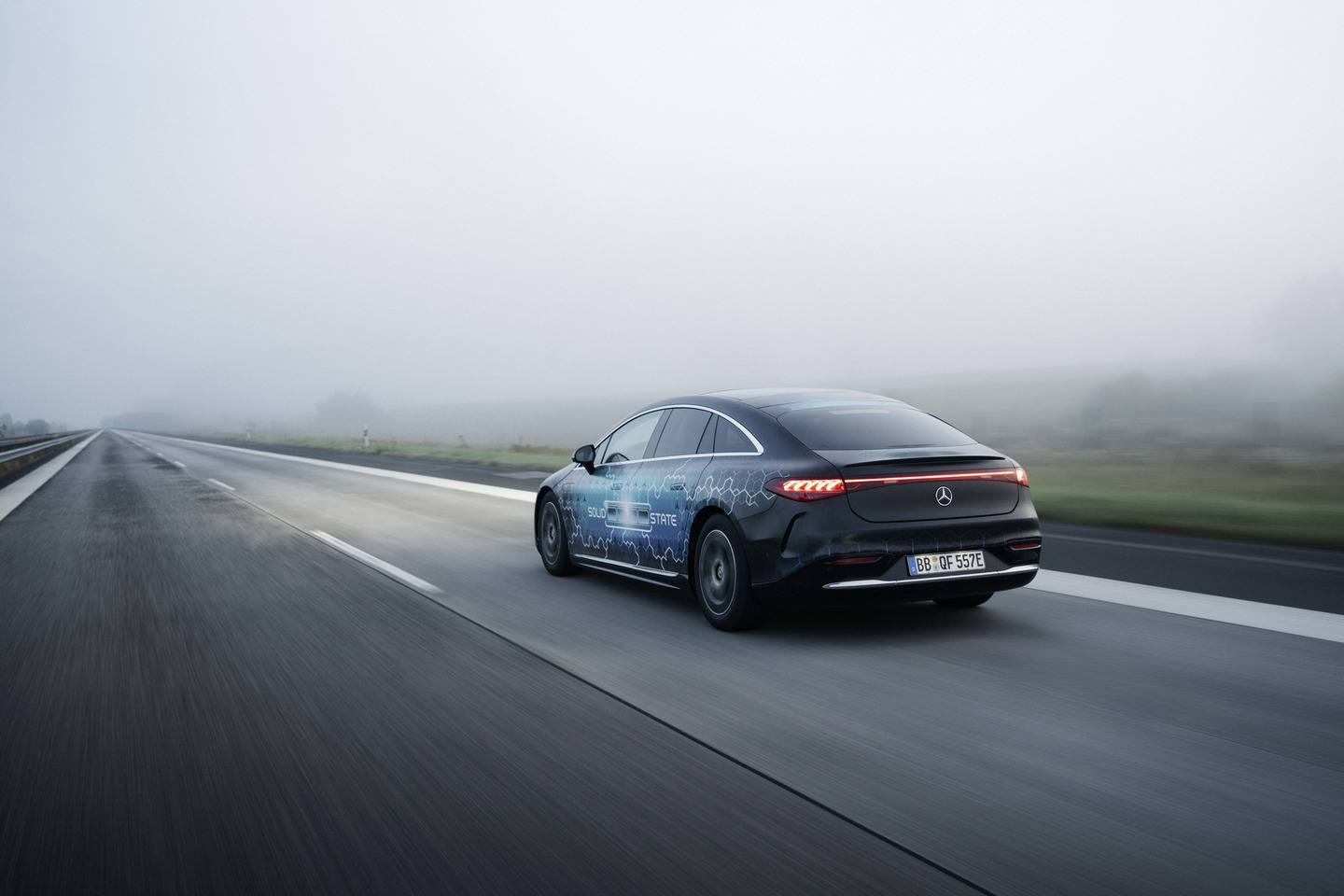
The long-distance drive is part of Mercedes-Benz’s ongoing testing program for solid-state batteries, which began road trials earlier this year. In addition to laboratory work and controlled testing at its facilities in Stuttgart-Untertürkheim and Sindelfingen, the company is now conducting public road trials across varying climate zones and route types.
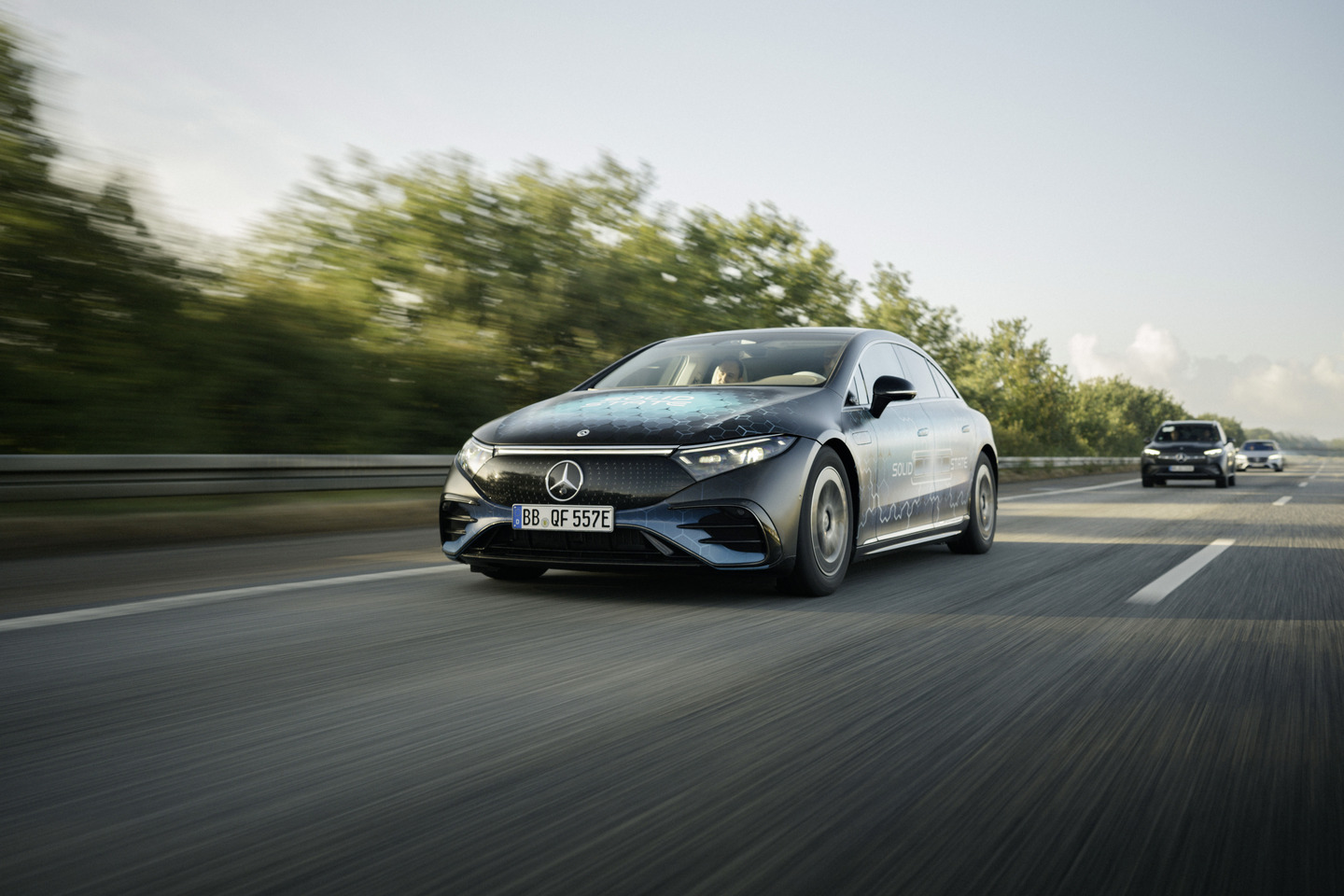
For the Stuttgart to Malmö trip, the EQS followed the A7 and E20 highways through Germany and Denmark. Route planning used the company’s Electric Intelligence system, which considered topography, traffic, ambient temperature, and energy demands for heating and cooling. No ferries were used along the route.
Markus Schäfer, Member of the Board of Management of Mercedes-Benz Group AG and Chief Technology Officer, said:
“The solid-state battery is a true gamechanger for electric mobility. With the successful long-distance drive of the EQS, we show that this technology delivers not only in the lab but also on the road. Our goal is to bring innovations like this into series production by the end of the decade and offer our customers a new level of range and comfort.”
The solid-state battery was developed with Mercedes-AMG High Performance Powertrains in Brixworth, UK, with cells supplied by U.S. company Factorial Energy using its FEST® technology (Factorial Electrolyte System Technology).
To manage the volume changes that occur during charging and discharging, the battery incorporates pneumatic actuators that maintain contact pressure on the cells. This design helps ensure long-term durability. The system provides 25 percent more usable energy compared to the standard EQS battery while keeping size and weight nearly the same. Efficiency is further improved with passive airflow cooling.
Mercedes-Benz aims to integrate solid-state batteries into production vehicles by the end of the decade.






0 Comments
Leave a Reply